// Field files for grades 2–12Observe. Measure. Explain.
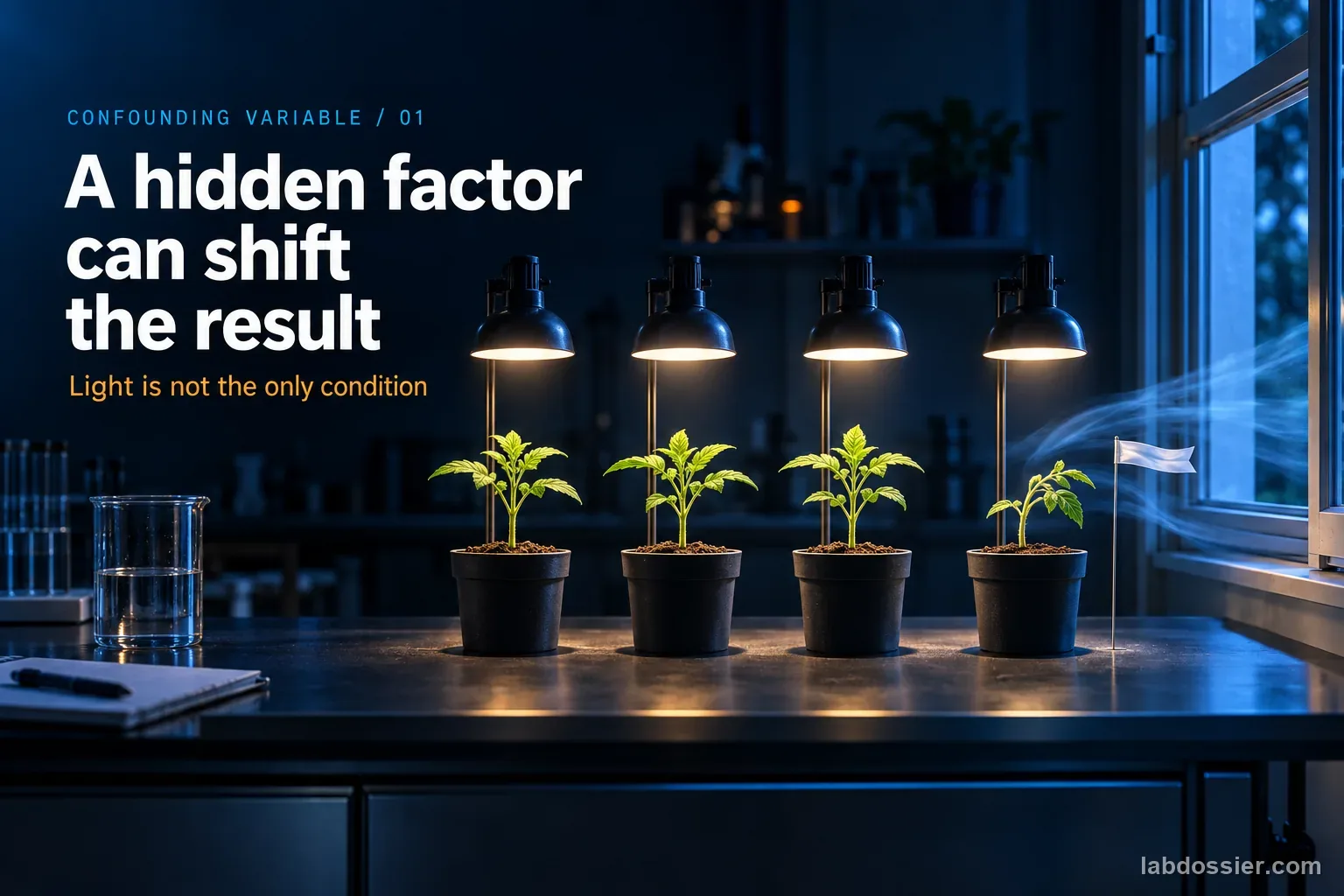
Four seedlings under lamps sit beside an open window with airflow, illustrating a hidden condition that can shift plant-growth results.
A draft can change temperature or water loss while light distance is being tested, creating an alternative explanation for plant growth.
← RETURN TO LESSONLAB DOSSIER / GUIDED VIDEOENGLISH VOICEOVER · CAPTIONS

SCIENTIFIC METHOD · GRADES 4–8

Catch the hidden confound

INVESTIGATION QUESTIONCould temperature explain the plant result instead?

● ILLUSTRATIVE SCIENCE MODEL
ENGLISH CAPTIONS

Plot A is closer to lamp and receives fifty milliliters of water.

0.0 / 3.0 s
01 / SCIENCE

What explains the result?

A confound changes alongside the treatment and offers another explanation for the measured outcome.
02 / EVERYDAY CONNECTION

Where does this matter?

Finding confounds is important in clinical studies, field research, and product testing.

03 / MODEL LIMIT

What should you keep in mind?

The ambiguity score is a teaching aid, not a formal statistical test.
Continue to the interactive experiment ↓
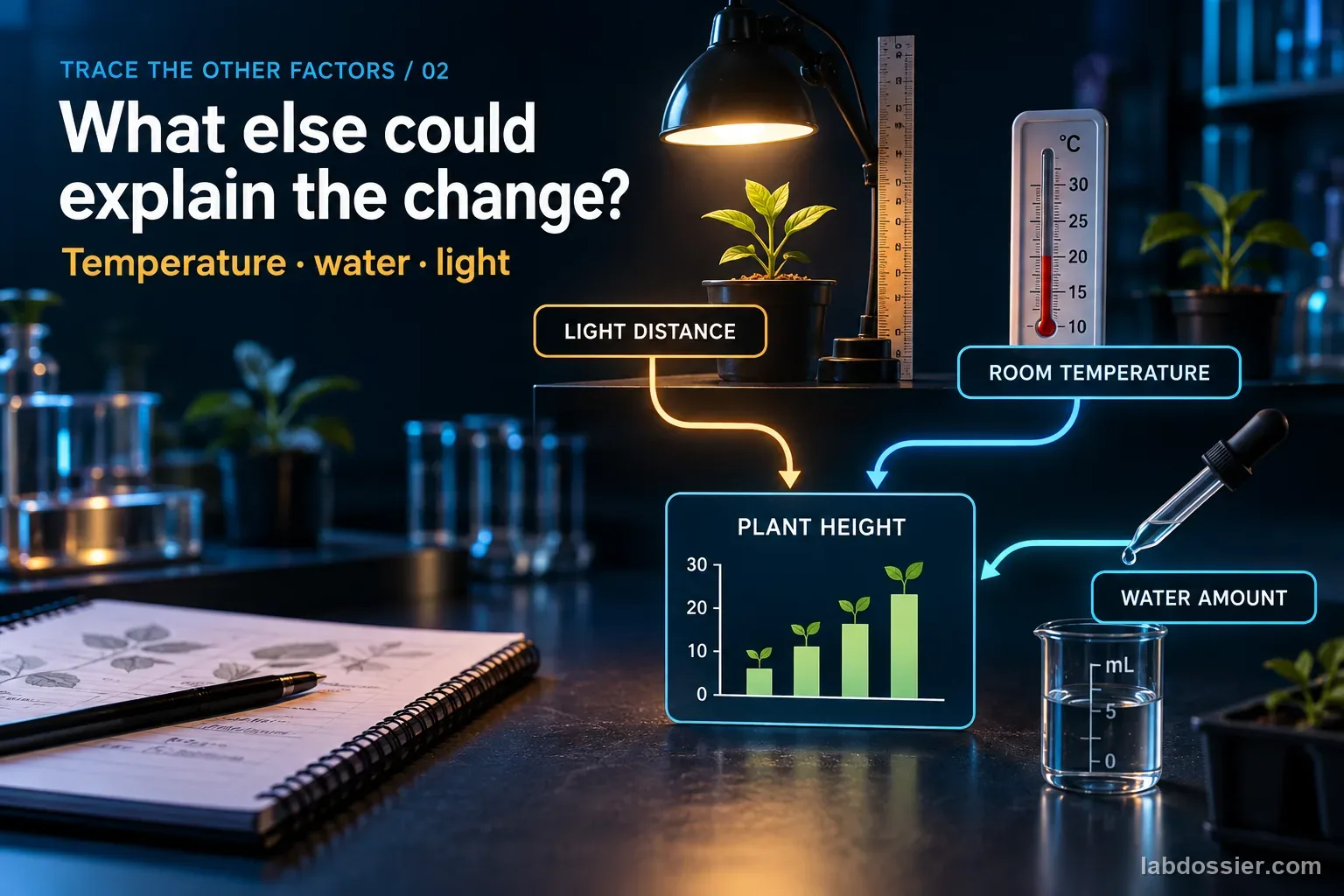
A plant-height graph is connected to light distance, room temperature and water amount as competing influences on the result.
List plausible influences on the outcome, including the intended treatment and conditions that could vary unintentionally.

DEDICATED PRACTICE ROOM · SCIENTIFIC METHOD

Catch the hidden confound

FREE · SELF-PACED · MODEL / PRACTICE DATA
YOUR TASK

Could temperature explain the plant result instead?
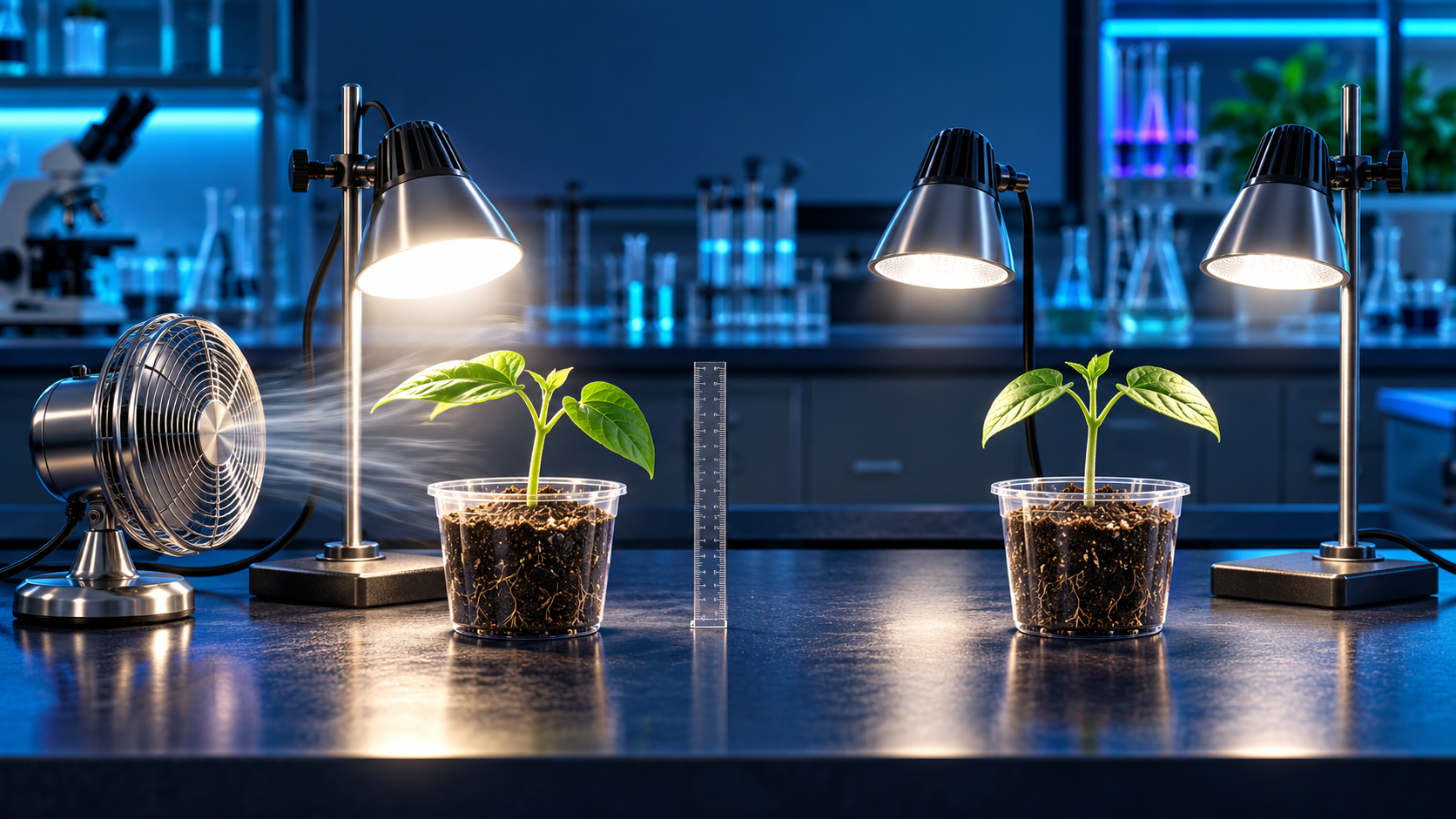
Catch the hidden confound: experiment-specific laboratory scene
READ THE BENCH CARD

Find the second factor tangled with the test factor

Compare the two plots and find another condition that changed along with lamp distance. The ambiguity score is a teaching aid, not a formal statistical test.

MATERIALS / DATAPlant cards · Thermometer · Light and water log
PLOT APlants 20 cm from the lamp

Watered 50 mL every day

Mean growth: 4.2 cm
PLOT BPlants 60 cm from the lamp

Watered 20 mL every day

Mean growth: 2.1 cm
Which hidden factor is tangled with lamp distance?
WHAT TO TAKE AWAY

A confound changes alongside the treatment and offers another explanation for the measured outcome.

WHERE THIS IS USED

Finding confounds is important in clinical studies, field research, and product testing.

MODEL LIMIT The ambiguity score is a teaching aid, not a formal statistical test. The activities on this page do not store classroom measurements.
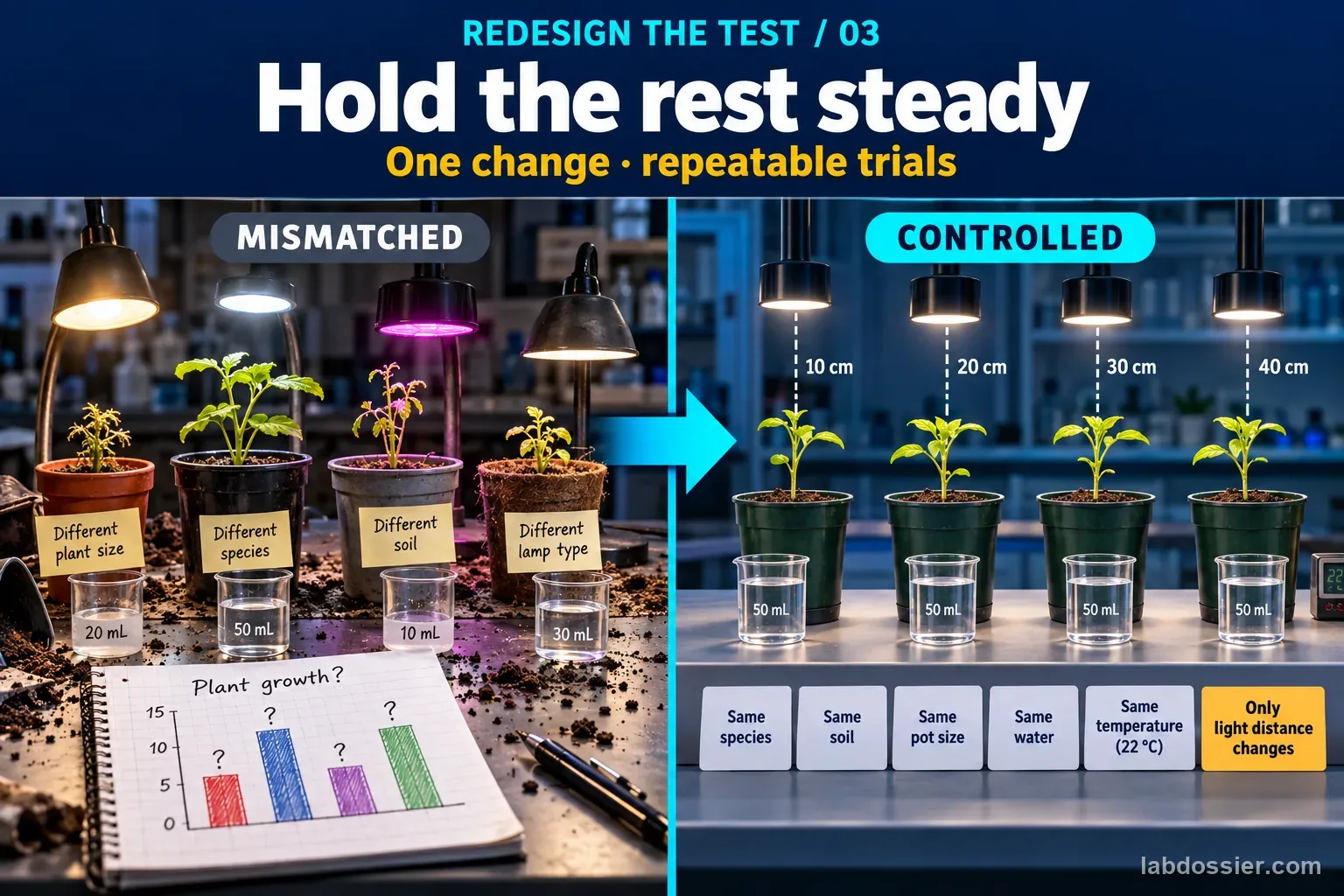
A split bench contrasts mismatched plant trials with a controlled repeated setup where only lamp distance changes.
Match the plants, pots, soil, water and temperature; vary the chosen factor and repeat each condition to make the comparison interpretable.