// Field files for grades 2–12Observe. Measure. Explain.
Lab skills / Density / Dedicated lab room
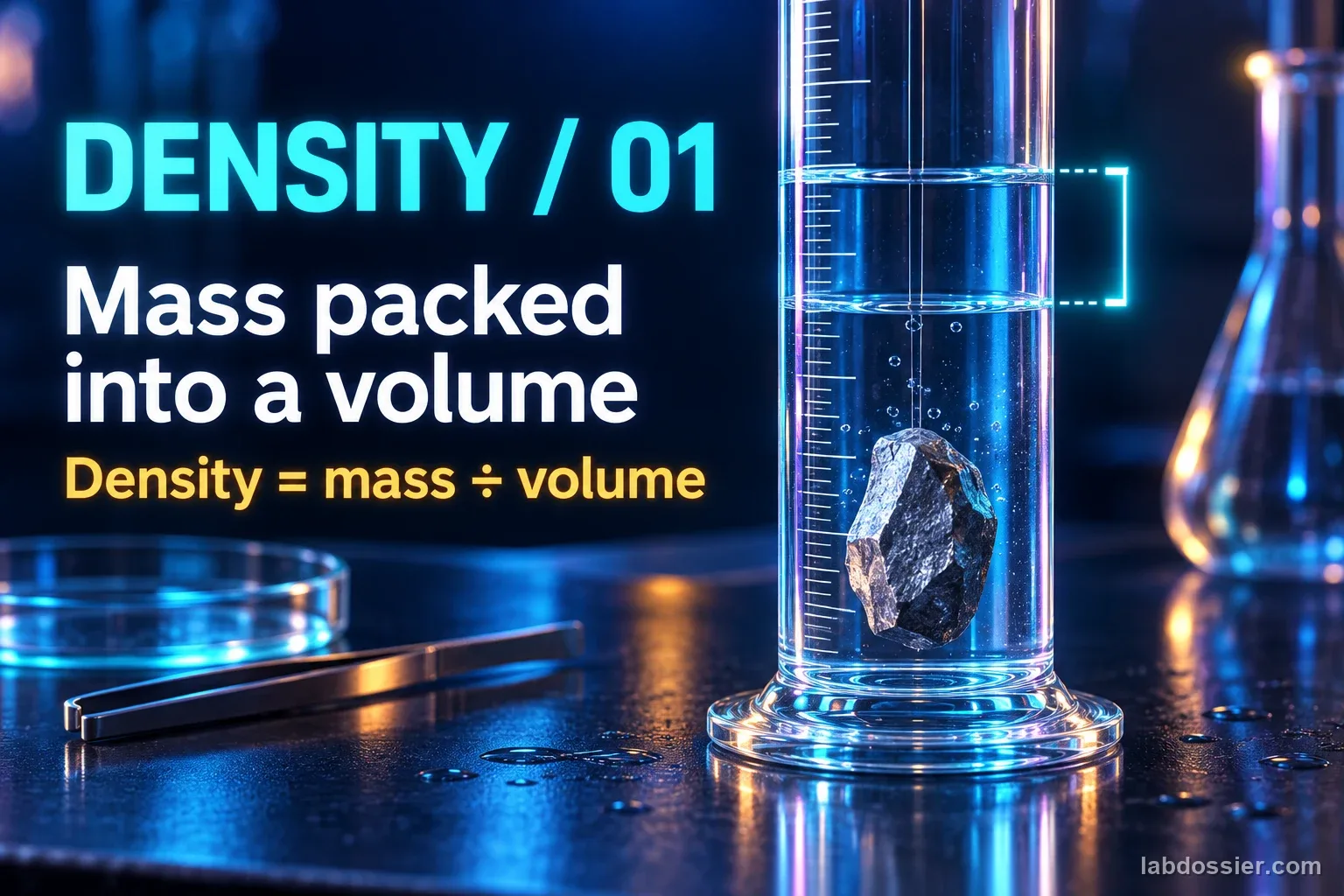
A holographic graduated cylinder shows a submerged object displacing water beside the density formula.
Density describes how much mass occupies a given volume and is calculated by dividing mass by volume.
← RETURN TO LESSONLAB DOSSIER / GUIDED VIDEOENGLISH VOICEOVER · CAPTIONS

LAB SKILLS · GRADES 4–8

Measure density from mass and volume

INVESTIGATION QUESTIONHow does the same mass pack into different volumes?

● ILLUSTRATIVE SCIENCE MODEL
ENGLISH CAPTIONS

Choose one solid and track its identity through every mass reading.

0.0 / 3.0 s
01 / SCIENCE

What explains the result?

Density equals mass divided by volume; changing the volume while holding mass constant changes density.
02 / EVERYDAY CONNECTION

Where does this matter?

Density helps identify materials and predict buoyancy.

03 / MODEL LIMIT

What should you keep in mind?

Use measured mass and volume with consistent units; this model assumes no trapped air or liquid loss.
Continue to the interactive experiment ↓
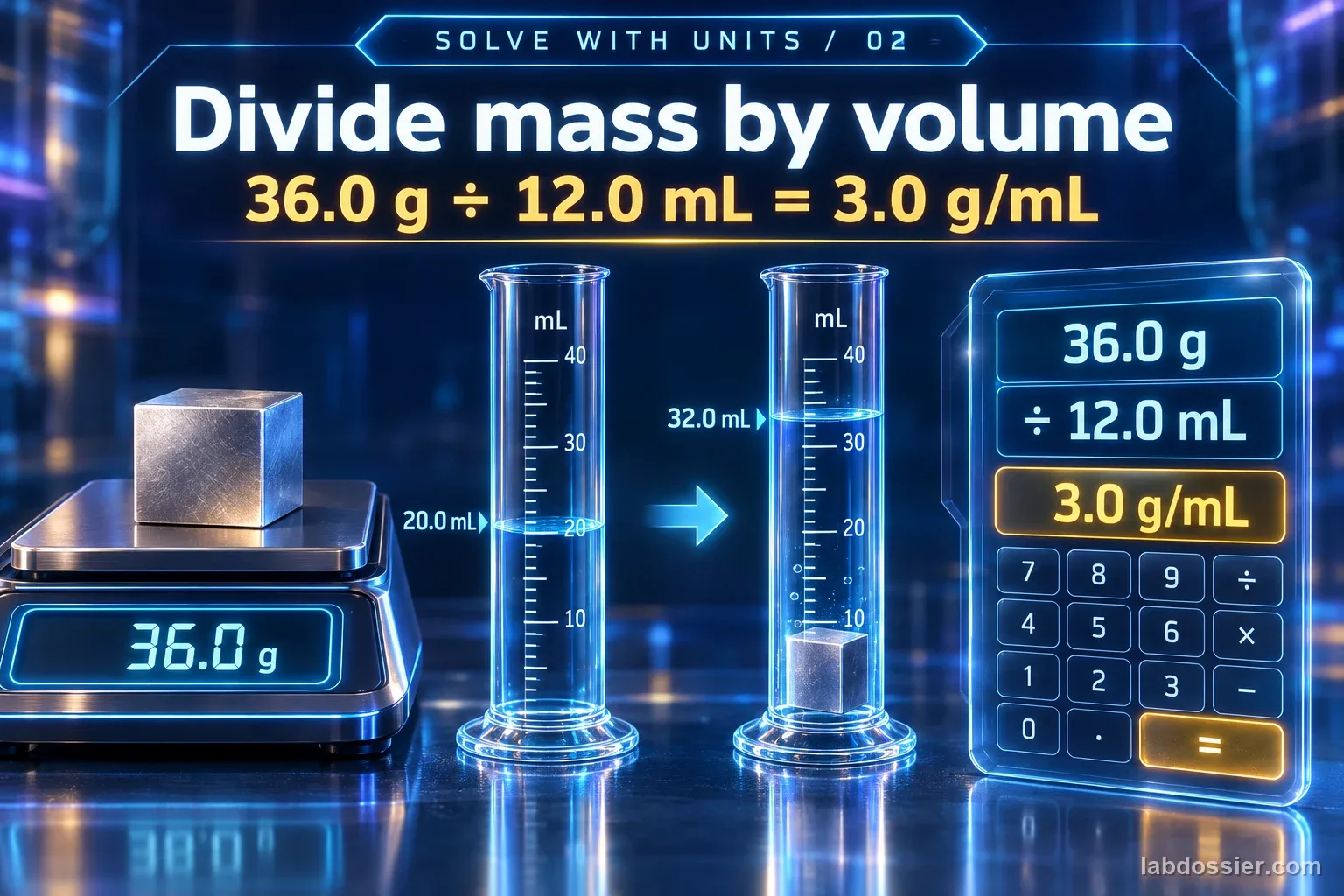
A 36.0 gram sample displaces 12.0 milliliters in a cylinder, with a holographic calculation showing density of 3.0 grams per milliliter.
For this example, 36.0 g divided by 12.0 mL equals 3.0 g/mL; the units show mass per unit volume.

DEDICATED PRACTICE ROOM · LAB SKILLS

Measure density from mass and volume

FREE · SELF-PACED · MODEL / PRACTICE DATA
YOUR TASK

How does the same mass pack into different volumes?
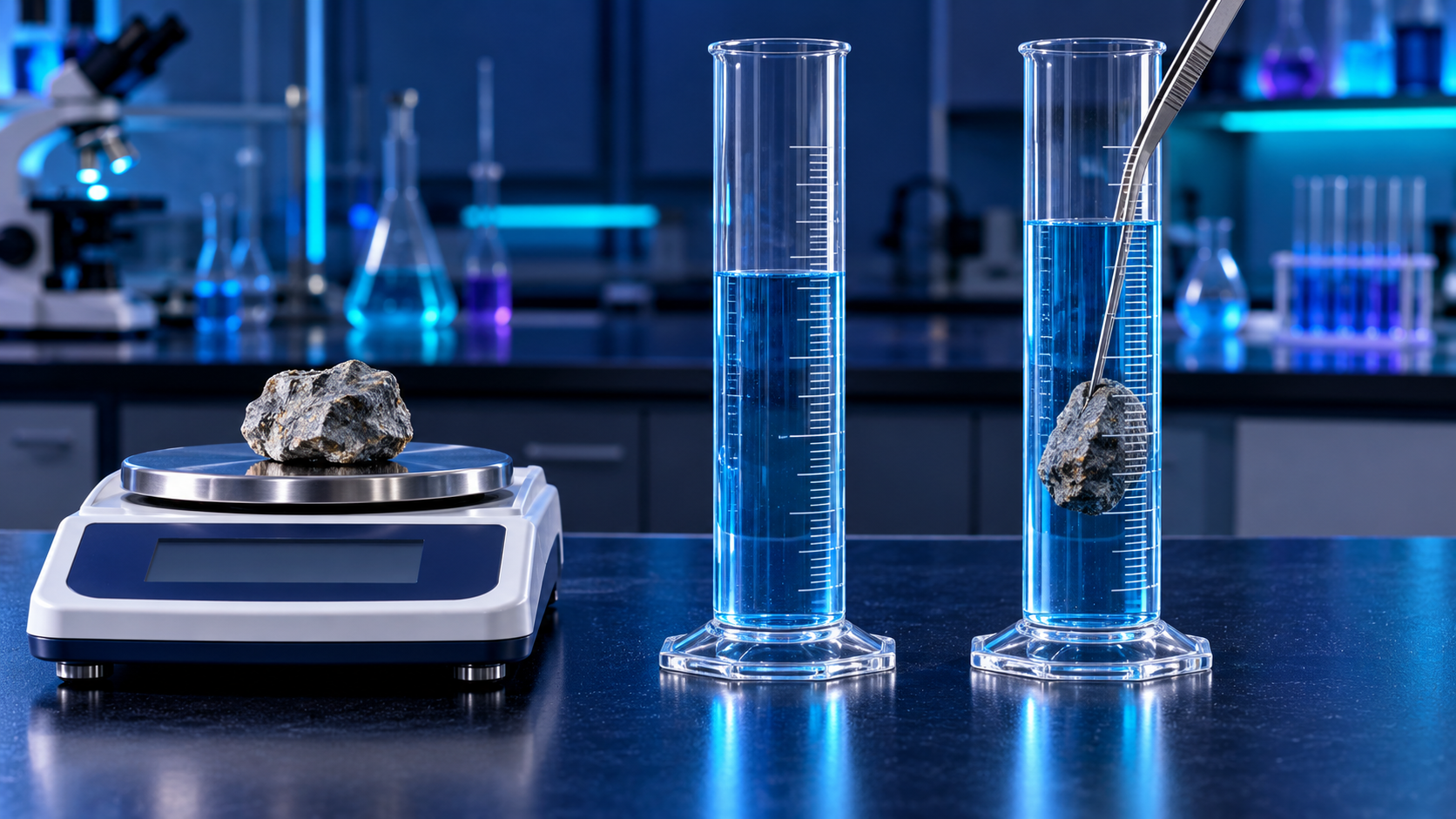
Measure density from mass and volume: experiment-specific laboratory scene
READ THE BENCH CARD

Identify a material from mass and volume

Select a specimen card, divide its mass by its volume, and compare the result with water to predict buoyancy. Use measured mass and volume with consistent units; this model assumes no trapped air or liquid loss.

MATERIALS / DATABalance · Graduated cylinder · Water
SPECIMEN DRAWER / THREE SAMPLES
MASS ÷ VOLUME12 ÷ 30

Calculate density, then compare it with water at about 1 g/cm³ to predict whether the sample tends to float or sink.

WHAT TO TAKE AWAY

Density equals mass divided by volume; changing the volume while holding mass constant changes density.

WHERE THIS IS USED

Density helps identify materials and predict buoyancy.

MODEL LIMIT Use measured mass and volume with consistent units; this model assumes no trapped air or liquid loss. The activities on this page do not store classroom measurements.
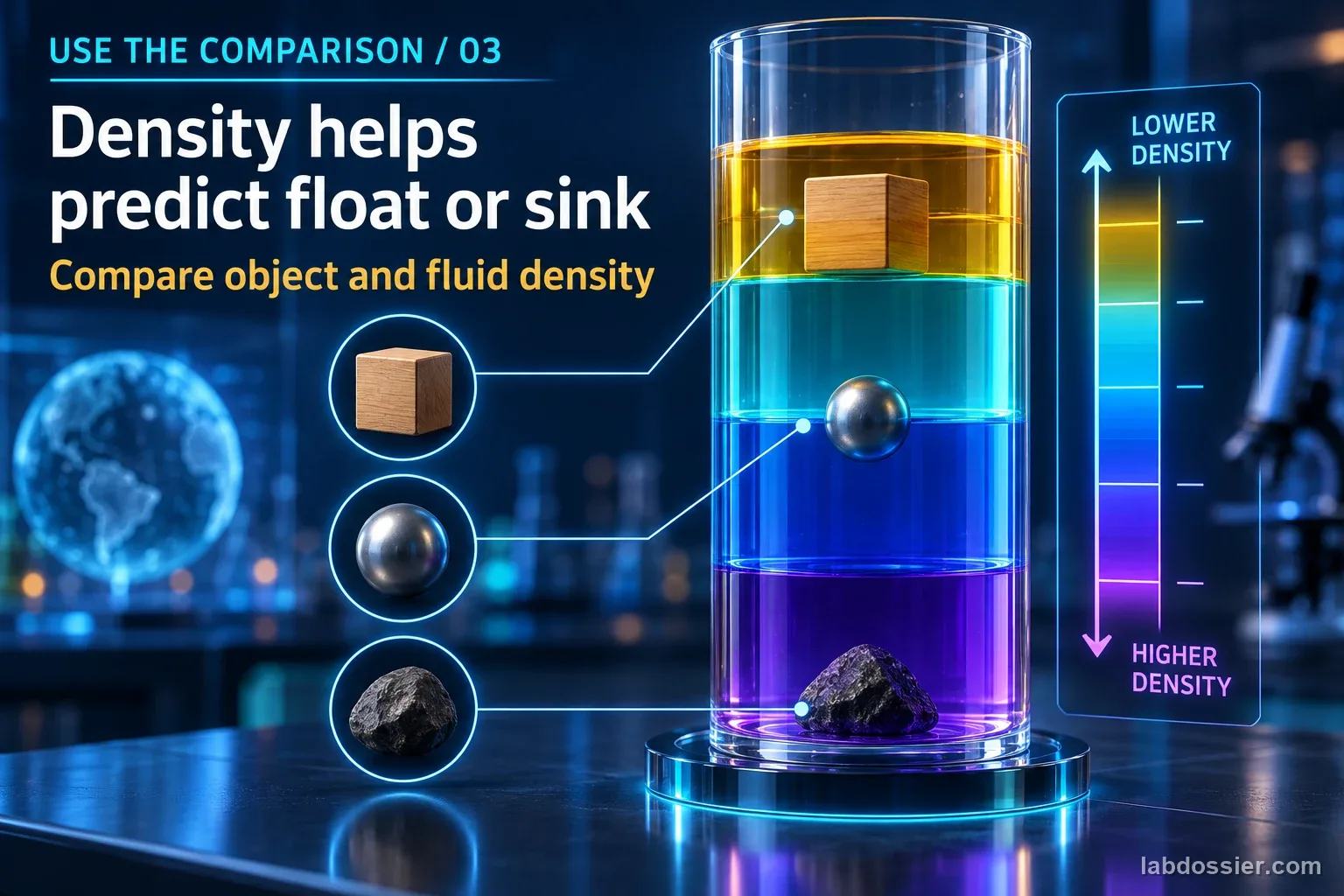
Wood, metal and stone rest at different heights in a holographic layered density column.
An object's average density relative to the surrounding fluid helps predict whether it will float or sink in that fluid.