// Field files for grades 2–12Observe. Measure. Explain.
Lab skills / Meniscus / Dedicated lab room
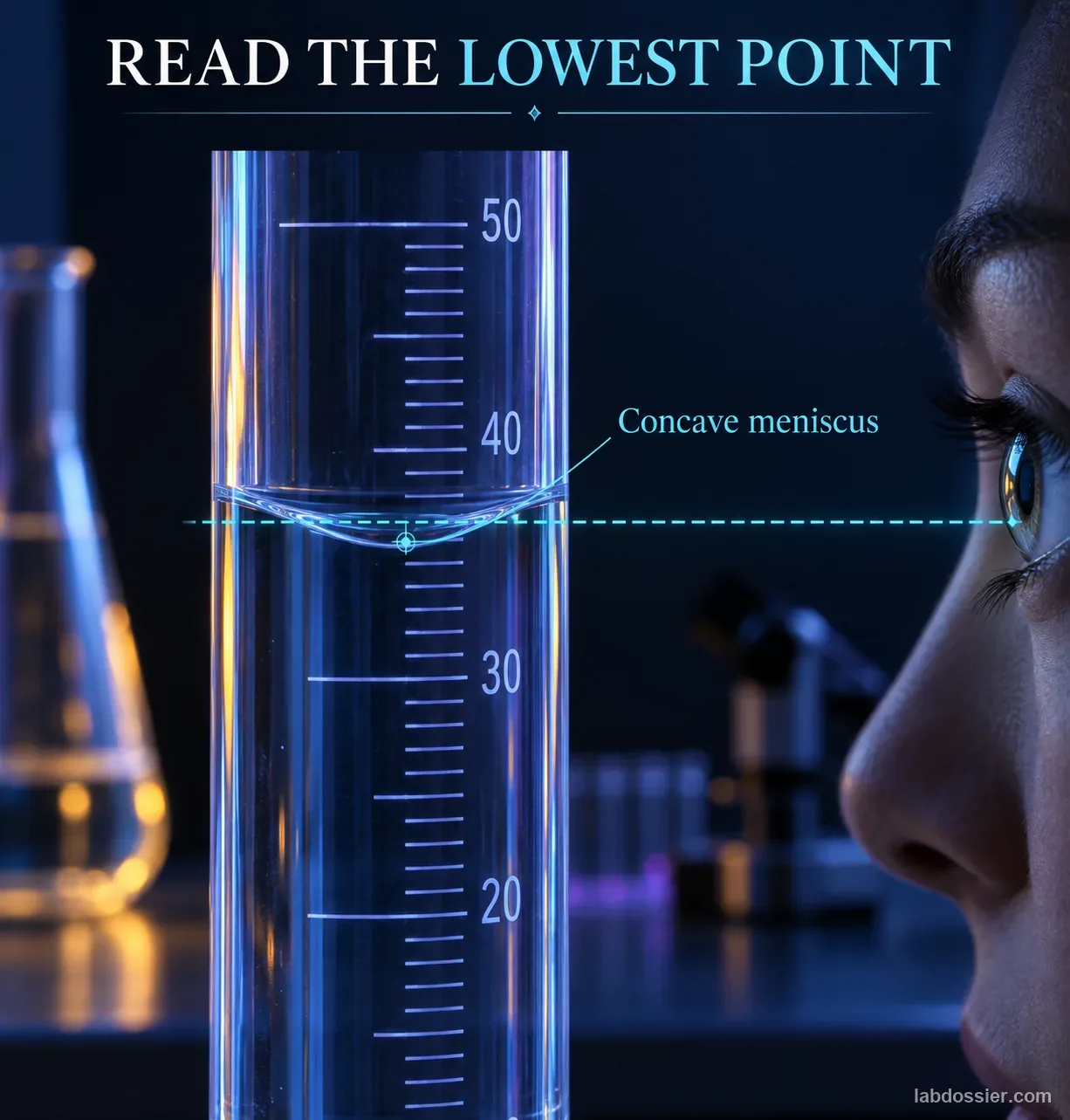
A student views a graduated cylinder at eye level as a cyan guide highlights the lowest point of the concave water meniscus.
For water and most liquids in glass, align your eyes with the surface and read the bottom of the curve.
← RETURN TO LESSONLAB DOSSIER / GUIDED VIDEOENGLISH VOICEOVER · CAPTIONS

LAB SKILLS · GRADES 5–12

Read the meniscus at eye level

INVESTIGATION QUESTIONHow does eye position change a liquid-volume reading?

● ILLUSTRATIVE SCIENCE MODEL
ENGLISH CAPTIONS

Rinse the graduated cylinder and place it upright on a level bench.

0.0 / 3.0 s
01 / SCIENCE

What explains the result?

Read the bottom of a clear aqueous meniscus at eye level to reduce parallax error.
02 / EVERYDAY CONNECTION

Where does this matter?

Accurate volume readings matter when preparing solutions, measuring doses, and comparing lab samples.

03 / MODEL LIMIT

What should you keep in mind?

The correct reading also depends on cylinder calibration, scale spacing, and reading technique.
Continue to the interactive experiment ↓
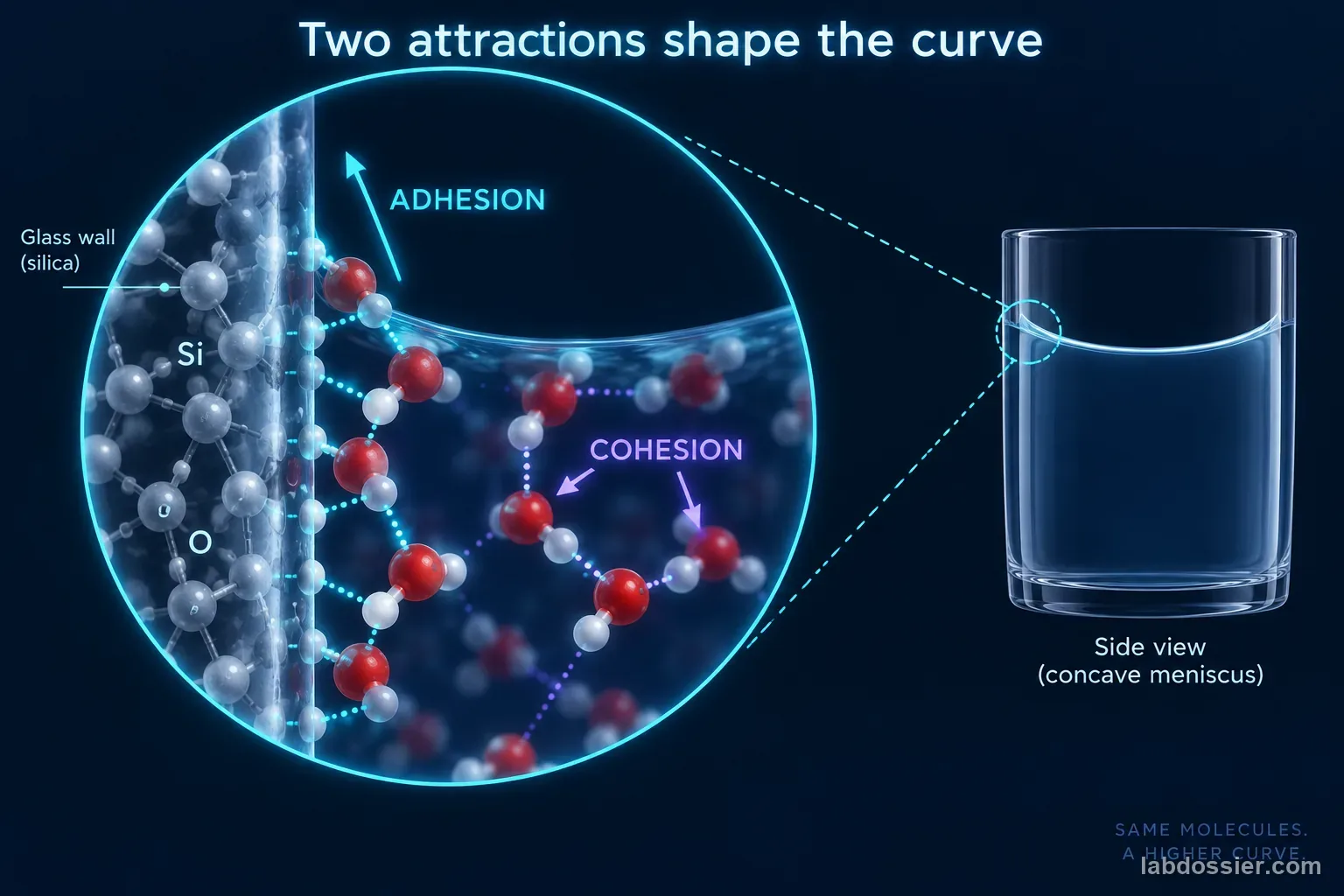
A molecular-scale illustration shows water adhesion to glass and cohesion between neighboring water molecules shaping a concave surface.
Water adheres to glass while water molecules cohere to one another, producing the familiar concave curve.

DEDICATED PRACTICE ROOM · LAB SKILLS

Read the meniscus at eye level

FREE · SELF-PACED · MODEL / PRACTICE DATA
YOUR TASK

How does eye position change a liquid-volume reading?
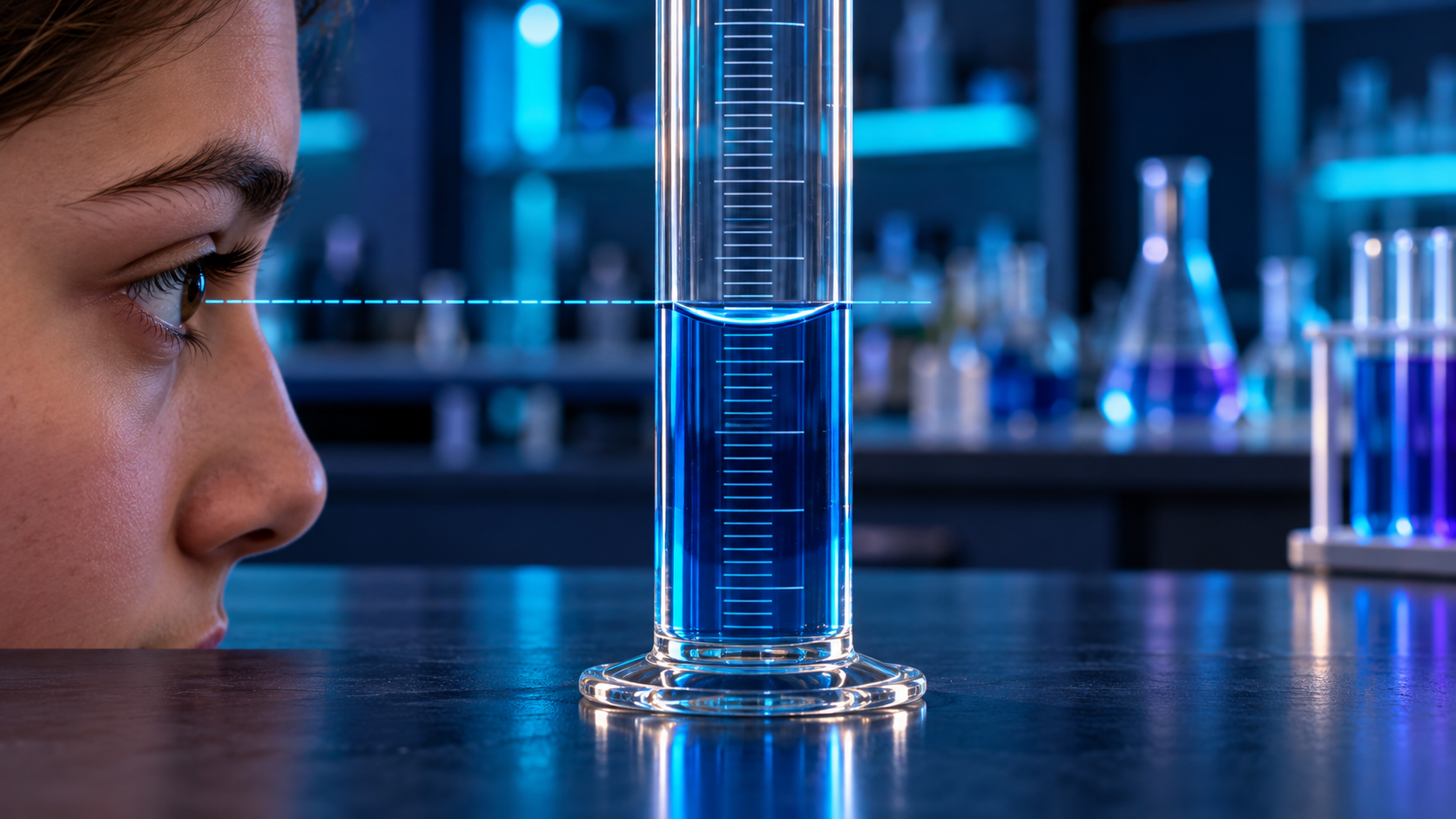
Read the meniscus at eye level: experiment-specific laboratory scene
READ THE BENCH CARD

Remove parallax before recording the meniscus

Move the observer’s eye and enter a reading. The displayed curve shifts to show how parallax can alter an apparent volume. The correct reading also depends on cylinder calibration, scale spacing, and reading technique.

MATERIALS / DATAGraduated cylinder · Colored water · Eye-level marker
34 mL ───── 35 mLEYE LEVEL
BOTTOM OF THE CURVE
WHAT TO TAKE AWAY

Read the bottom of a clear aqueous meniscus at eye level to reduce parallax error.

WHERE THIS IS USED

Accurate volume readings matter when preparing solutions, measuring doses, and comparing lab samples.

MODEL LIMIT The correct reading also depends on cylinder calibration, scale spacing, and reading technique. The activities on this page do not store classroom measurements.
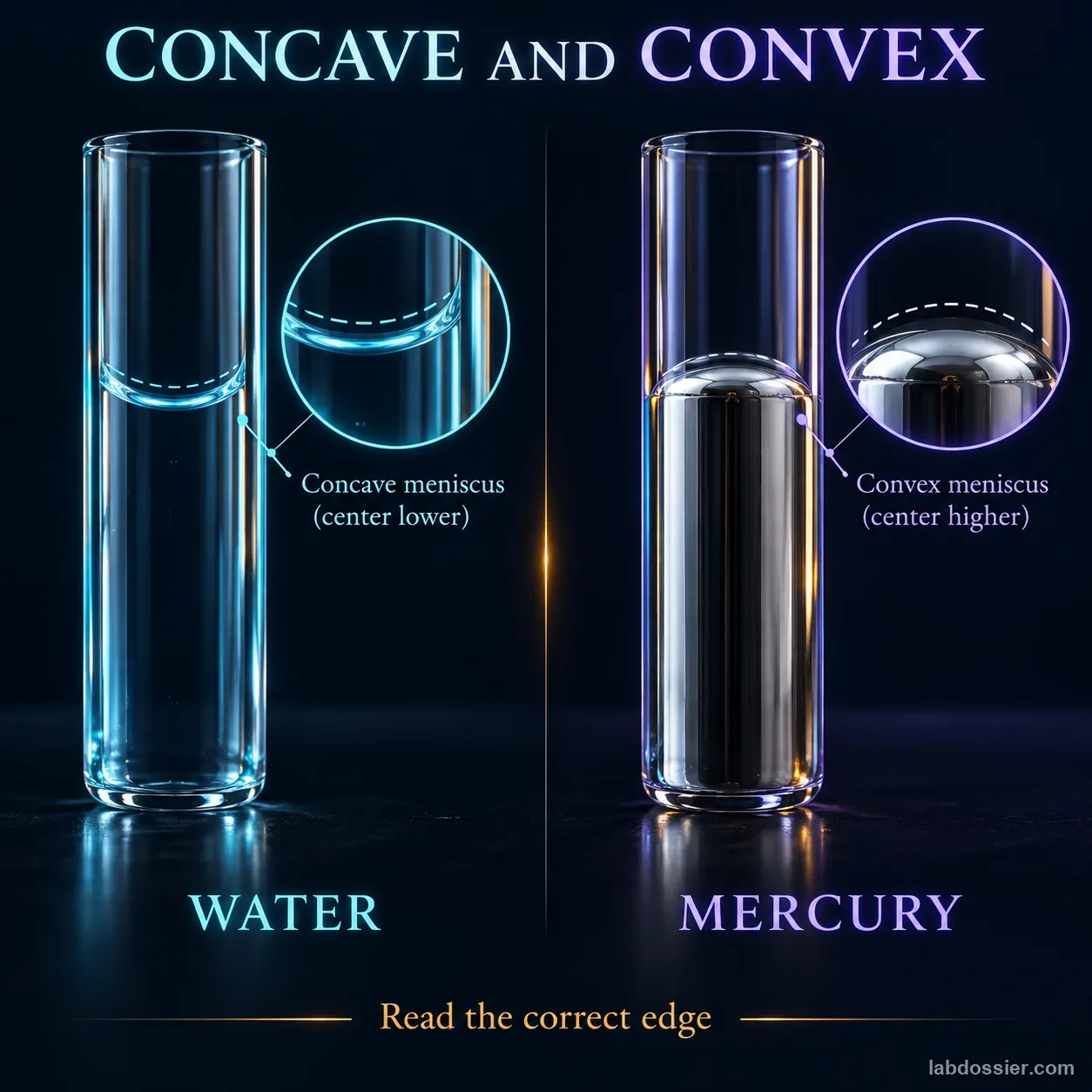
Side-by-side glass tubes compare water's concave meniscus with mercury's convex meniscus.
Water usually forms a concave meniscus in glass; mercury forms a convex one, so the correct reading edge depends on the liquid.