// Field files for grades 2–12Observe. Measure. Explain.
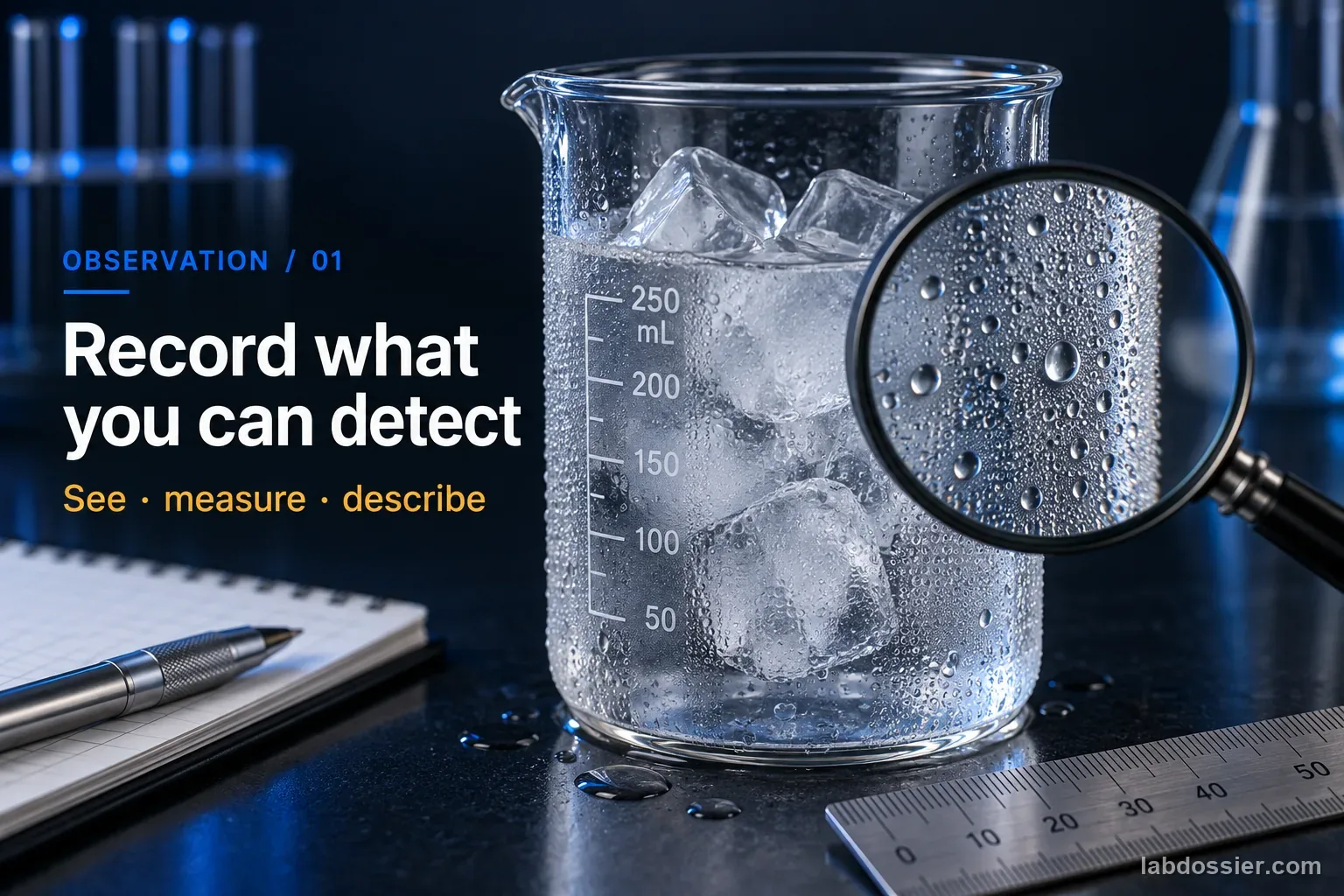
A condensation-covered beaker, magnifying glass and ruler illustrate an observation labeled Record what you can detect.
An observation records detectable evidence such as visible droplets, a measured temperature, or a change in volume without adding an explanation.
← RETURN TO LESSONLAB DOSSIER / GUIDED VIDEOENGLISH VOICEOVER · CAPTIONS

SCIENTIFIC METHOD · GRADES 4–8

Observation or inference?

INVESTIGATION QUESTIONWhich statements can you see, and which explain what happened?

● ILLUSTRATIVE SCIENCE MODEL
ENGLISH CAPTIONS

Describe three brown leaf spots without guessing their cause.

0.0 / 3.0 s
01 / SCIENCE

What explains the result?

An observation records what was seen or measured; an inference offers an explanation that needs evidence.
02 / EVERYDAY CONNECTION

Where does this matter?

Separating observations from inference reduces bias in lab notes and field reports.

03 / MODEL LIMIT

What should you keep in mind?

An inference can be reasonable, but it should be labeled as an explanation rather than a direct observation.
Continue to the interactive experiment ↓
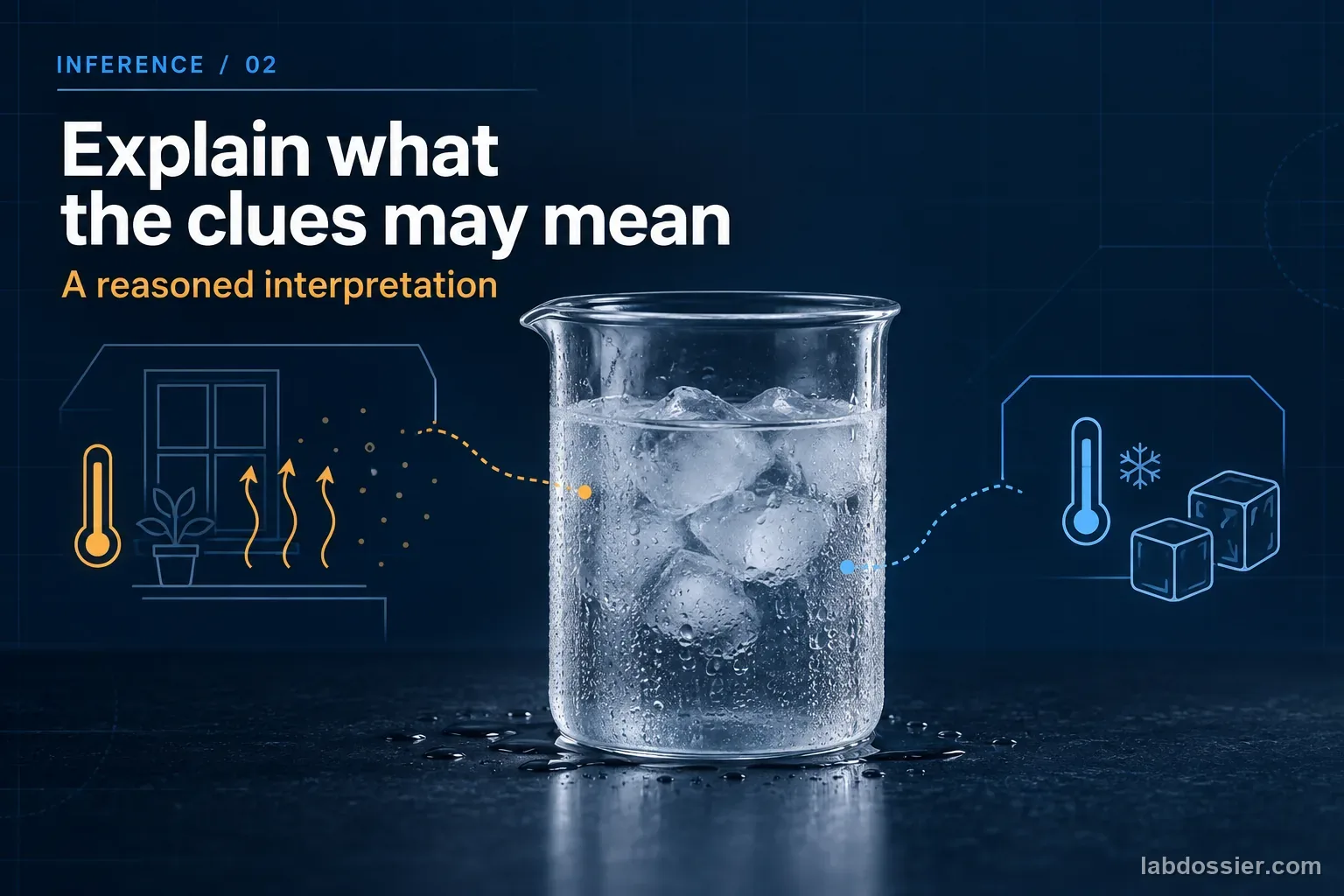
A beaker of ice water is diagrammed between warm-air and cold-surface clues under the title Inference.
An inference uses observations and scientific ideas to explain a pattern; new evidence may support or revise that interpretation.

DEDICATED PRACTICE ROOM · SCIENTIFIC METHOD

Observation or inference?

FREE · SELF-PACED · MODEL / PRACTICE DATA
YOUR TASK

Which statements can you see, and which explain what happened?
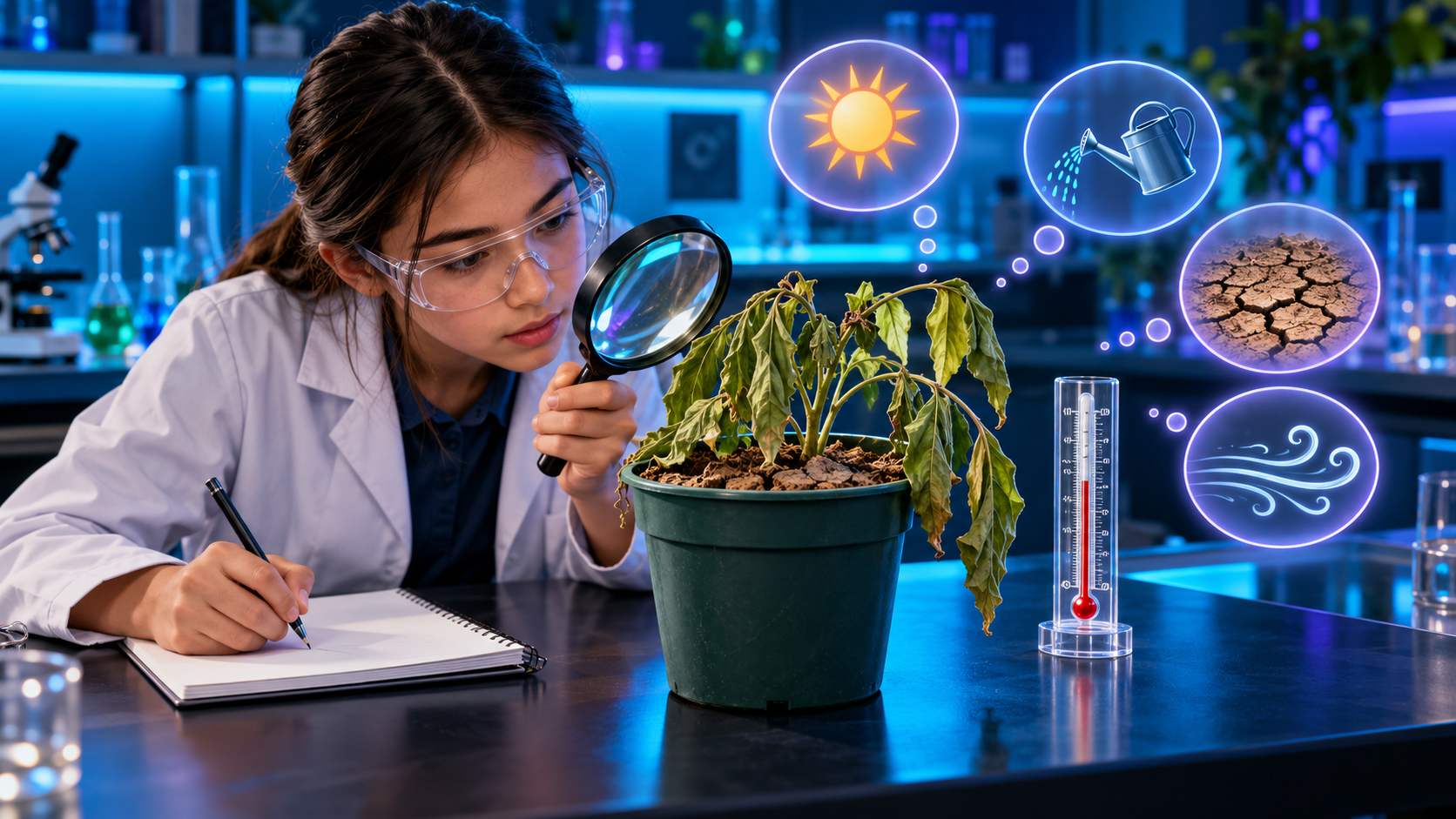
Observation or inference?: experiment-specific laboratory scene
READ THE BENCH CARD

Separate a direct observation from an explanation

A direct note and an explanation can sound similar. Ask which statement an instrument could record without guessing why. An inference can be reasonable, but it should be labeled as an explanation rather than a direct observation.

MATERIALS / DATAImage cards · Measurement cards · Claim cards
MICROSCOPE FIELD NOTE

Classify the sentence as something directly observed or an explanation that goes beyond the view.

EVIDENCE CARD 1 OF 4The leaf has three brown spots.
What kind of statement is this?
WHAT TO TAKE AWAY

An observation records what was seen or measured; an inference offers an explanation that needs evidence.

WHERE THIS IS USED

Separating observations from inference reduces bias in lab notes and field reports.

MODEL LIMIT An inference can be reasonable, but it should be labeled as an explanation rather than a direct observation. The activities on this page do not store classroom measurements.
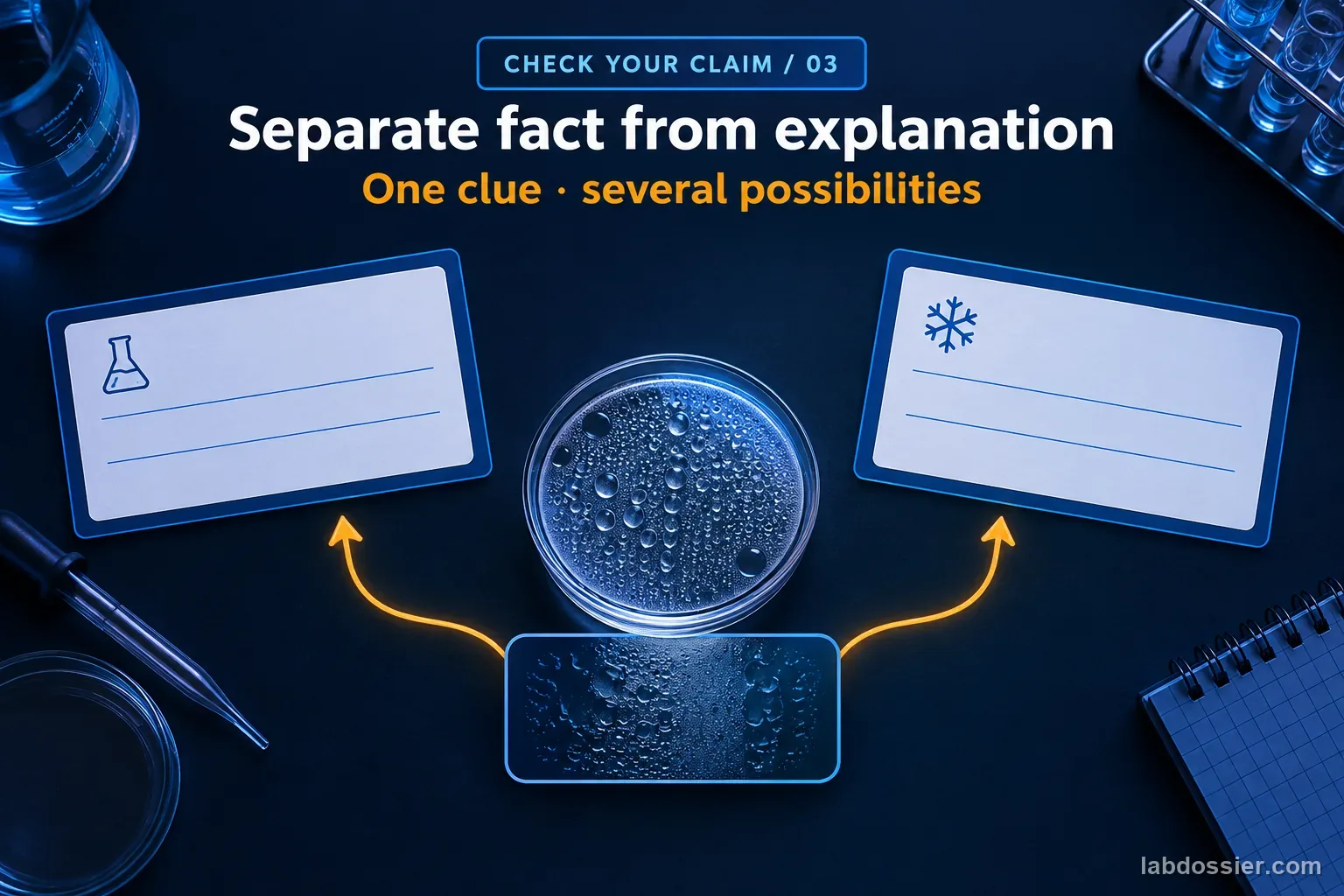
A condensation observation branches toward two blank explanation cards under Separate fact from explanation.
Keep the recorded fact separate from its possible causes, then identify what additional test could distinguish between explanations.