// Field files for grades 2–12Observe. Measure. Explain.
Lab skills / Percent error / Dedicated lab room
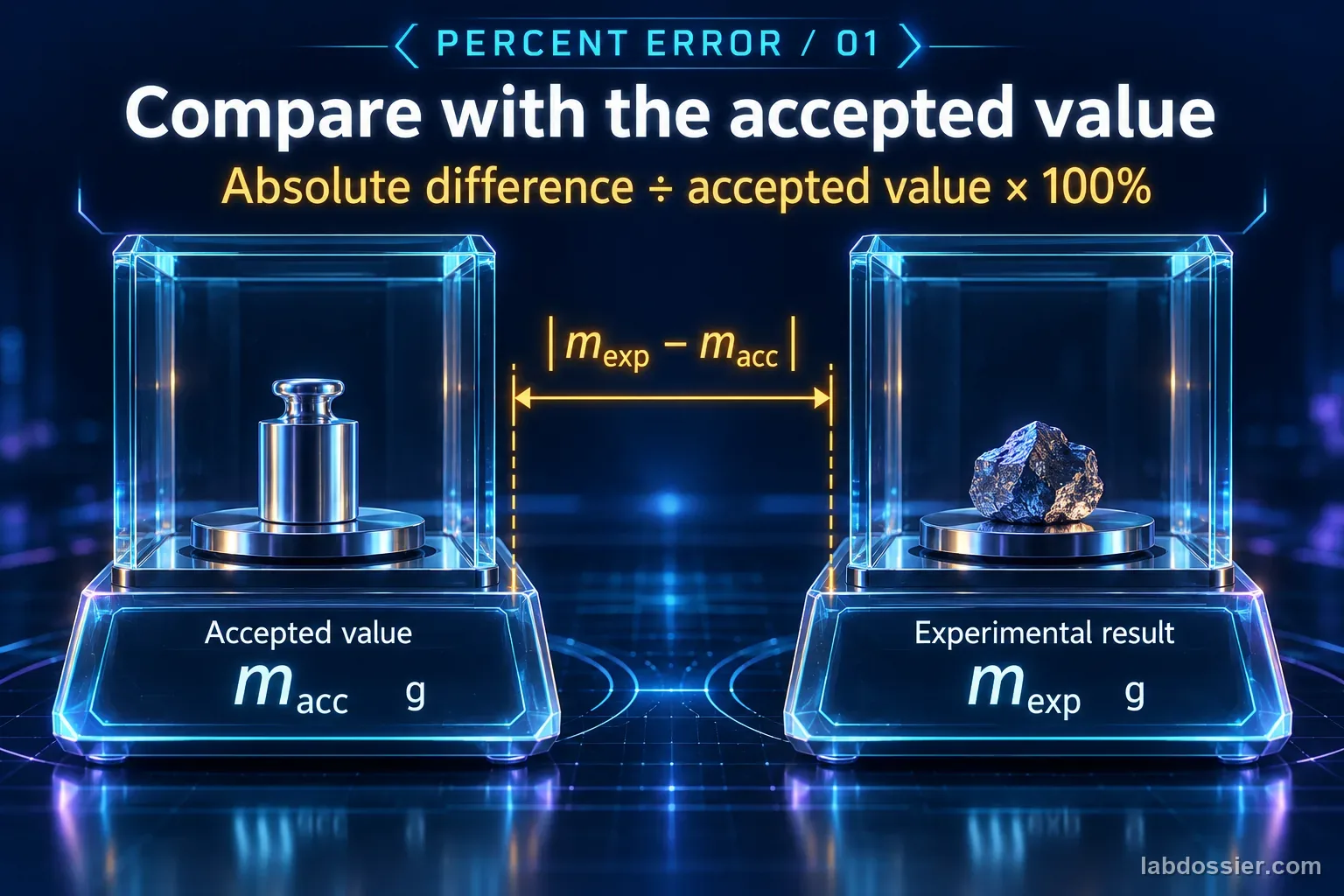
Two holographic balance displays compare an accepted value with an experimental result and mark their absolute difference.
Percent error compares the absolute difference between an experimental and accepted value with the accepted value, then expresses the result as a percentage.
← RETURN TO LESSONLAB DOSSIER / GUIDED VIDEOENGLISH VOICEOVER · CAPTIONS

LAB SKILLS · GRADES 4–8

Find percent error

INVESTIGATION QUESTIONHow does measurement error compare with an accepted value?

● ILLUSTRATIVE SCIENCE MODEL
ENGLISH CAPTIONS

Write experimental and accepted density values using the same units.

0.0 / 3.0 s
01 / SCIENCE

What explains the result?

Percent error compares the absolute difference with an accepted reference value.
02 / EVERYDAY CONNECTION

Where does this matter?

Error calculations help check instrument calibration and experimental methods.

03 / MODEL LIMIT

What should you keep in mind?

An accepted value must be appropriate to the same material, method, and conditions.
Continue to the interactive experiment ↓
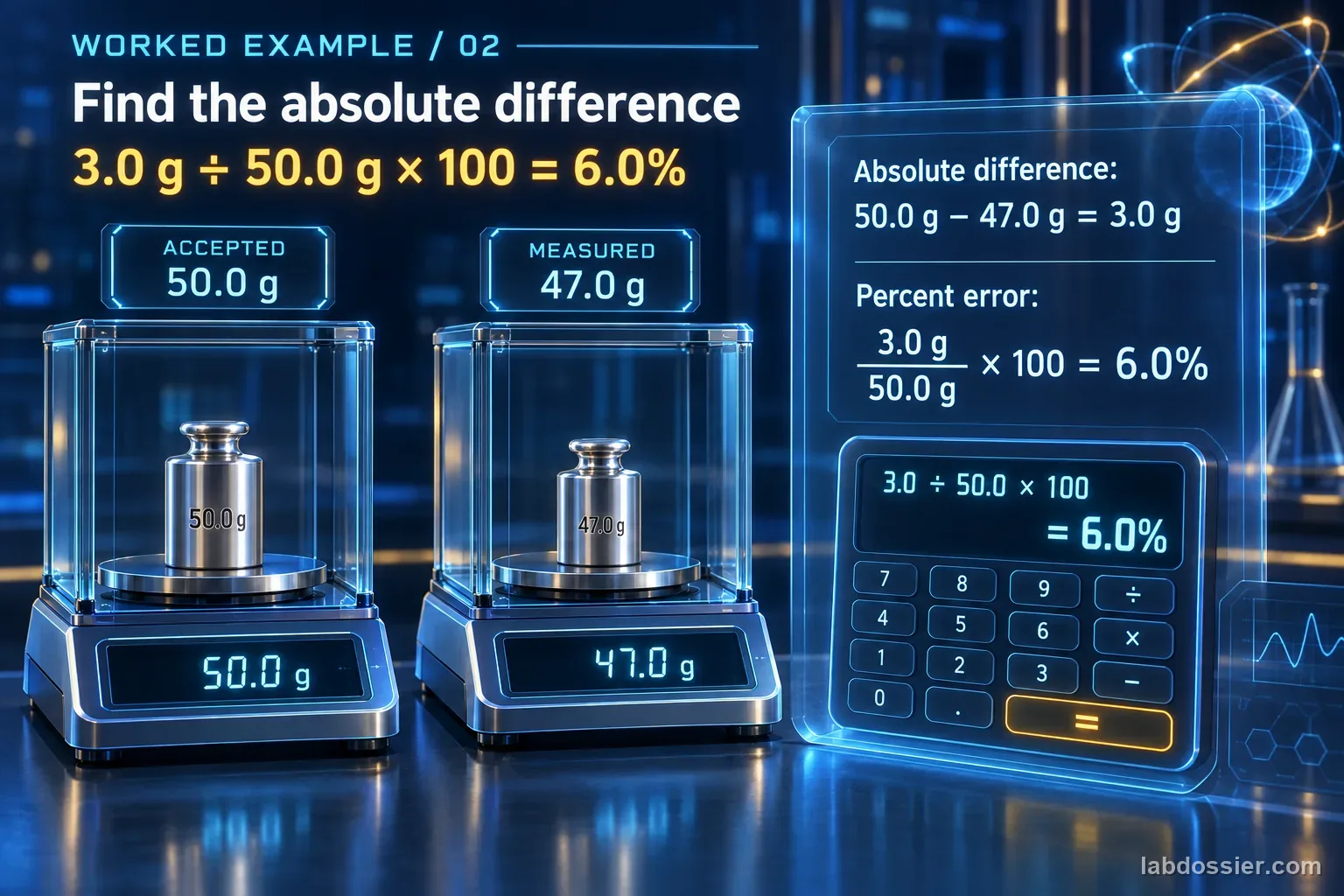
Holographic balances show an accepted mass of 50.0 grams and measured mass of 47.0 grams, leading to a six percent error calculation.
The absolute difference is 3.0 g. Divide it by the accepted value, 50.0 g, then multiply by 100 to get 6.0% percent error.

DEDICATED PRACTICE ROOM · LAB SKILLS

Find percent error

FREE · SELF-PACED · MODEL / PRACTICE DATA
YOUR TASK

How does measurement error compare with an accepted value?
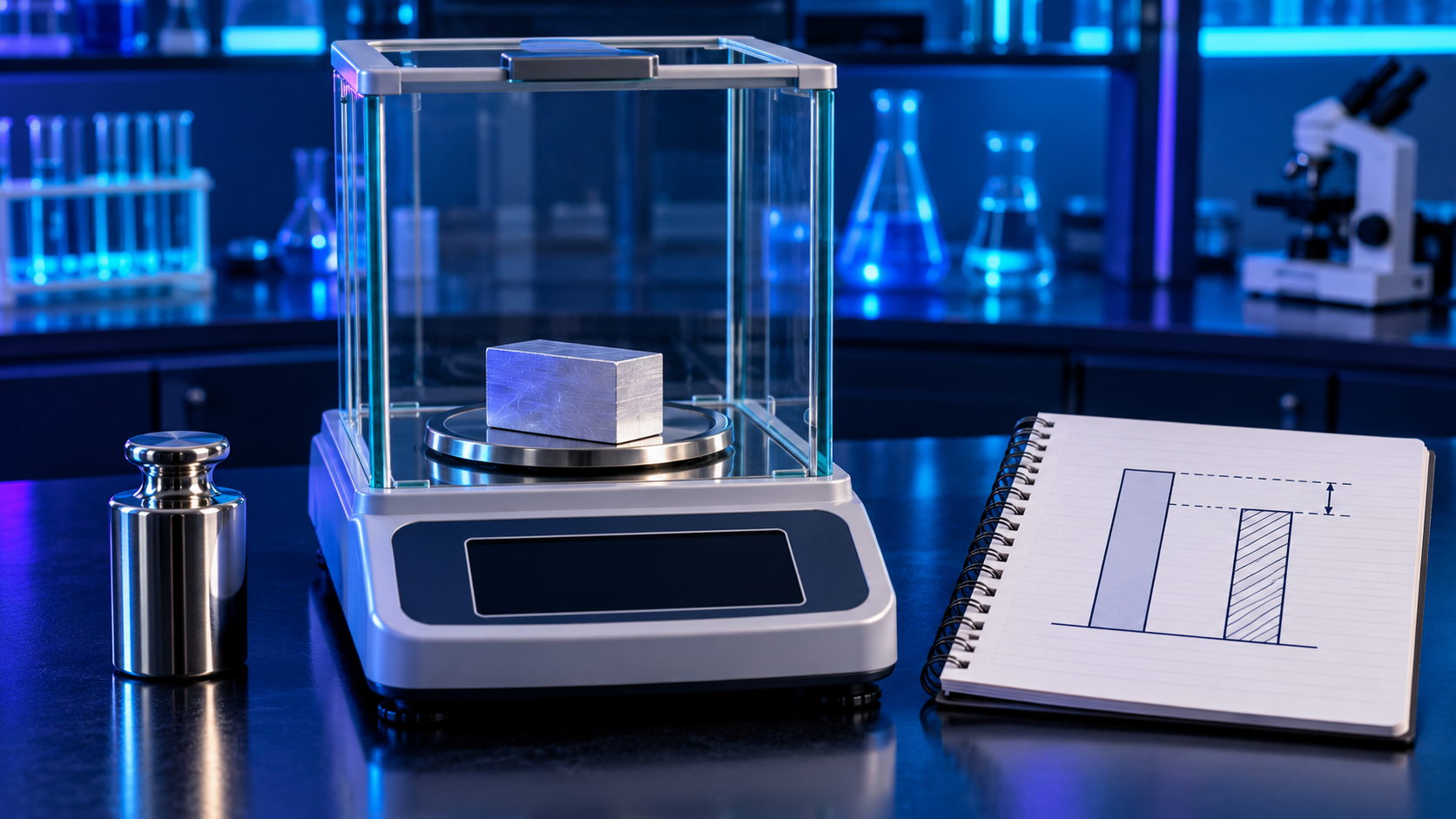
Find percent error: experiment-specific laboratory scene
READ THE BENCH CARD

Calculate the size and direction of measurement error

Compare an experimental measurement with an accepted reference. Show the calculation and state whether the measured value was high or low. An accepted value must be appropriate to the same material, method, and conditions.

MATERIALS / DATABalance reading · Accepted value · Calculator
REFERENCE-VALUE ERROR CHECK
|measured − accepted| ÷ accepted × 100

Use the same unit for both values. Absolute value reports the size of the difference; note “high” or “low” separately for its direction.

WHAT TO TAKE AWAY

Percent error compares the absolute difference with an accepted reference value.

WHERE THIS IS USED

Error calculations help check instrument calibration and experimental methods.

MODEL LIMIT An accepted value must be appropriate to the same material, method, and conditions. The activities on this page do not store classroom measurements.
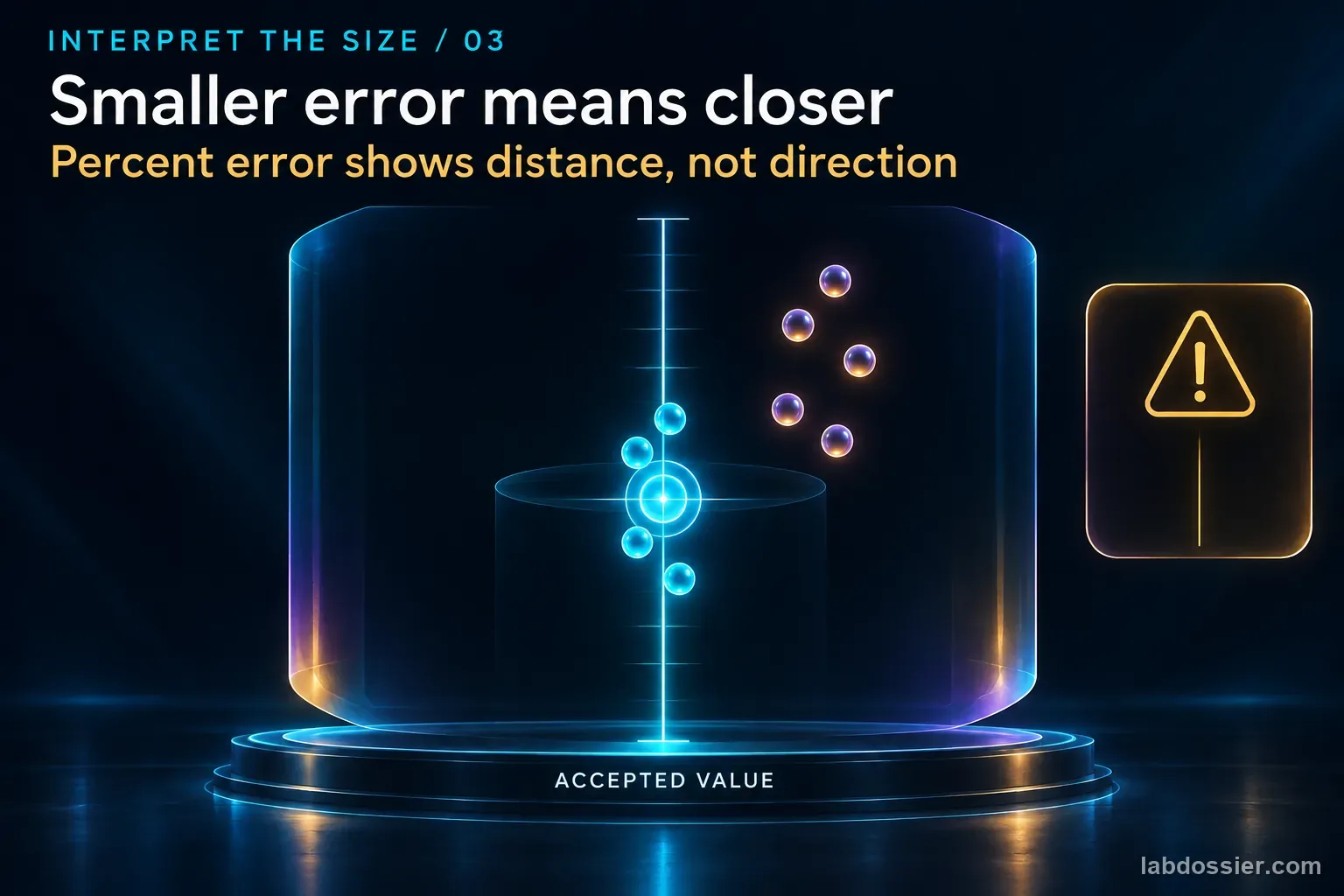
A holographic gauge shows measurement clusters near and far from the accepted-value line beneath a note about error distance.
Percent error describes the size of the difference from an accepted value; by itself, it does not show whether a measurement is high or low.