What explains the result?
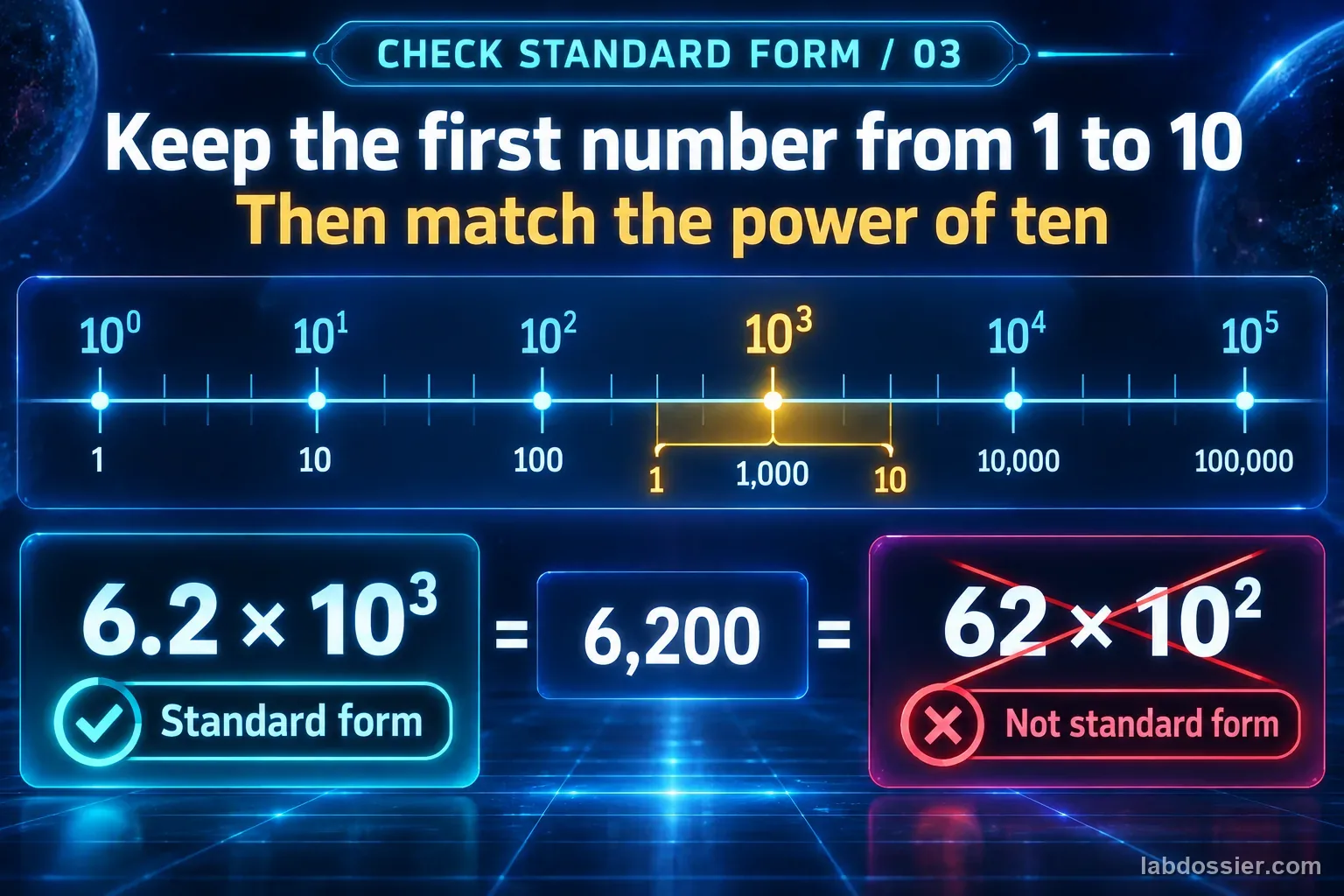
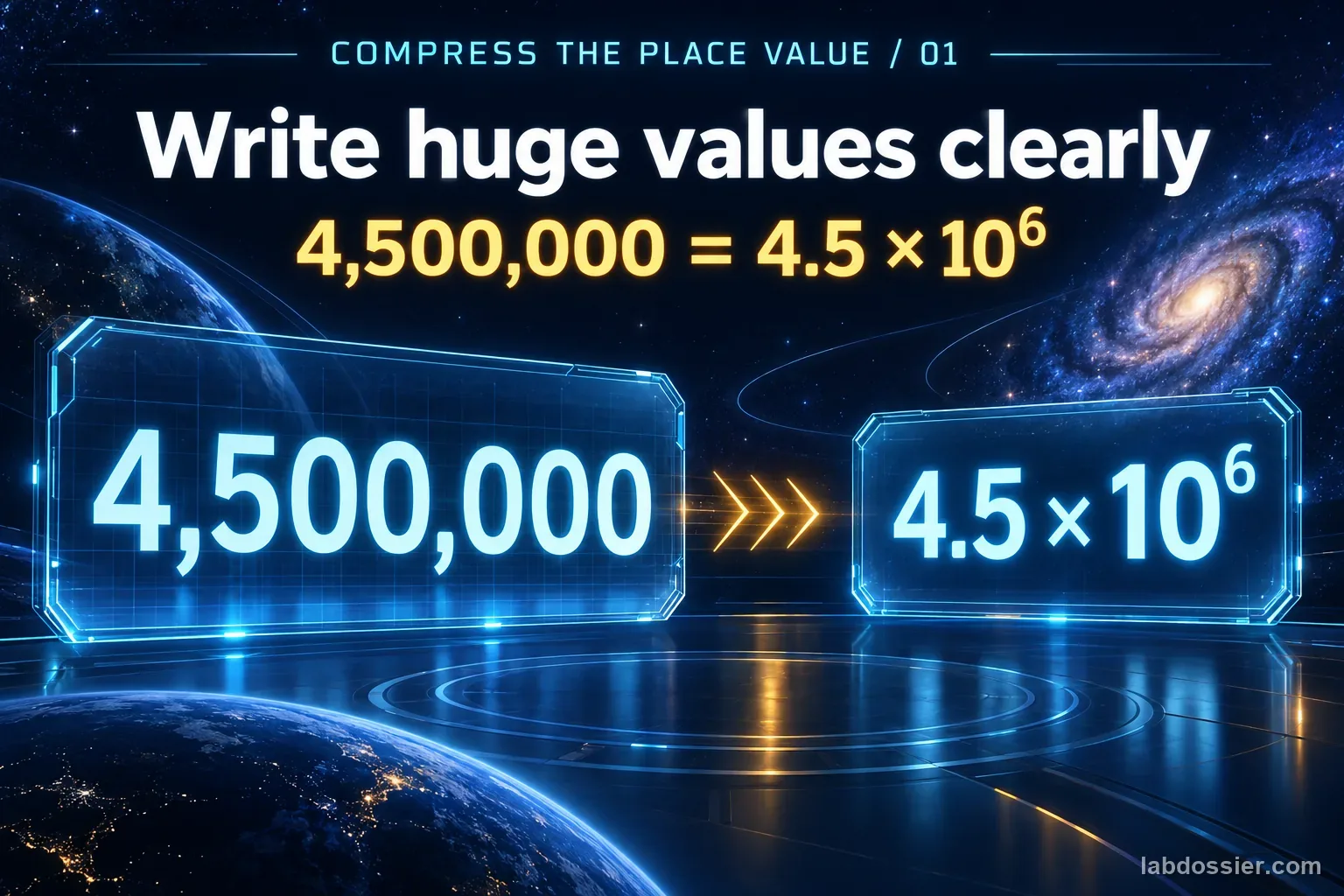
Scientific notation writes a value as a number from 1 up to (but not including) 10 multiplied by a power of ten. The exponent records how far the decimal point moves.
LAB SKILLS · GRADES 6–12
INVESTIGATION QUESTIONHow does notation make very large and very small measurements easier to compare?
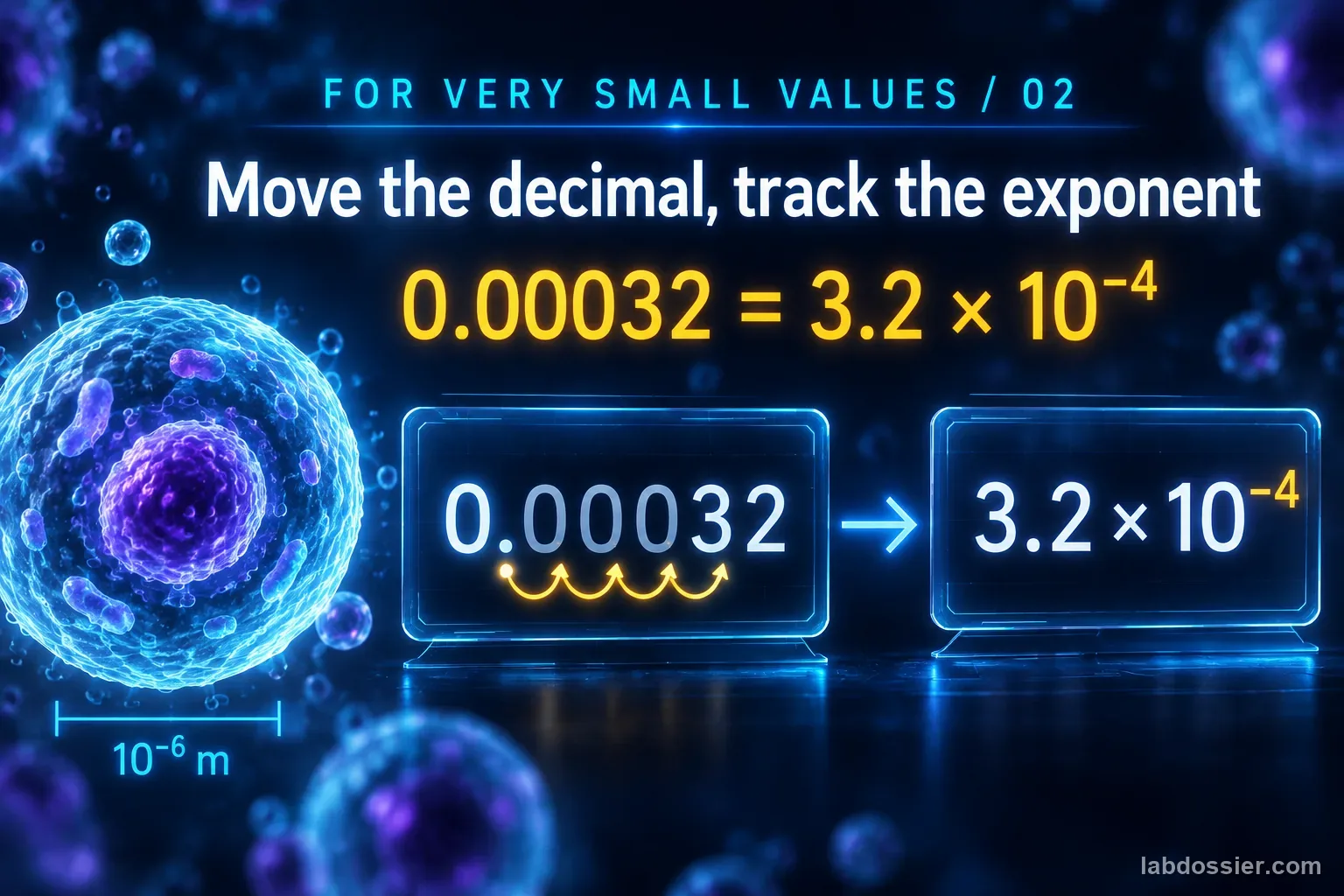
Move the decimal until one nonzero digit remains before it.
Scientific notation writes a value as a number from 1 up to (but not including) 10 multiplied by a power of ten. The exponent records how far the decimal point moves.
Scientists use powers of ten to communicate scales from cells and atoms to planets and distances in space.
Changing notation does not change the measured quantity. Keep significant figures and units consistent when converting.
DEDICATED PRACTICE ROOM · LAB SKILLS
How does notation make very large and very small measurements easier to compare?

Enter a normalized coefficient and exponent for the same measured quantity. A moved decimal must be balanced by its power of ten. Changing notation does not change the measured quantity. Keep significant figures and units consistent when converting.
Keep the value equal: one nonzero digit before the decimal; use the exponent to track decimal moves.
Scientific notation writes a value as a number from 1 up to (but not including) 10 multiplied by a power of ten. The exponent records how far the decimal point moves.
Scientists use powers of ten to communicate scales from cells and atoms to planets and distances in space.
MODEL LIMIT Changing notation does not change the measured quantity. Keep significant figures and units consistent when converting. The activities on this page do not store classroom measurements.