// Field files for grades 2–12Observe. Measure. Explain.
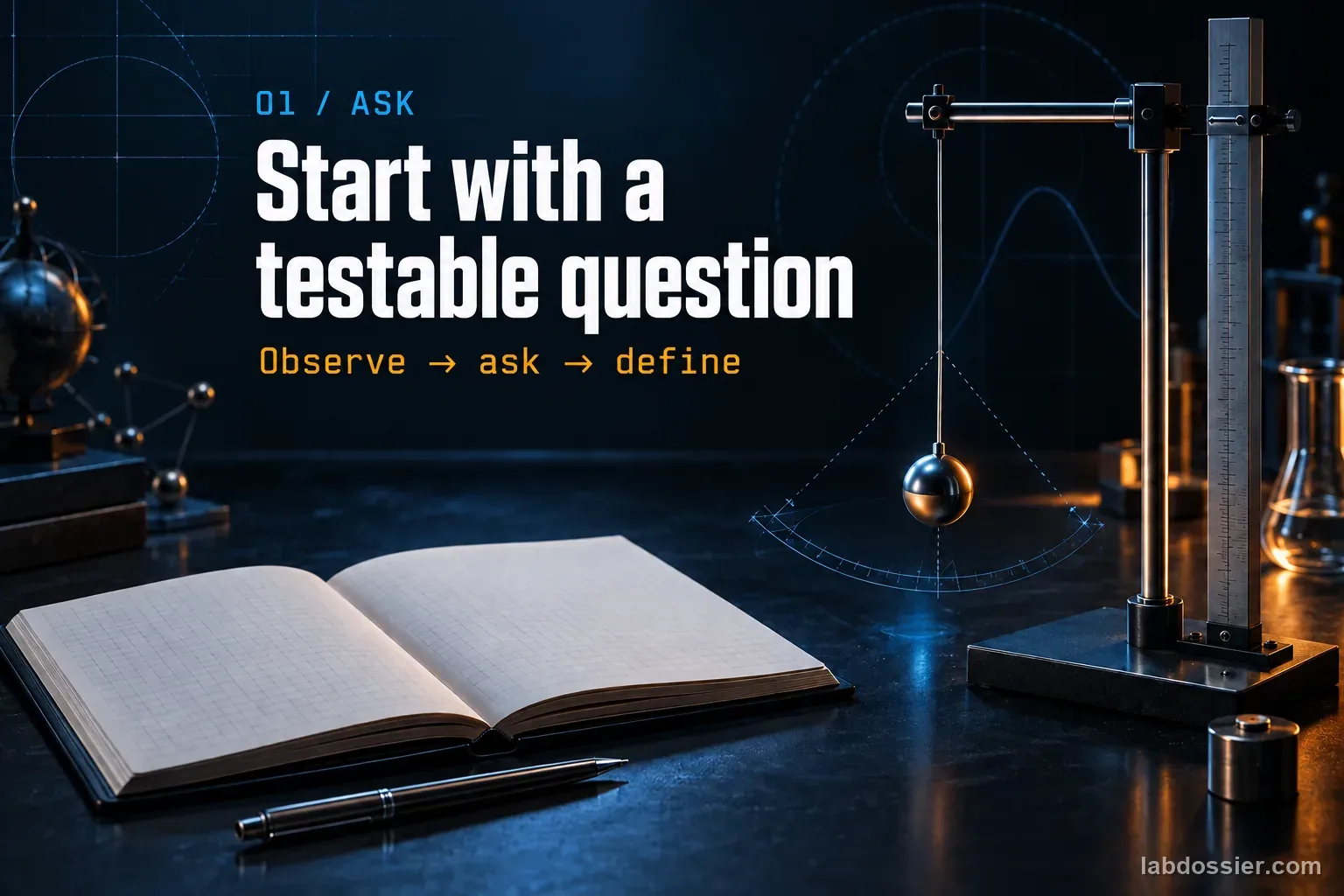
A pendulum beside a measurement notebook represents turning an observation into a testable scientific question.
A focused question connects an observable system with a measurable change, giving the investigation a clear starting point.
← RETURN TO LESSONLAB DOSSIER / GUIDED VIDEOENGLISH VOICEOVER · CAPTIONS

SCIENTIFIC METHOD · GRADES 5–12

Choose the next step in an investigation

INVESTIGATION QUESTIONWhat should a scientist do next when an observation raises a testable question?

● ILLUSTRATIVE SCIENCE MODEL
ENGLISH CAPTIONS

Notice a plant leaning toward a window and ask a testable question.

0.0 / 3.0 s
01 / SCIENCE

What explains the result?

Scientific investigation is iterative: ask a focused question, plan a fair test, collect evidence, interpret it, and communicate or revise.
02 / EVERYDAY CONNECTION

Where does this matter?

A clear sequence helps teams investigate health, ecosystems, materials, and engineering problems without treating one result as proof.

03 / MODEL LIMIT

What should you keep in mind?

Scientists may revisit earlier steps; real investigations are not always a perfectly linear checklist.
Continue to the interactive experiment ↓
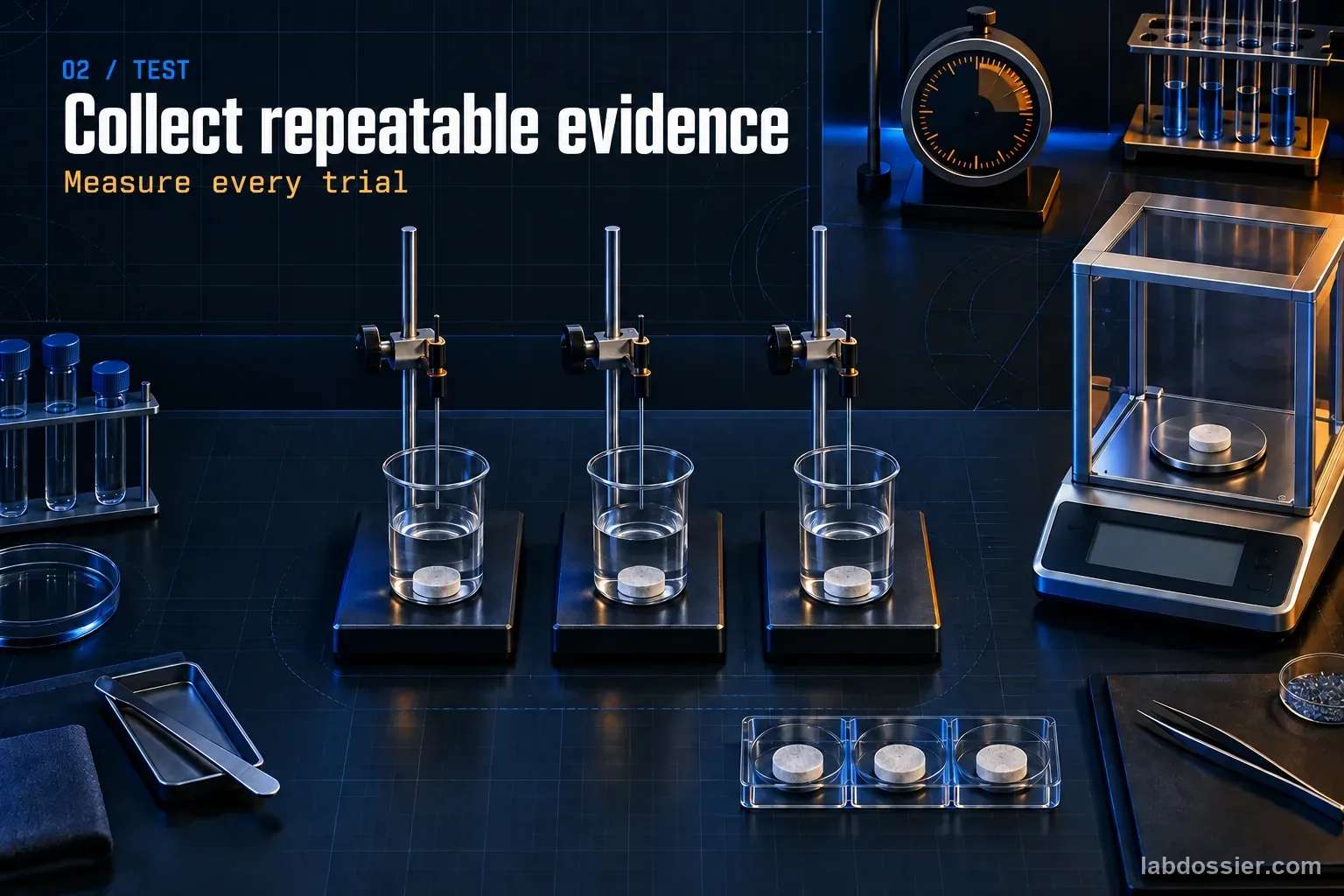
Repeated sample vessels and measurement equipment represent collecting consistent observations across trials.
Use a consistent setup and record every trial so the evidence shows both the pattern and its natural variation.

DEDICATED PRACTICE ROOM · SCIENTIFIC METHOD

Choose the next step in an investigation

FREE · SELF-PACED · MODEL / PRACTICE DATA
YOUR TASK

What should a scientist do next when an observation raises a testable question?
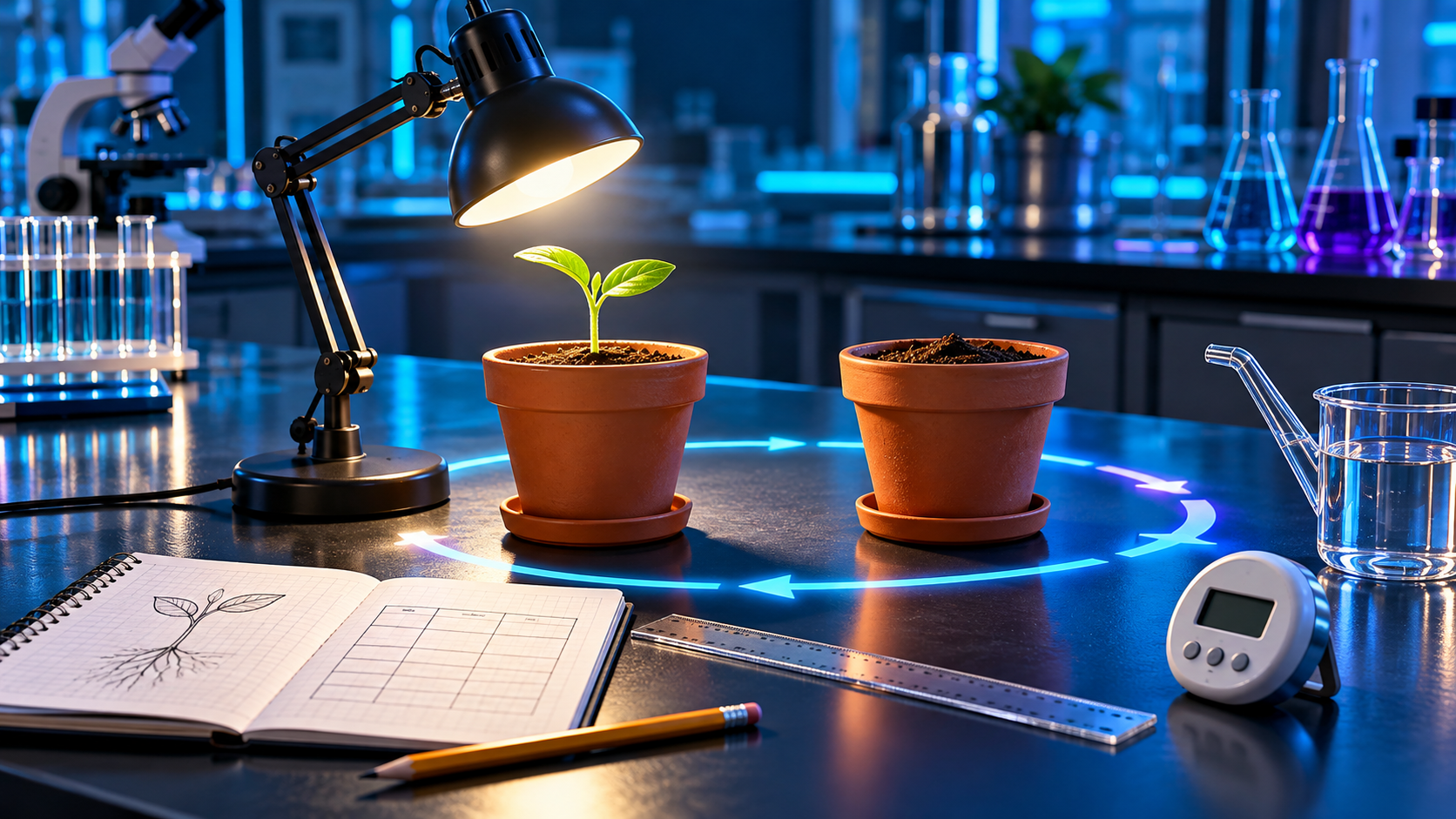
Choose the next step in an investigation: experiment-specific laboratory scene
READ THE BENCH CARD

Choose the next evidence-based step

Respond to the evidence at each checkpoint. The best next step depends on what the team already knows. Scientists may revisit earlier steps; real investigations are not always a perfectly linear checklist.

MATERIALS / DATAObservation card · Question and hypothesis cards · Evidence and revision cards
01Ask a testable question
02Research what is already known
03Write a prediction
04Plan and run a fair test
05Analyze the evidence
06Share the conclusion and revise
EVIDENCE CHECKPOINT 1 / 6 · WHAT NEXT?A plant near the window leans toward the light.
Select the next defensible action
WHAT TO TAKE AWAY

Scientific investigation is iterative: ask a focused question, plan a fair test, collect evidence, interpret it, and communicate or revise.

WHERE THIS IS USED

A clear sequence helps teams investigate health, ecosystems, materials, and engineering problems without treating one result as proof.

MODEL LIMIT Scientists may revisit earlier steps; real investigations are not always a perfectly linear checklist. The activities on this page do not store classroom measurements.
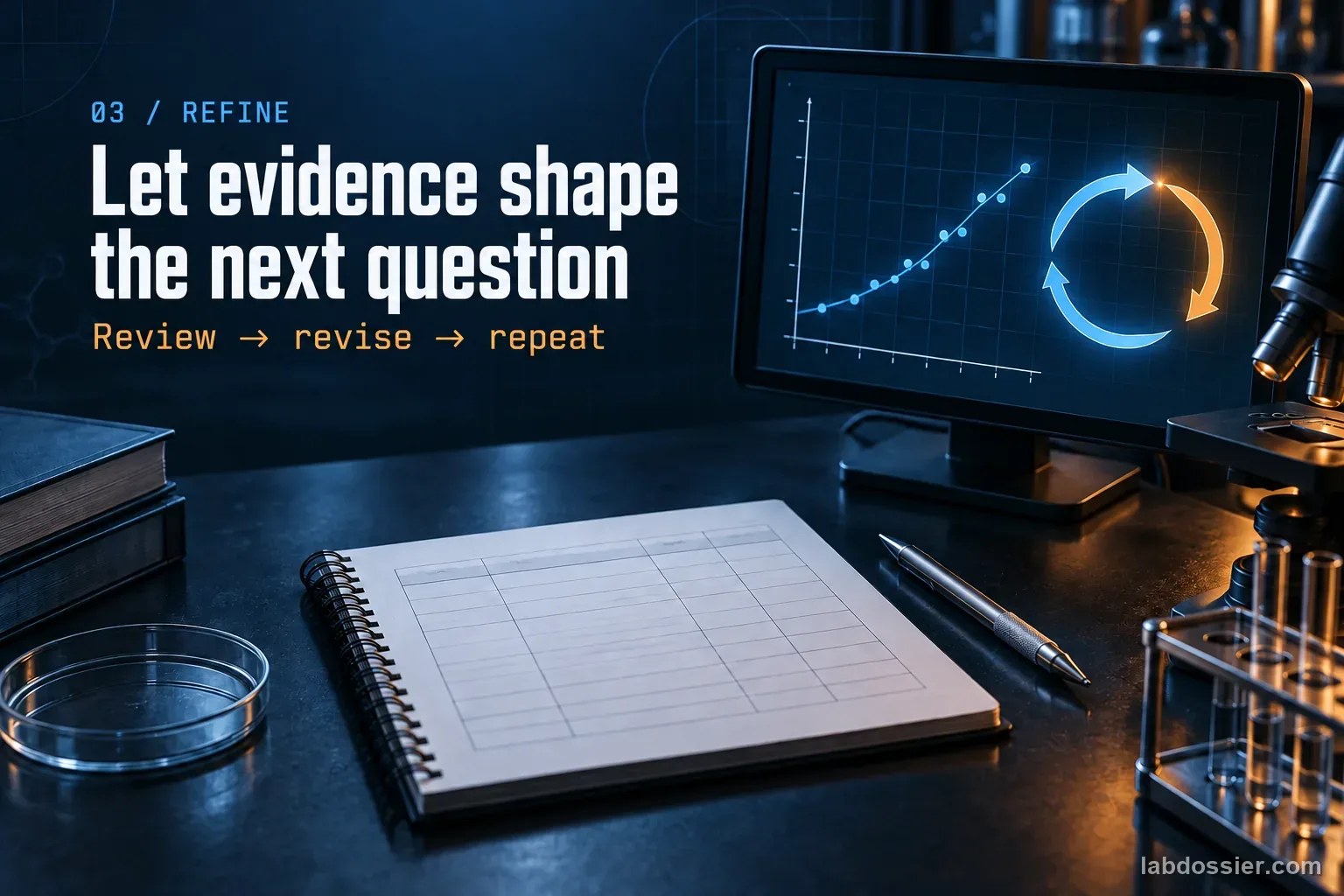
A plotted data pattern and circular arrows show how evidence can revise a scientific explanation and prompt a new question.
Interpret the observed pattern, revise an explanation when needed, and use remaining uncertainty to plan what to investigate next.