What explains the result?
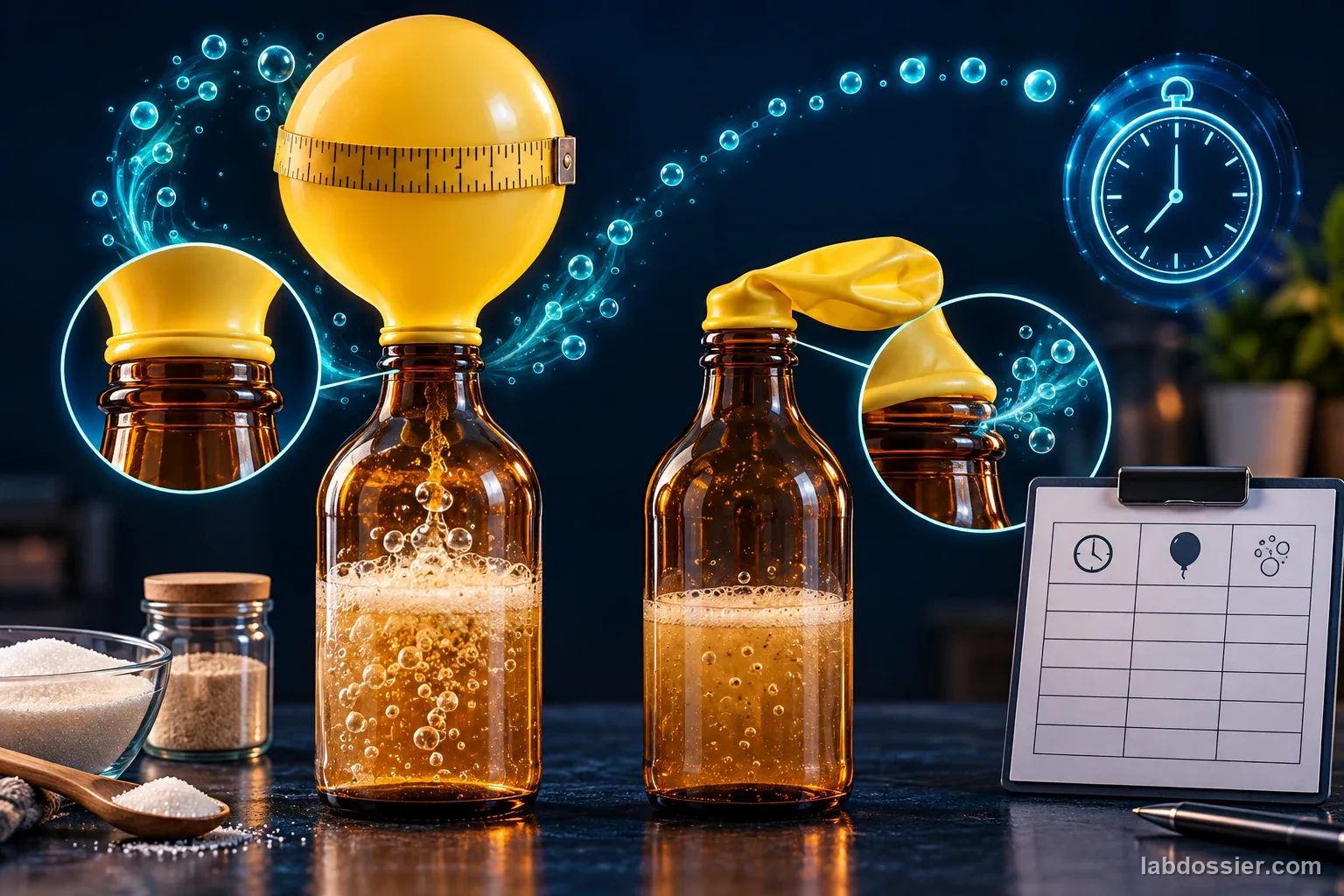
Yeast can use sugar and release carbon dioxide; temperature may affect activity; these illustrative readings do not identify a universal optimum.
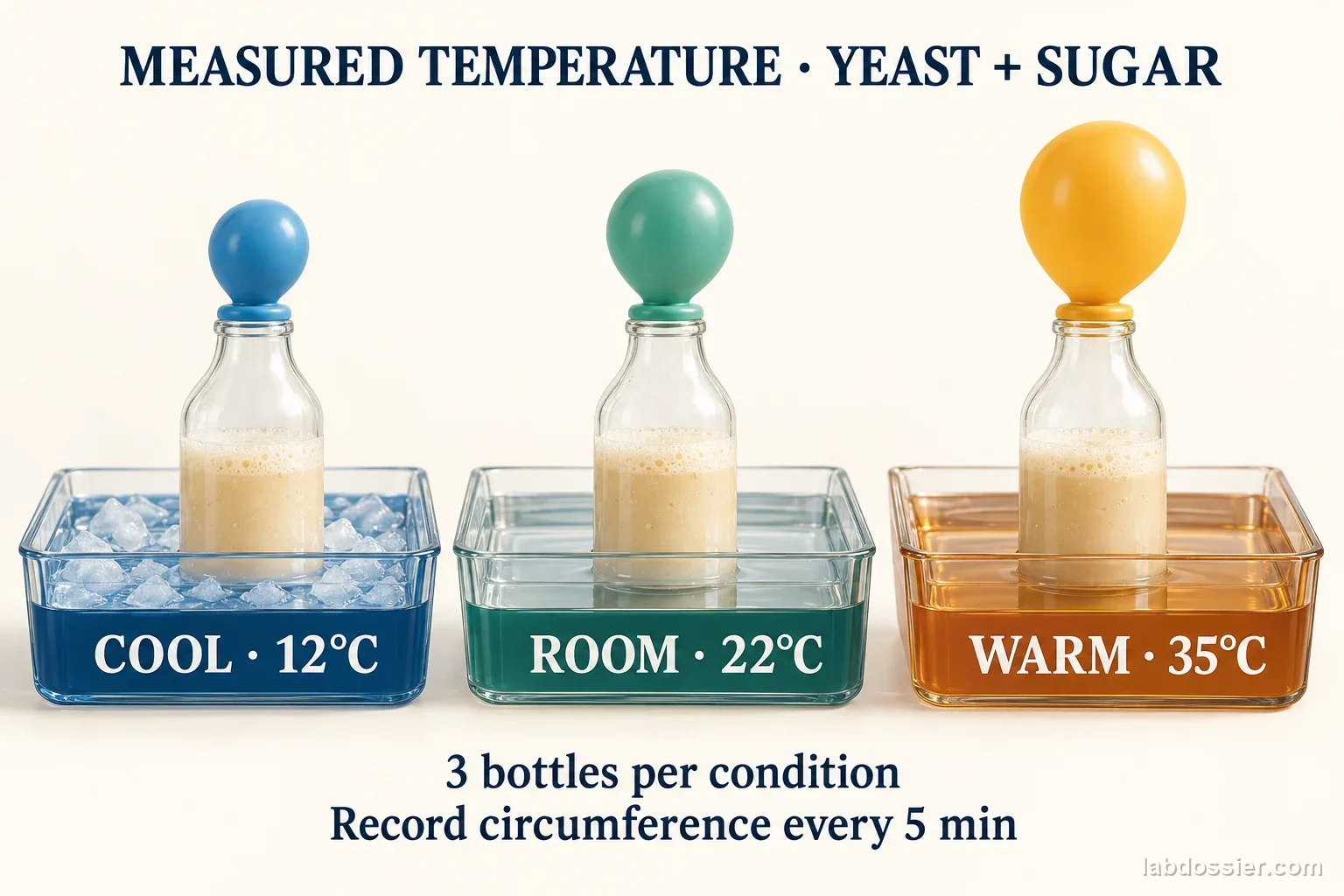
How is the measured starting-water temperature condition associated with balloon circumference over 20 minutes?
Record mixture-water starting temperatures and prepare the shared baths.
Yeast can use sugar and release carbon dioxide; temperature may affect activity; these illustrative readings do not identify a universal optimum.
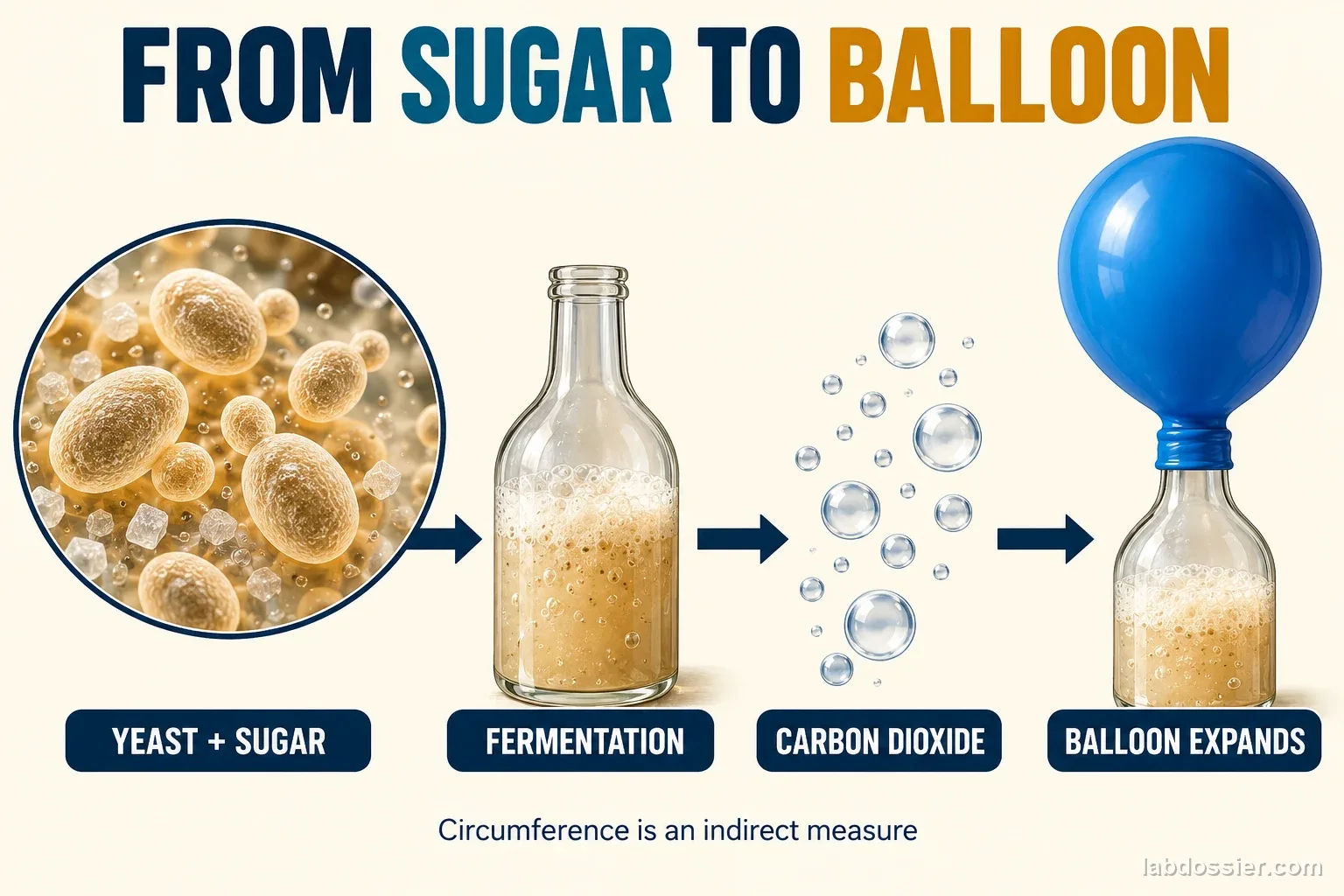
Fermentation makes bread rise and is used to produce foods and fuels.
Lesson readings are illustrative. Record each mixture-water starting temperature and log the shared bath separately; three bottles in one bath are bottle-level repeats, not independent bath runs. Circumference is indirect, rubber stretch is nonlinear, and a loose seal or leak changes readings.
Answer all 4 questions, then press Check.
Answer all 4 questions to unlock the check.
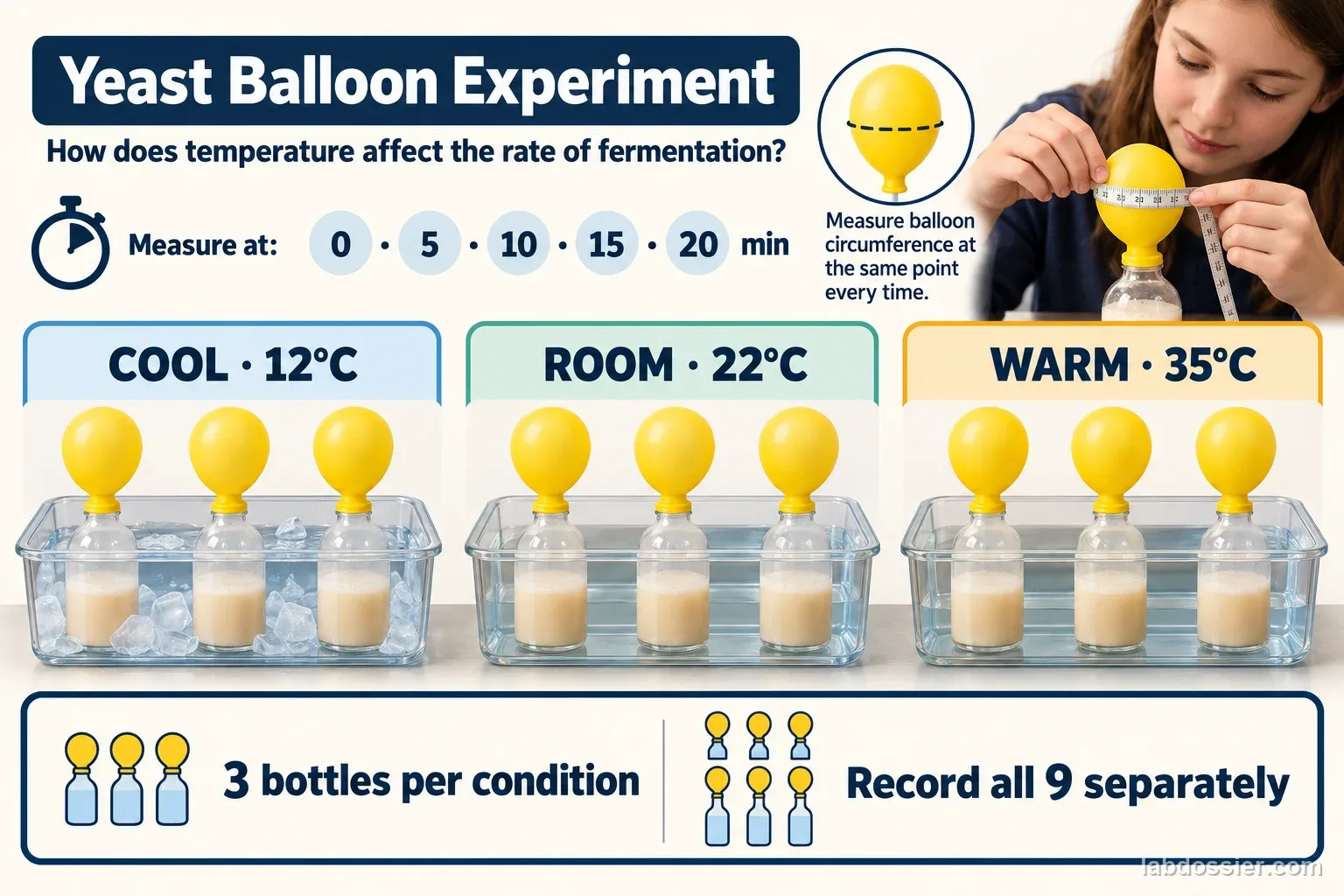
Compare cool water near 12°C, room-temperature water near 22°C, and comfortably warm water near 35°C. These are starting targets for a classroom comparison, not a claim about the best temperature for every yeast strain. Measure each bath with a thermometer and log its actual temperature at the start and during the run.
For every bottle, keep the yeast brand, sugar amount, water volume, bottle size, balloon type, mixing routine, and start time the same. Use adult-prepared warm tap water. Do not use a kettle, stove, hot plate, or boiling water. Check that each balloon fits securely before recording a starting circumference.
The bottle mixture and surrounding bath are different measurements. Write the mixture recipe once, then record each bath reading beside its time point. If a bath warms or cools during the run, keep those readings rather than relabeling the condition by its starting target. Report the measured temperature range with the balloon observations so another class can judge how closely the setups matched.
| Condition | Starting bath target | Bottles | Bath log |
|---|---|---|---|
| Cool | Near 12°C | 3 | 0, 10, 20 min |
| Room | Near 22°C | 3 | 0, 10, 20 min |
| Comfortably warm | Near 35°C | 3 | 0, 10, 20 min |
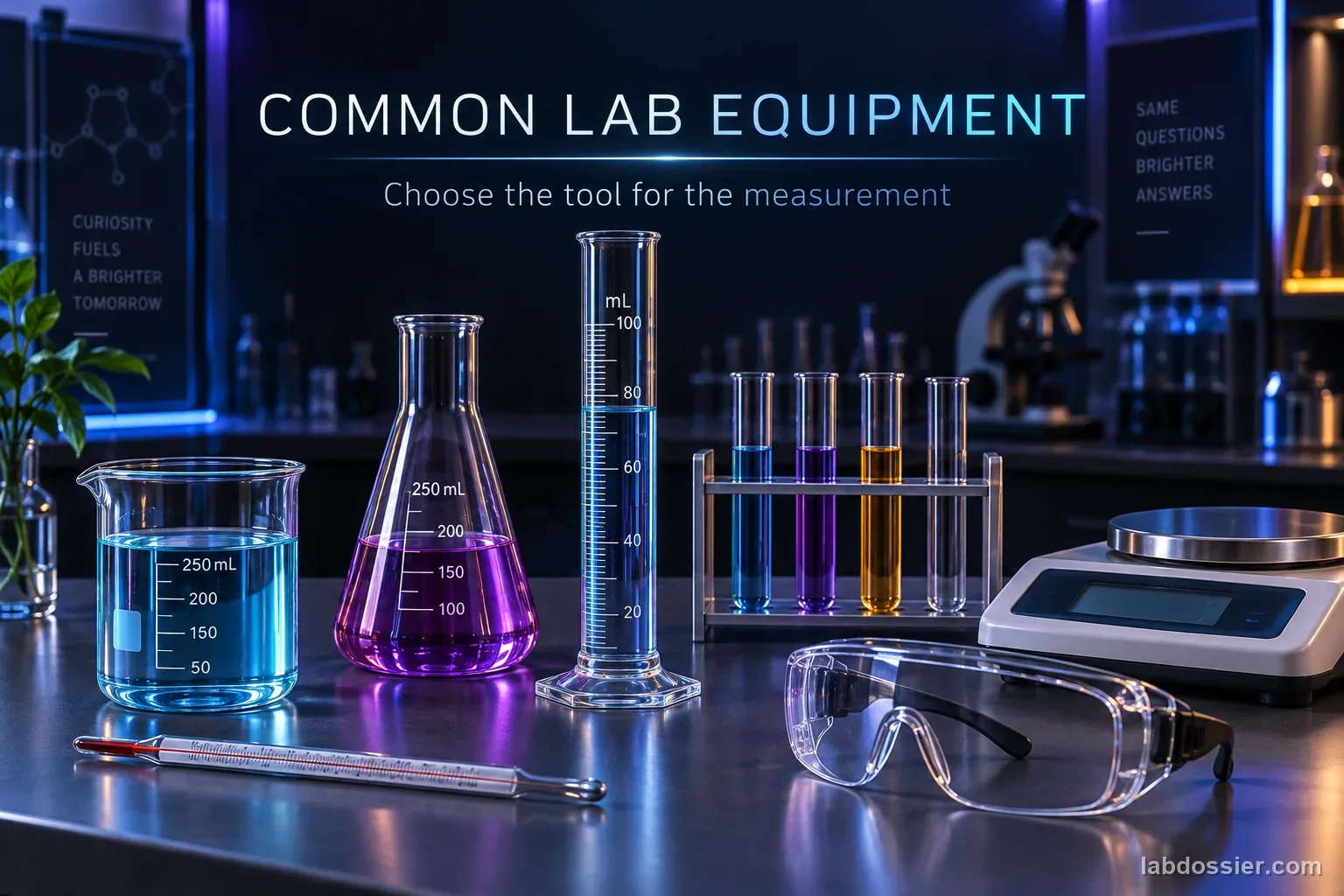
Measure circumference at 0, 5, 10, 15, and 20 minutes. Mark one location on each balloon and use the same flexible tape with gentle, consistent tension. Record each bottle separately rather than writing only the three condition averages. Note bath temperature beside the bottle readings so temperature drift remains visible.
Worked example, illustrative warm-condition readings at 20 minutes: 22 cm, 23 cm, and 24 cm. The mean is (22 + 23 + 24) ÷ 3 = 23 cm, and the range is 24 − 22 = 2 cm. These practice values demonstrate the calculation; they are not expected outcomes. Circumference is an indirect response because balloon shape and rubber stretch vary.
| Bottle | Condition | 0 min | 5 min | 10 min | 15 min | 20 min |
|---|---|---|---|---|---|---|
| C1 | Cool | ___ | ___ | ___ | ___ | ___ |
| C2 | Cool | ___ | ___ | ___ | ___ | ___ |
| R1 | Room | ___ | ___ | ___ | ___ | ___ |
| W1 | Warm | ___ | ___ | ___ | ___ | ___ |
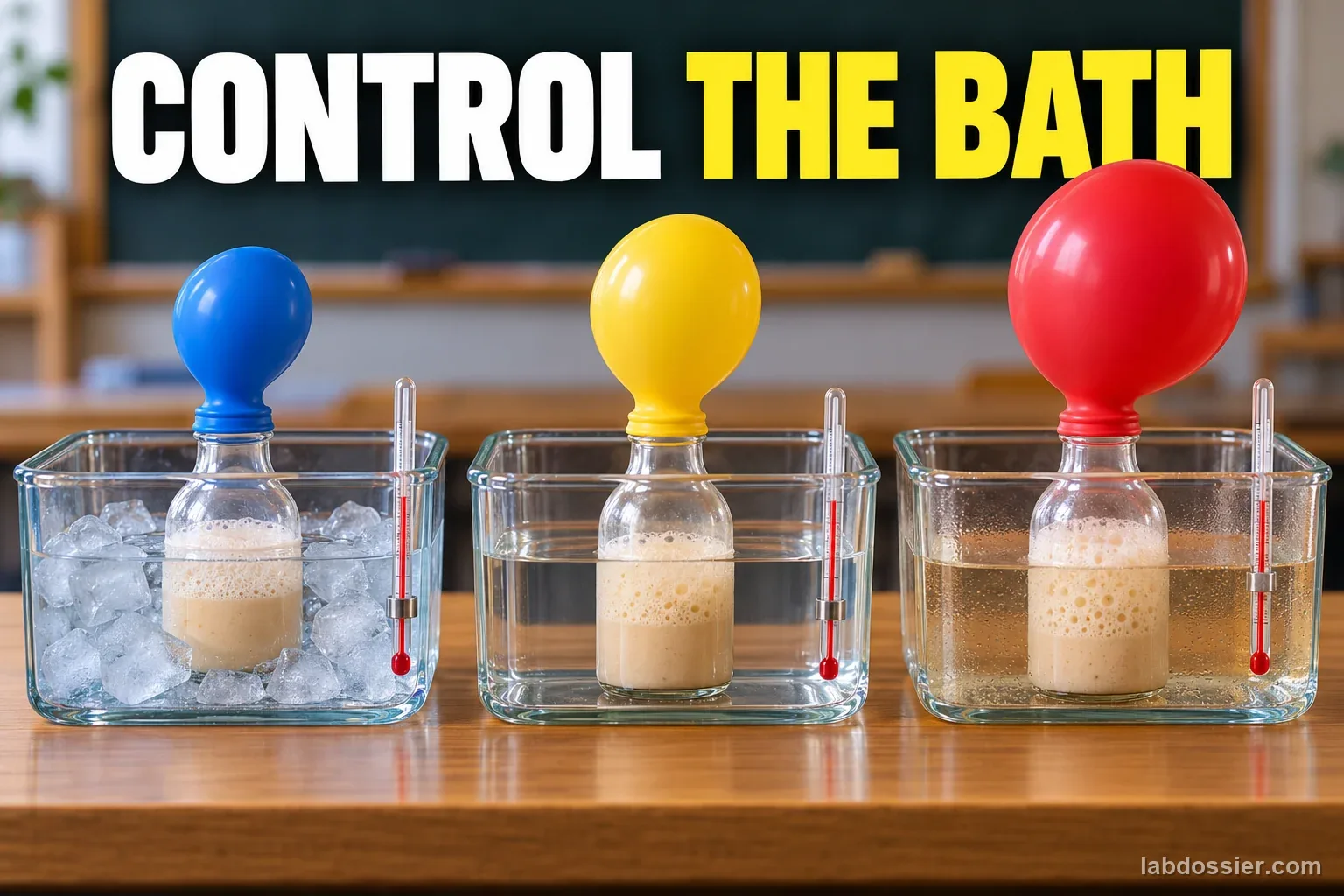
Three bottles placed in one shared bath show bottle-to-bottle variation under that bath setup. They are not three independently prepared temperature conditions. If the question is whether the bath-level result repeats, run the full comparison again with separately prepared baths and keep each run identifiable.
A second worked check compares the condition summaries at one fixed time. If the illustrative cool mean is 15 cm and warm mean is 23 cm, the difference is 8 cm in measured circumference for those example groups. It does not mean the warm bottles produced exactly 8 cm more carbon dioxide; the measurement is not gas volume.
If a balloon slips, a seal leaks, or a bath drifts, record the event beside that bottle and explain how it affects interpretation. Repeat a failed setup only under the class protocol, and keep the original record marked as a setup issue. Do not silently replace a low reading or average a leak with intact bottles as if conditions matched.
Yeast can release carbon dioxide as it metabolizes sugar, and that gas can stretch a balloon. The observed circumference also depends on headspace, seal quality, balloon stiffness, and handling. The experiment compares the tested recipe, temperatures, and 20-minute window. It does not establish a universal optimum.
If none of the balloons changes, first check the seal and starting fit, then confirm the yeast and sugar were added as planned and the bath stayed within its recorded range. Do not respond by changing several ingredients at once. A separate repeat with one documented setup correction can help distinguish a measurement problem from a weak or inactive mixture.
A larger circumference at one time point also does not by itself show a faster gas-production rate. Compare the full time series and note when each bottle began changing. If the curves cross or one bottle starts later, report that pattern instead of selecting only the largest final reading.
If students need to check whether active yeast contributes to the inflation, add a separate bottle with sugar and water but no yeast. Keep that troubleshooting control outside the three-temperature averages so it answers a different question.