Magic milk experiment
01 // Question
How does milk fat percentage relate to the duration and visible intensity of color motion after a measured soap touch?
Compare whole, 2% and skim milk using three fresh trials per type. The pattern may differ, but no milk type is guaranteed to swirl most.
02 // Variables
Independent
Fat content of the milk- Whole milk
- 2% milk
- Skim milk
Dependent
Active color-motion duration and visible pattern intensity- Active-motion seconds until five seconds without visible movement; cap at 60 s and report any capped trial as 60+
- Shared ordinal 1–5 visual rating, anchored to the fraction of the plate crossed by streaks
03 // Hypothesis
IF whole, 2% and skim milk are tested under the same conditions, THEN the mean active-motion time or intensity rating may differ, although the pattern may overlap across trials, BECAUSE soap changes surface conditions and interacts with milk components; fat is one factor among several that shape the flow.
04 // Procedure
1. Set up nine trials plus a control
Label three matching plates each for whole, 2% and skim milk. Prepare one extra whole-milk plate as a no-soap control. Pour 60 mL of the same brand and starting temperature into every plate.
2. Place the same dye drops
Add one drop each of the same three food colors at marked, evenly spaced positions. Leave each plate still before testing.
3. Use a measured soap touch
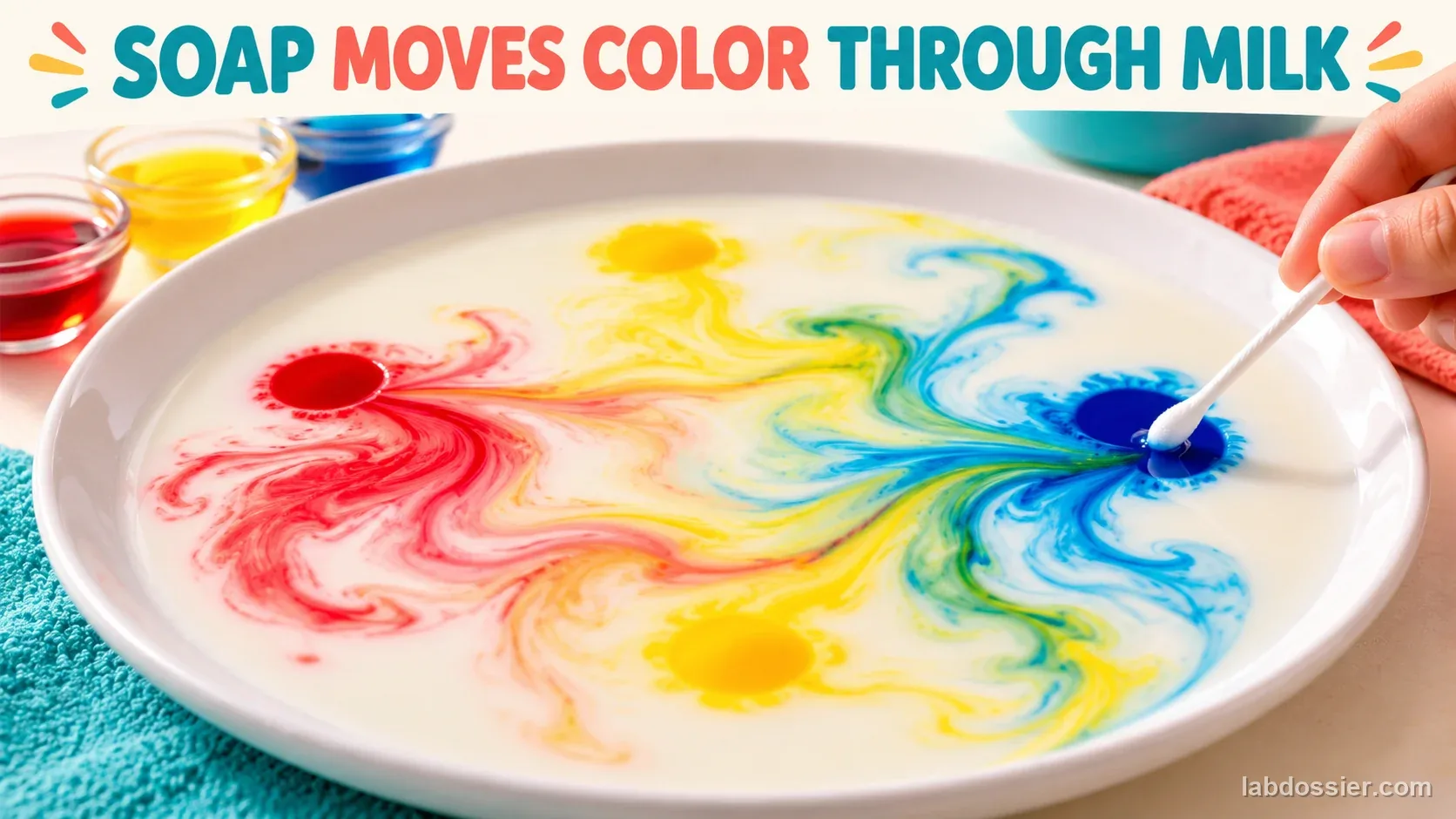
For each plate, put one drop of dish soap on a fresh cotton-swab tip. Touch the center once; do not stir or reuse the swab.
4. Time with one stop rule
Start at contact. Stop when no obvious color movement has continued for 5 seconds, or record 60+ seconds if movement continues to the one-minute cap. If any trial reaches the cap, report the capped count and raw times instead of calculating a time mean or range.
5. Keep all nine records
Use the same visual scale for every plate: 1 = no streaking beyond the drops; 2 = short streaks near the swab; 3 = streaks cross about one-third of the plate; 4 = about two-thirds; 5 = most of the plate. Compare time means/ranges only when all three trials stop before 60 seconds. For the ordinal 1–5 ratings, keep the three scores and compare their distribution or median; do not calculate a mean score. The rating describes visible spread, not fat content.
Materials // Prepare the bench
- Whole, 2% and skim milk from the same brand
- 10 identical shallow plates
- food coloring
- dish soap
- 10 fresh cotton swabs
- dropper
- timer
- allergy-safe eye protection
- paper towels and spill tray
05 // Data table
| Milk type | Active-motion times (s; 60+ if needed) | Pattern scores (1–5) | Mean time · range (only if no trial reaches cap) |
|---|---|---|---|
| Whole | 1 ____ · 2 ____ · 3 ____ | 1 ____ · 2 ____ · 3 ____ | ____ s · ____ s |
| 2% | 1 ____ · 2 ____ · 3 ____ | 1 ____ · 2 ____ · 3 ____ | ____ s · ____ s |
| Skim | 1 ____ · 2 ____ · 3 ____ | 1 ____ · 2 ____ · 3 ____ | ____ s · ____ s |
06 // What to expect
Compare the three raw times, mean and range for each milk type. A broad range or overlapping scores means the result is not a clear separation under this classroom method. The reviewed Science Demonstrations page suggests comparing whole, 2% and skim milk but gives no repeated measurement method. Turku's classroom write-up reports rapid, shorter-lived motion with 2% milk and a different pattern after adding cream. A family activity also reports faster color movement in 2% milk than cream, but changes in setup and added soap/color make that an anecdotal observation, not an isolated fat test. These mixed examples are why this lesson avoids promising a winner.
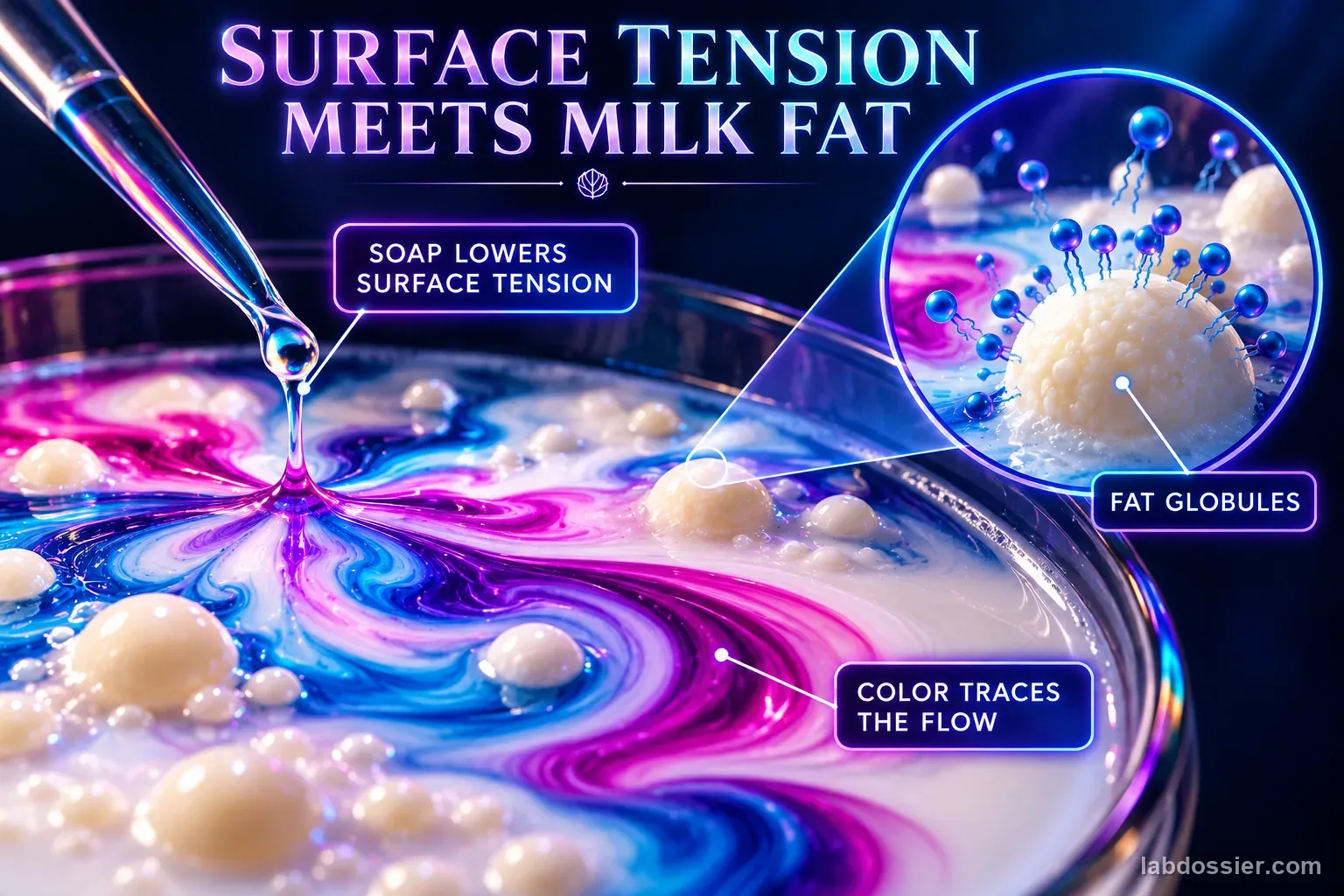
Dish soap is a surfactant that changes surface tension and interacts with milk components; the spreading surface flow carries the food dye. The dye is a tracer, not evidence that colored substances formed or that fat molecules were directly measured. Plate geometry, milk depth and temperature, dye size, contact force and soap quantity can all alter the pattern.
07 // Lab notes
- Use exactly one drop of soap on each fresh swab. Do not compare a saturated swab in one trial with a barely wet swab in another.
- Let every plate sit for the same short interval after adding dye; movement before contact makes the starting pattern unfair.
- Check dairy and food-coloring sensitivities, wear eye protection, keep the materials away from mouths, and discard all tested milk.
08 // Remember
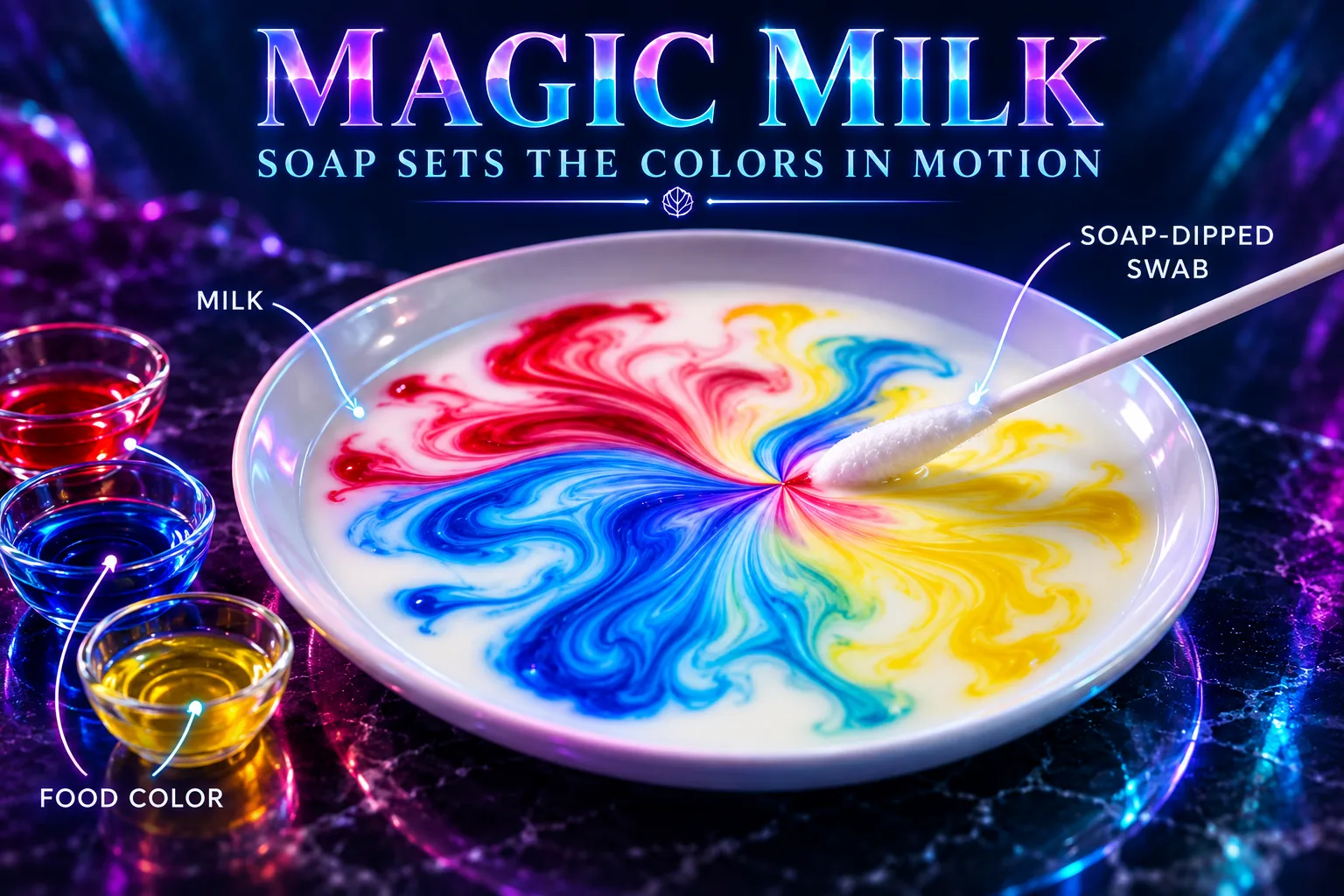
Color traces fluid movement at the surface. Soap changes surface conditions and interacts with milk fats.
09 // Run nine matched milk trials
Label three identical level plates for each milk type: whole, 2%, and skim. Use milk of the same brand and starting temperature when possible. Measure 60 mL into each plate. Add one drop each of the same three food colors at marked, evenly spaced positions; leave each plate undisturbed for the same short wait. Prepare one additional whole-milk plate as a no-soap comparison and touch it with a clean, dry swab.
For every milk trial, put exactly one drop of dish soap on a fresh swab. Touch once at the center and start the timer at contact; do not stir, press, or reuse swabs. Stop when no obvious color movement has continued for five seconds. If movement continues at one minute, record 60+ seconds. Rate the pattern with the same anchored 1–5 scale for all plates, then retain each raw result and calculate each milk type's mean and range.
10 // Use a rating scale and read the data carefully
Agree on the score before testing: 1 = no visible streaking beyond the dye drops; 2 = short streaks near the contact point; 3 = streaks cross about one-third of the plate; 4 = streaks cross about two-thirds; 5 = vigorous streaks reach most of the plate. Use the same plate boundary and lighting each time. A fixed overhead video can help students settle close scores, but it does not remove all judgement.
Compare the three times, mean and range for each milk. A wide range or strongly overlapping scores means the evidence is inconclusive under this classroom method. The reviewed Science Demonstrations page suggests comparing whole, 2% and skim milk but does not specify repeated measurement. Turku reports rapid, shorter-lived motion with 2% milk and a different result after adding cream. A family activity reports another 2%-versus-cream pattern, but changes setup and adds more soap and color, so it cannot isolate fat percentage. These examples do not establish a universal fat-to-swirl ranking; do not claim whole milk must win.
11 // Explain the surface motion without overclaiming
Dish soap is a surfactant. It changes surface tension and interacts with milk components; as the soap spreads, fluid motion carries the food coloring. The dye is a tracer of flow, not proof that the color chemically reacted or that fat molecules broke apart. The demonstration makes surface movement visible but does not show individual molecules directly.
Temperature, milk depth, plate shape, starting dye spread, soap-drop size, swab contact and lighting can all affect results. If you extend the investigation, change only one factor such as soap amount and start a new set of matched trials. Check dairy and food-coloring sensitivities, wear eye protection, protect clothing and the work surface, keep materials away from mouths, and discard all tested milk.
12 // Questions people ask
Why does dish soap make the colors move in milk?
Soap changes conditions at the milk surface and interacts with milk components. The fluid motion carries the food coloring, which acts as a visible tracer.
How should I compare the milk types?
Use three fresh plates per type, matched 60 mL portions, identical dye drops, one soap drop and the same contact point. Calculate time mean/range only if all three trials stop before the 60-second cap; otherwise report the capped count and raw times. Keep all three ordinal scores and compare their distribution or median rather than averaging the ratings.
What do the 1–5 color-motion scores mean?
Use one shared visual scale: 1 = no streaking beyond the dye drops; 2 = short streaks near the swab; 3 = streaks cross about one-third of the plate; 4 = about two-thirds; 5 = most of the plate. Keep the plate size and viewing angle consistent. The score describes visible spread and is not a measurement of milk-fat content.
Why use three trials for each milk type?
The swirl can vary with small differences in soap contact or plate conditions. Repeats show whether one dramatic result is typical; overlapping results may mean the classroom method cannot distinguish the types clearly.
Is the magic milk experiment a chemical reaction?
The visible swirl is mainly fluid movement caused by changes in surface tension and interactions between surfactant and milk components. This classroom observation does not demonstrate new substances being formed.
13 // Keep going
Can you explain the investigation?
Magic milk experiment · Student Data Sheet
Question: How does milk fat percentage relate to the duration and visible intensity of color motion after a measured soap touch?
Hypothesis: If whole, 2% and skim milk are tested under the same conditions, then the mean active-motion time or intensity rating may differ, although the pattern may overlap across trials, because soap changes surface conditions and interacts with milk components; fat is one factor among several that shape the flow.
Materials
- Whole, 2% and skim milk from the same brand
- 10 identical shallow plates
- food coloring
- dish soap
- 10 fresh cotton swabs
- dropper
- timer
- allergy-safe eye protection
- paper towels and spill tray
Safety before starting
- Check for dairy or food-coloring allergies before setup. Do not drink or eat the milk after soap or test materials have touched it.
- Wear eye protection. Use one small drop of dish soap per test swab, keep it away from eyes, and wipe milk spills promptly to prevent a slippery surface.
Lab notes
- Use exactly one drop of soap on each fresh swab. Do not compare a saturated swab in one trial with a barely wet swab in another.
- Let every plate sit for the same short interval after adding dye; movement before contact makes the starting pattern unfair.
- Check dairy and food-coloring sensitivities, wear eye protection, keep the materials away from mouths, and discard all tested milk.
Variables
Independent: Fat content of the milk · Dependent: Active color-motion duration and visible pattern intensity
Keep constant: same milk brand and starting temperature · 60 mL in identical level plates · same three dye drops and spacing · one measured soap drop on a fresh swab · same center contact and timing rule
Procedure
- Set up nine trials plus a control: Label three matching plates each for whole, 2% and skim milk. Prepare one extra whole-milk plate as a no-soap control. Pour 60 mL of the same brand and starting temperature into every plate.
- Place the same dye drops: Add one drop each of the same three food colors at marked, evenly spaced positions. Leave each plate still before testing.
- Use a measured soap touch: For each plate, put one drop of dish soap on a fresh cotton-swab tip. Touch the center once; do not stir or reuse the swab.
- Time with one stop rule: Start at contact. Stop when no obvious color movement has continued for 5 seconds, or record 60+ seconds if movement continues to the one-minute cap. If any trial reaches the cap, report the capped count and raw times instead of calculating a time mean or range.
- Keep all nine records: Use the same visual scale for every plate: 1 = no streaking beyond the drops; 2 = short streaks near the swab; 3 = streaks cross about one-third of the plate; 4 = about two-thirds; 5 = most of the plate. Compare time means/ranges only when all three trials stop before 60 seconds. For the ordinal 1–5 ratings, keep the three scores and compare their distribution or median; do not calculate a mean score. The rating describes visible spread, not fat content.
Record your observations
| Milk type | Active-motion times (s; 60+ if needed) | Pattern scores (1–5) | Mean time · range (only if no trial reaches cap) |
|---|---|---|---|
Answer key and expected pattern
Compare the three raw times, mean and range for each milk type. A broad range or overlapping scores means the result is not a clear separation under this classroom method. The reviewed Science Demonstrations page suggests comparing whole, 2% and skim milk but gives no repeated measurement method. Turku's classroom write-up reports rapid, shorter-lived motion with 2% milk and a different pattern after adding cream. A family activity also reports faster color movement in 2% milk than cream, but changes in setup and added soap/color make that an anecdotal observation, not an isolated fat test. These mixed examples are why this lesson avoids promising a winner.
Dish soap is a surfactant that changes surface tension and interacts with milk components; the spreading surface flow carries the food dye. The dye is a tracer, not evidence that colored substances formed or that fat molecules were directly measured. Plate geometry, milk depth and temperature, dye size, contact force and soap quantity can all alter the pattern.
Remember: Color traces fluid movement at the surface. Soap changes surface conditions and interacts with milk fats.