Mentos and soda geyser
01 // Question
How does the number of Mentos dropped into a bottle of soda change the height of the eruption?
A testable question names one thing you change (number of candies) and one thing you measure (eruption height).
02 // Variables
Independent
Number of Mentos candies- 2 candies
- 4 candies
- 6 candies
Dependent
Height of the eruption- Peak height in inches, read against a marked backdrop
03 // Hypothesis
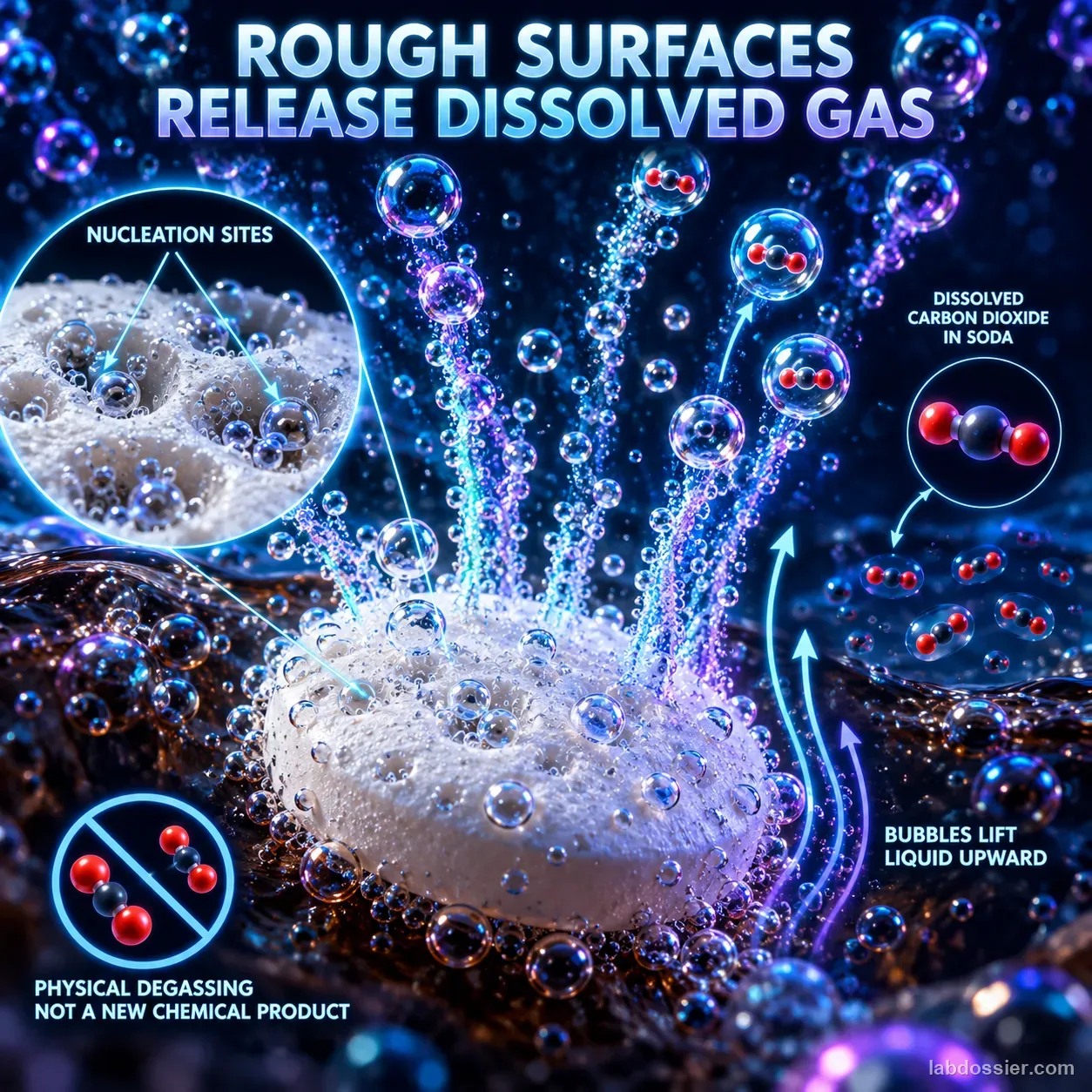
IF more Mentos candies are dropped into a bottle of soda at once, THEN the eruption may reach a greater height, BECAUSE each candy's rough, pitted surface gives dissolved carbon dioxide more places to rapidly form bubbles, and more candies create more of those release sites at once.
04 // Procedure
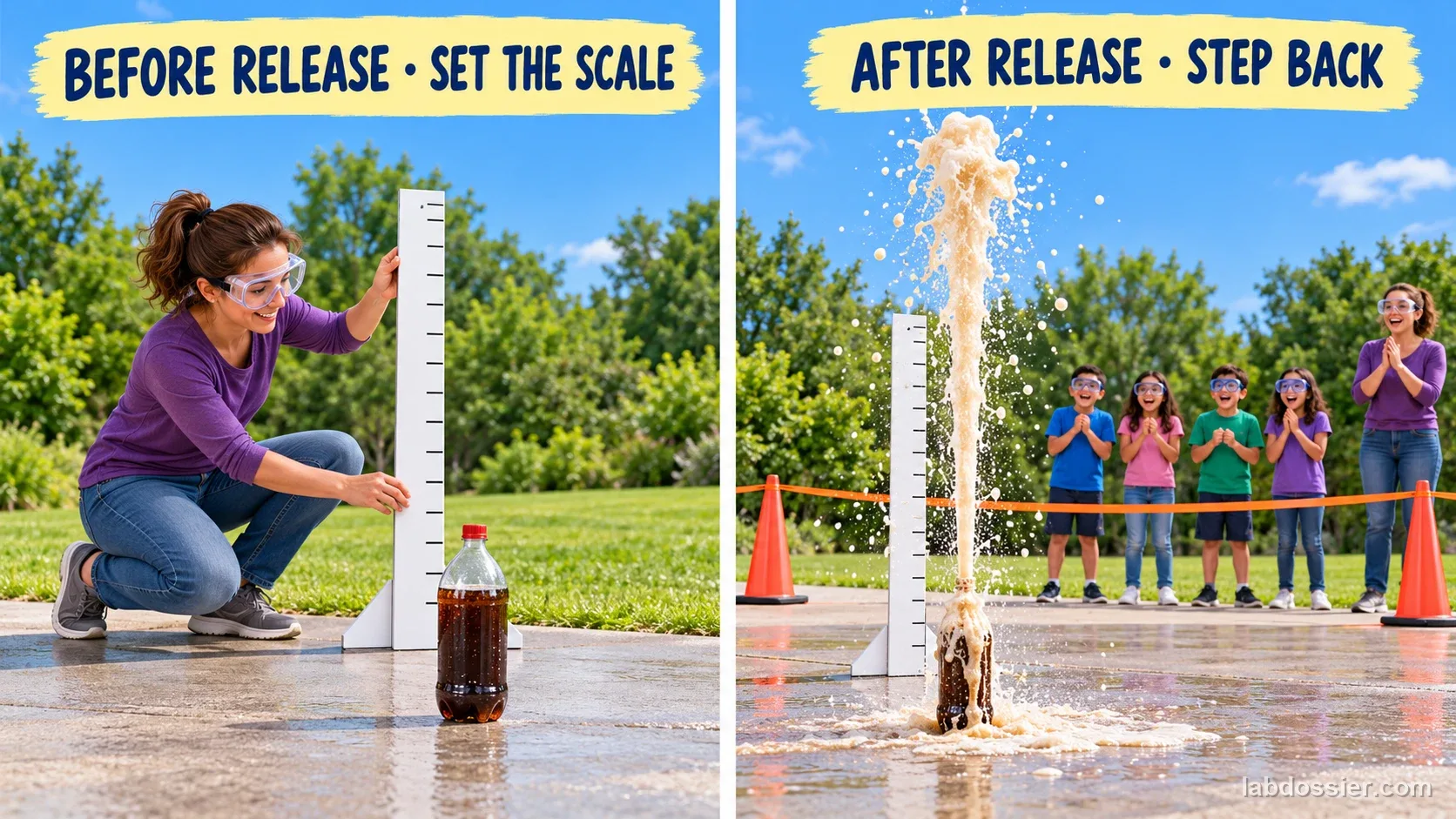
1. Set up outdoors
Use a level, open, hoseable area away from people, buildings, windows, overhangs and wires. Everyone wears eye protection and stays behind a clear line.
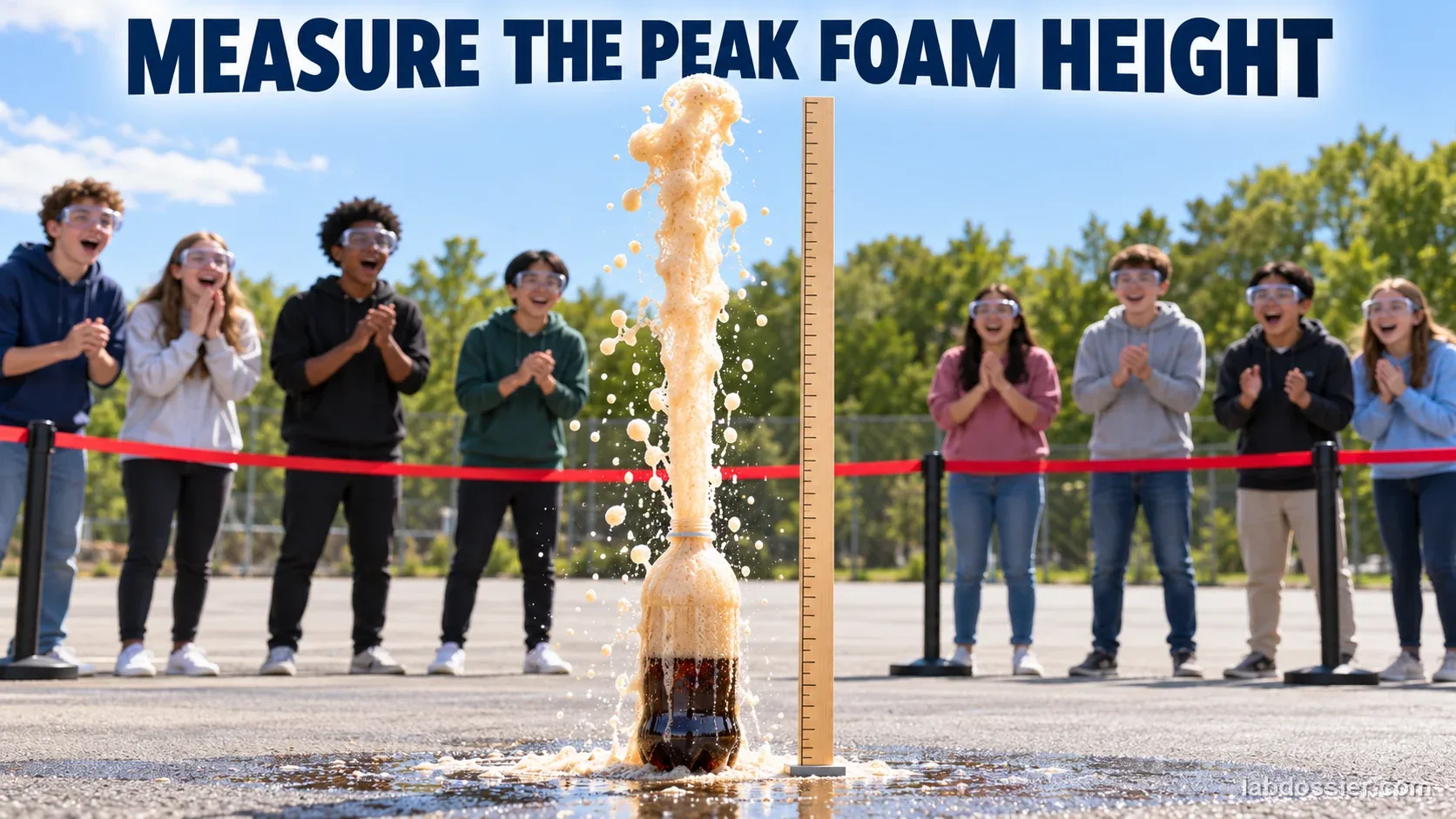
2. Set a safe height reference
Place a freestanding marked board behind the bottle, low enough to set up from the ground. Keep the observer and camera at a fixed safe viewing point; never climb to place a scale.
3. Match and load
Use the same soda brand, bottle size and starting temperature. Prepare 2, 4 or 6 of the same candies in a drop tube so they enter together.
4. Release and step back
An adult opens one fresh bottle at the test point, releases the candies, then immediately moves clear. Do not lean over, hold down or recap the bottle.
5. Record three fresh-bottle trials
From the safe viewing point, record peak height against the scale for three fresh bottles at each candy count. Keep all three readings, then compare their mean and range.
Materials // Prepare the bench
- Unopened bottles of one soda product, same brand and size
- Mentos candies
- geyser tube or release guide
- freestanding marked height board
- outdoor level area
- safety glasses
- timer
05 // Data table
| Number of Mentos | Trial 1 / Trial 2 / Trial 3 (in) | Mean height (in) | Range (in) |
|---|---|---|---|
| 2 candies | ____ / ____ / ____ | ____ | ____ |
| 4 candies | ____ / ____ / ____ | ____ | ____ |
| 6 candies | ____ / ____ / ____ | ____ | ____ |
06 // What to expect
More candies may produce a taller eruption because they add more bubble-starting surface at once, but bottle pressure, temperature, formula, delivery timing, foam behavior and measurement affect the result. Treat this as a prediction to test, not a guaranteed ranking.
This is a physical process, not a chemical reaction — no new substance is created. The soda already contains dissolved CO2 gas; the candy surface provides many places for bubbles to form and escape quickly.
07 // Lab notes
- Zero-sugar soda may make cleanup less sticky, but that does not mean it always makes the tallest geyser. For a height comparison, use one soda product and match bottle size and starting temperature.
08 // Remember
The gas was already in the soda. The candy just gives it thousands of tiny doors to escape through at once.
09 // Treat the geyser as a rapid gas-release test
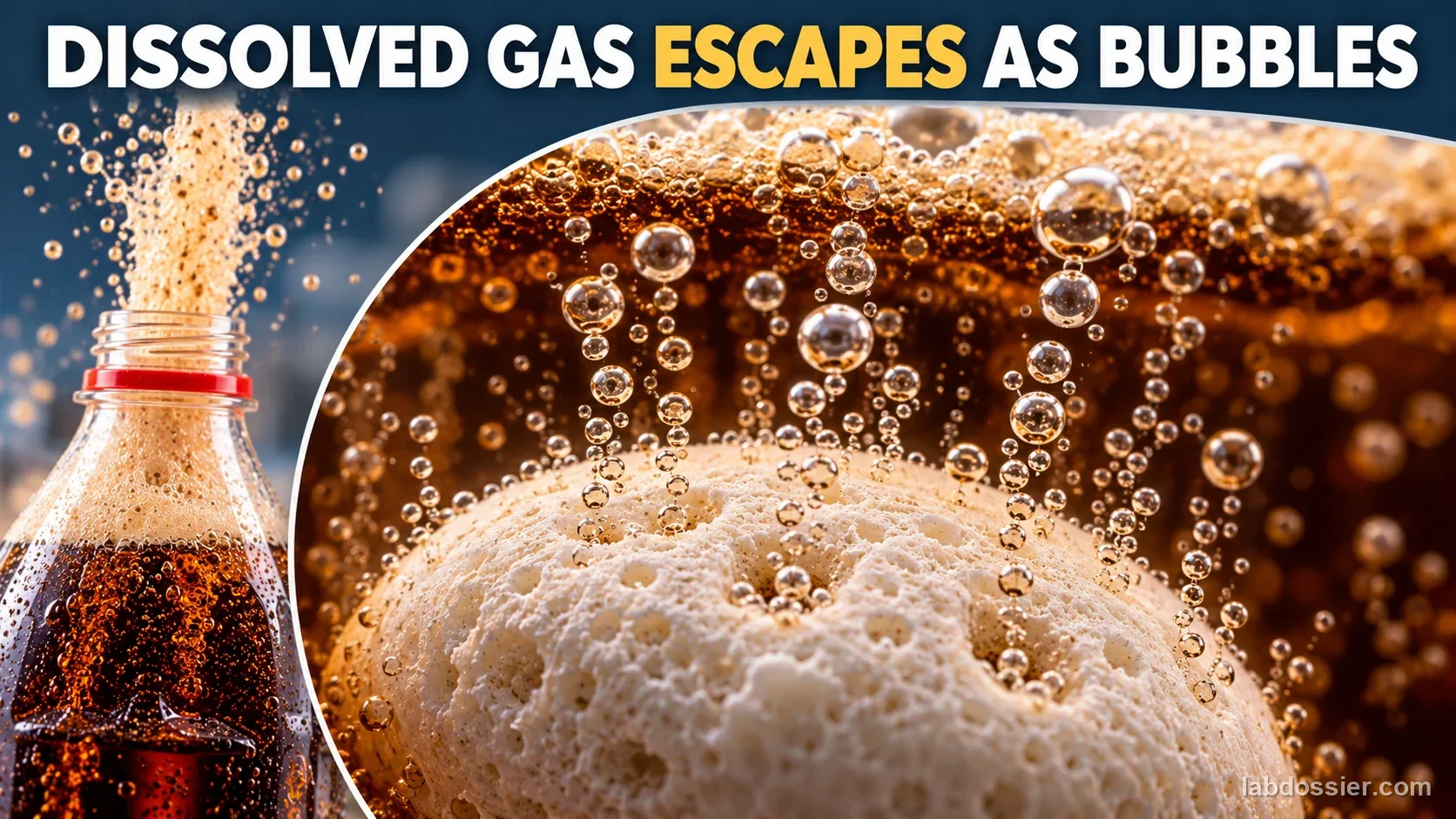
Carbonated soda contains dissolved carbon dioxide under pressure. The rough surface of a Mentos candy provides many sites where bubbles can form quickly, and the soda's surfactants and other ingredients affect how the foam behaves. The eruption is primarily a rapid release of dissolved gas, not a chemical reaction between the candy and soda that creates a new gas. This distinction helps students ask a testable question about eruption height or duration.
For this comparison, vary only the number of candies: 2, 4 or 6. Match the soda product, bottle size and starting temperature, and use the same candy type and drop tube. A release tube helps the candies enter together; adding them one at a time changes the release. Measure peak height against a freestanding marked board, or record video from one fixed safe position with the scale in the same plane as the plume. Work outdoors in an open area away from people, buildings, windows, overhangs and wires.
10 // Measure fairly and explain variability
A bottle opened at a different angle or one that has lost carbonation will not match a fresh, upright bottle. Record the brand, bottle volume, temperature, candy count, and time since opening. Use separate bottles for separate trials rather than trying to recreate the same pressure state after the first eruption. If using video, include a known height scale in the same plane as the geyser to reduce perspective error.
Use a fresh bottle for each trial because the first eruption changes the soda's carbonation. Run three independent fresh-bottle trials per candy count, calculate the mean, and report the range alongside every reading. Three runs give a clearer view of variation than a pair, but they remain a small classroom sample. Differences can come from temperature, carbonation, release timing, foam behavior or measurement angle. This comparison cannot establish that one candy count or soda formula always wins. If testing temperature in a separate investigation, let unopened bottles reach the chosen temperatures; never put sealed soda in a freezer where it may burst.
11 // Safety and responsible cleanup
Use eye protection and keep observers behind a clear boundary. An adult should open the fresh bottle at the test point, release the candies, and immediately move clear. Do not lean over, hold down, recap or point the bottle at anyone. Never climb to install or read a high scale; set a low freestanding reference from ground level and observe from a safe distance. Open the bottle only at the outdoor test site. Sticky soda makes surfaces slippery and can attract insects, so collect bottles and candy wrappers and rinse the test area when permitted.
Define the scale's upper limit before releasing the candies. If the top of the main foam column rises above it, record “above scale” instead of estimating unseen height or walking toward the bottle; adjust the reference safely from ground level before a later trial. Do not erase an out-of-range result from the record.
12 // Keep a soda-formula question separate
This investigation changes candy count, so keep the soda product the same. A zero-sugar drink may make cleanup less sticky, but that does not prove it always makes a taller plume. If a class wants to compare soda formulas, make that a separate test: keep candy count, bottle size, starting temperature and release method the same, and use a fresh bottle for every trial.
For a consistent height reading, define the endpoint before releasing candies: record the highest point of the main foam column, not a stray droplet. Set a low scale from ground level and place it in the same plane as the bottle; read it from a fixed safe viewing point or use video. Keep everyone clear until the eruption ends, then let an adult collect and rinse the test area.
13 // Questions people ask
Why do Mentos make soda erupt?
The rapid foaming is a physical process involving nucleation. Soda holds dissolved carbon dioxide gas under pressure. A Mentos candy's rough, pitted surface provides many sites where bubbles can form, helping the dissolved CO2 escape much faster than it would from an undisturbed bottle.
Is the Mentos and soda reaction a chemical reaction?
No — it's physical, not chemical. No new substance is produced. The carbon dioxide gas was already dissolved in the soda; the candy's surface simply speeds up how fast that existing gas can form bubbles and escape.
Does diet soda always make a taller geyser?
No. Zero-sugar soda can leave less sticky residue, which can simplify cleanup, but that is not evidence that it always produces the tallest plume. Soda formulation affects foam behavior, so keep the product the same when testing candy count and compare only matched trials.
How can I measure the plume without approaching it?
Place a freestanding height scale behind the bottle before the test and record from one fixed, safe viewing point, or film from that point with the scale in the same plane as the plume. Never stand beside the opening, climb to set a scale, or try to measure a spent bottle by hand.
14 // Keep going
Can you explain the investigation?
Mentos and soda geyser · Student Data Sheet
Question: How does the number of Mentos dropped into a bottle of soda change the height of the eruption?
Hypothesis: If more Mentos candies are dropped into a bottle of soda at once, then the eruption may reach a greater height, because each candy's rough, pitted surface gives dissolved carbon dioxide more places to rapidly form bubbles, and more candies create more of those release sites at once.
Materials
- Unopened bottles of one soda product, same brand and size
- Mentos candies
- geyser tube or release guide
- freestanding marked height board
- outdoor level area
- safety glasses
- timer
Safety before starting
- Do this outdoors on level ground in an open hoseable area away from people, buildings, windows, overhangs and wires. Wear eye protection and keep observers behind a clear line.
- An adult opens the fresh bottle at the test point, releases the candies, then immediately moves clear. Never lean over, hold down, recap or point the bottle toward anyone. Clean the sugary spill so the ground is not slippery.
Lab notes
- Zero-sugar soda may make cleanup less sticky, but that does not mean it always makes the tallest geyser. For a height comparison, use one soda product and match bottle size and starting temperature.
Variables
Independent: Number of Mentos candies · Dependent: Height of the eruption
Keep constant: same soda brand and bottle size · same starting temperature · same candy type · all candies released together by the same drop tube
Procedure
- Set up outdoors: Use a level, open, hoseable area away from people, buildings, windows, overhangs and wires. Everyone wears eye protection and stays behind a clear line.
- Set a safe height reference: Place a freestanding marked board behind the bottle, low enough to set up from the ground. Keep the observer and camera at a fixed safe viewing point; never climb to place a scale.
- Match and load: Use the same soda brand, bottle size and starting temperature. Prepare 2, 4 or 6 of the same candies in a drop tube so they enter together.
- Release and step back: An adult opens one fresh bottle at the test point, releases the candies, then immediately moves clear. Do not lean over, hold down or recap the bottle.
- Record three fresh-bottle trials: From the safe viewing point, record peak height against the scale for three fresh bottles at each candy count. Keep all three readings, then compare their mean and range.
Record your observations
| Number of Mentos | Trial 1 / Trial 2 / Trial 3 (in) | Mean height (in) | Range (in) |
|---|---|---|---|
Answer key and expected pattern
More candies may produce a taller eruption because they add more bubble-starting surface at once, but bottle pressure, temperature, formula, delivery timing, foam behavior and measurement affect the result. Treat this as a prediction to test, not a guaranteed ranking.
This is a physical process, not a chemical reaction — no new substance is created. The soda already contains dissolved CO2 gas; the candy surface provides many places for bubbles to form and escape quickly.
Remember: The gas was already in the soda. The candy just gives it thousands of tiny doors to escape through at once.