Paper towel absorbency lab
01 // Question
How does paper towel product type affect the volume of water added at the first visible drip?
This is an operational first-drip comparison. Keep sample area and the water-addition rate fixed; it does not directly measure absorption speed or a towel's maximum retained mass.
02 // Variables
Independent
Paper towel product tested- Brand A
- Brand B
- Brand C
Dependent
Water added at first visible drip- Three raw trial volumes (mL) per product
- Mean and range of those volumes
03 // Hypothesis
IF equal-area samples from different paper towel products are tested with the same measured addition rate, THEN their mean volumes at the first visible drip may differ, BECAUSE product construction affects how water enters and moves through the sheet, while ply, embossing and wet strength also vary.
04 // Procedure
1. Match each sample
Cut a fresh 10 × 10 cm square for each trial. Keep all plies as sold, label the product and place the square flat over its own catch tray.
2. Measure clean water
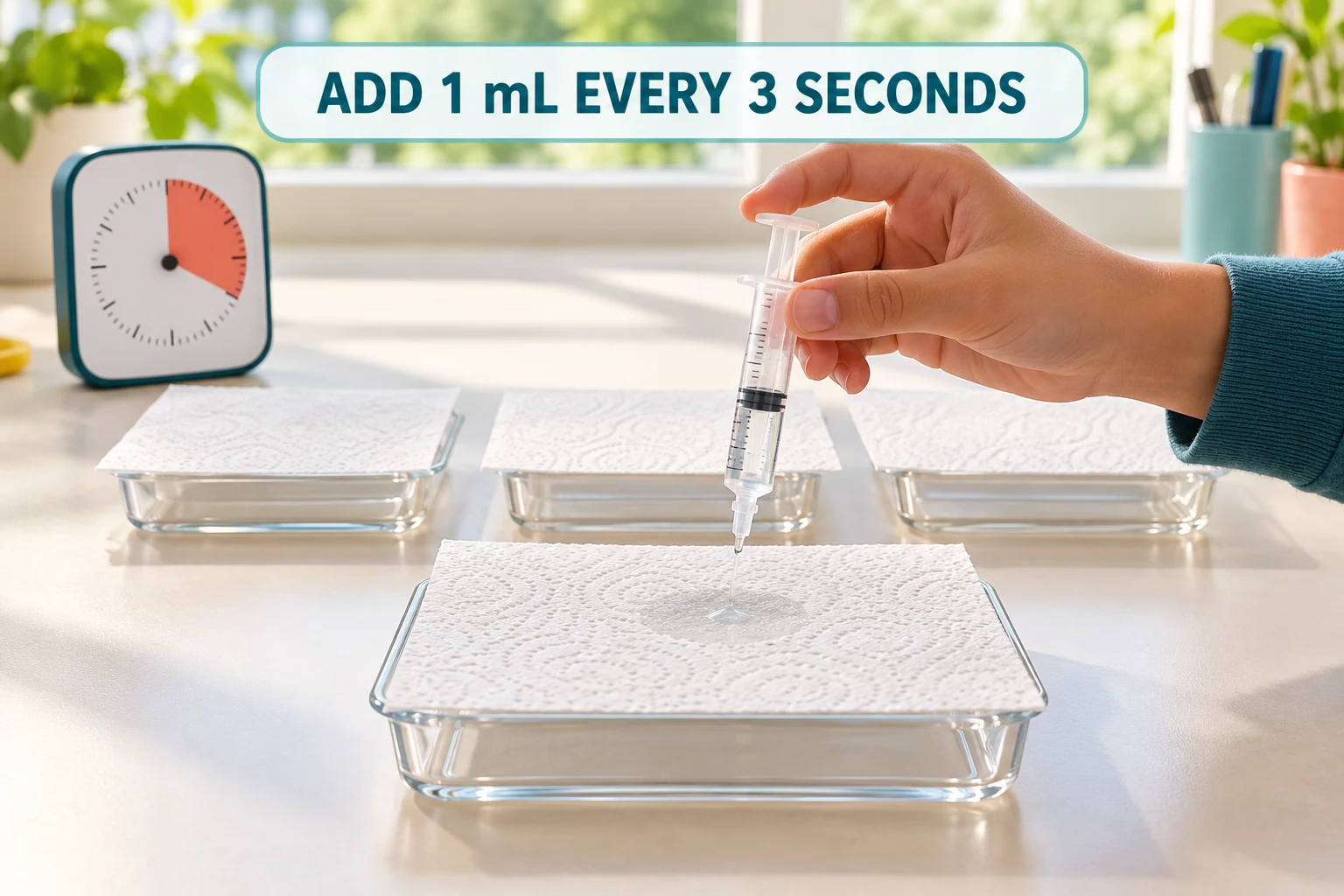
Use a graduated cylinder or 1 mL syringe at room temperature. Add the same measured 1 mL increment for every step.
3. Use a fixed pace
Add 1 mL to the center, wait exactly 3 seconds, then add the next 1 mL. Use the same pace for every sample.
4. Define the first drip
Stop at the first visible drop that passes through the underside into the tray. Record total water added; this endpoint is a comparison proxy, not a direct water-retention measurement.
5. Repeat and summarize
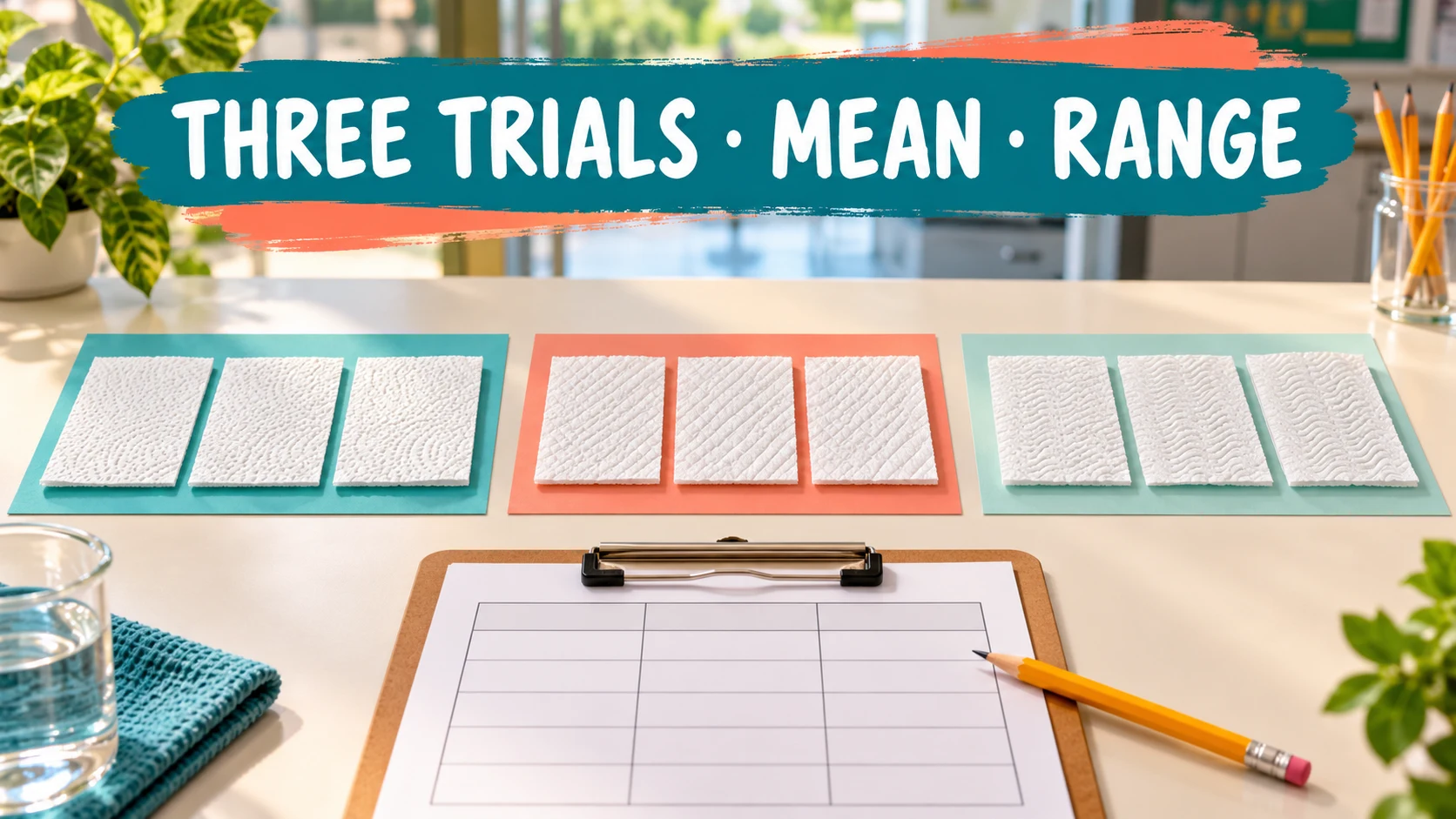
Test three fresh squares per product. Keep all three readings, calculate the mean and range (highest minus lowest), and compare the tested products only.
Materials // Prepare the bench
- Identified paper towel products
- equal 10 × 10 cm squares, plies retained
- clean room-temperature water
- 1 mL syringe or graduated cylinder
- catch tray, dried between samples
- scissors
- ruler
- timer
- labels
05 // Data table
| Paper towel product | Trial 1 (mL) | Trial 2 (mL) | Trial 3 (mL) | Mean (mL) | Range (mL) |
|---|---|---|---|---|---|
| Product A | ____ | ____ | ____ | ____ | ____ |
| Product B | ____ | ____ | ____ | ____ | ____ |
| Product C | ____ | ____ | ____ | ____ | ____ |
Match the measurement to the question
| Measurement | What it answers | Key limitation |
|---|---|---|
| Water added at first drip (this lab) | Which equal-area sample reaches a defined leak-through point under this addition rate? | Depends on addition pace and is not total water retained. |
| Fixed soak/drain, then starting minus remaining water (comparison method) | How much water is not recovered after one stated soak and drain routine? | Transfer loss and water left on the tray can affect the estimate; timing and technique must match. |
| Wet mass − dry mass after a fixed drain time | How much water remains in a sample after one stated soak/drain routine? | Results depend on soak and drain times. |
| Mass gain over a fixed short interval | How quickly a sample takes up water during that interval? | Rate is a different outcome from capacity. |
06 // What to expect
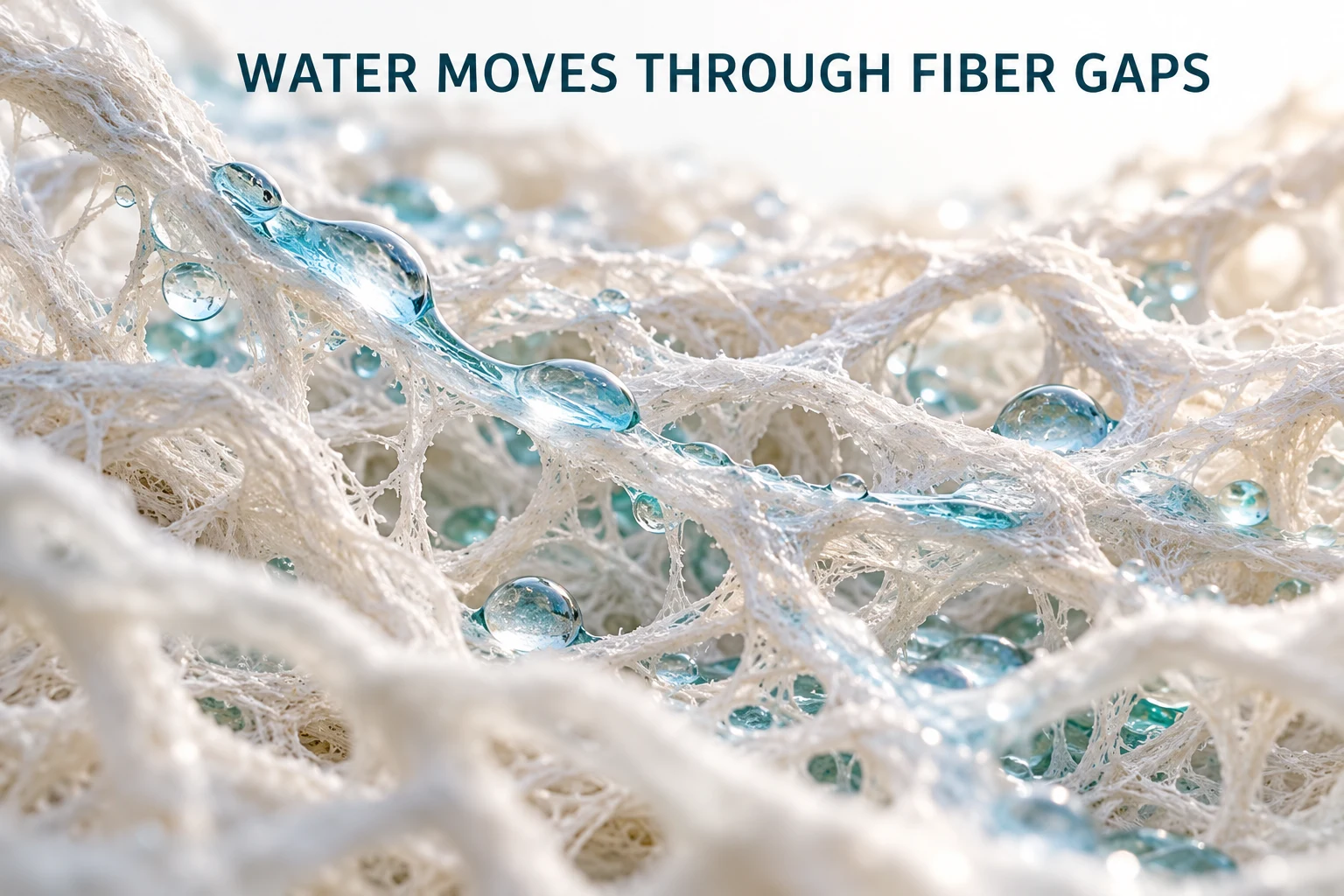
There is no guaranteed winner based on thickness or appearance. Fiber arrangement and spaces between fibers help draw and hold water, but products also vary in plies, embossing, coatings and wet strength. Report the exact products tested instead of generalizing to every towel from a brand.
This lab records how many milliliters are added before the first visible drip when equal-area squares are tested at one fixed pace. It is an operational endpoint that depends on both uptake and drainage; it is not a direct measurement of total water retained or how quickly a towel absorbs.
07 // Lab notes
- Add exactly 1 mL every 3 seconds. A faster or slower pace can change when the first drip appears.
- Cut each fresh sample to 10 × 10 cm and keep its commercial plies intact; record the specific product and ply shown on the package.
- Other guides use a folded pad and count eyedropper drops until it drips, or soak and drain a sample before measuring remaining water. Those are different endpoints; compare results only when the sample setup and method match.
- Use one clean catch tray at a time and dry it between trials; wipe drips promptly and dry the floor before walking.
08 // Remember
First-drip volume is not the same as absorption speed. Report the exact endpoint, fixed addition pace, mean and trial range.
09 // Define the first-drip endpoint
This lesson uses a first-visible-drip comparison: cut three fresh 10 × 10 cm squares per identified product, keep each product's plies as sold, and add clean room-temperature water to the center in measured 1 mL increments every 3 seconds. Stop when the first visible drop passes through the underside into the catch tray. Record total water added for all three samples, then calculate the mean and range. Use one tray at a time and dry it between trials.
The result answers a narrow question: how much water was added before leak-through under this sample size, addition pace and endpoint? It combines uptake and drainage. It is not the mass of water retained, a maximum capacity, or an absorption-speed measurement. Identify the exact products and plies; three squares from one package do not establish a universal brand ranking.
10 // Separate absorption from strength and speed
Different methods answer different questions. A fixed-pace first-drip test records added volume at a visible leak-through point. A retained-water test instead weighs a dry sample, soaks it for a stated time, drains it for a stated time and compares wet with dry mass. A rate test measures mass gain during a fixed short interval. Do not call one outcome another: the first-drip volume does not tell which towel absorbs fastest or retains the most after draining.
Product construction varies in ply, fiber arrangement, embossing, coatings and wet strength. These features can influence results, but appearance or thickness alone cannot predict the winner. Report the sample size, plies, 1 mL-per-3-second pace, first-drip rule, three raw readings, mean and range. Limit the conclusion to the products and procedure tested.
11 // Build a useful comparison table
Keep a raw-data table with product, Trial 1, Trial 2, Trial 3, mean and range in milliliters. Mean = (T1 + T2 + T3) ÷ 3; range = highest reading − lowest reading. Show the individual readings so an unusual sample is visible, and label example numbers as illustrative rather than measured results from a named product.
A separate extension may compare the first-drip method with fixed soak-and-drain mass or a timed uptake-rate test, but use fresh matched samples and keep each method's endpoint separate. Collect used paper towels in solid waste, follow local classroom cleanup directions, and dry water spills promptly to prevent slips.
12 // Measure water added at a repeatable first drip
The comparison uses fresh equal 10 × 10 cm squares, product plies kept as sold, and 1 mL of room-temperature water added to the center every 3 seconds. Stop at the first visible drop passing through the underside. Test three squares for each exact product; record every reading, then calculate mean and range. Keep the tray clean and dry between samples.
This method measures water added before leak-through at a specified pace. It does not directly measure water retained after draining or how quickly the towel absorbs. If the research question is retained mass, weigh dry and wet samples after a fixed soak and drain. If it is speed, measure mass gain during a fixed interval. Keep those endpoints distinct and limit any conclusion to the products tested.
13 // Keep product identity and trial order in the record
Write the product name, package size, ply count, and any printed construction detail beside each set of readings. “Brand A” is useful during a blind classroom comparison, but preserve a key that identifies the package so another group can repeat the test. If several products are tested, vary the order rather than always testing the same one first; a tray that is still damp or a changing room setup can otherwise line up with one product.
Keep the first-drip endpoint visible in the method: 10 × 10 cm, plies as sold, 1 mL every 3 seconds, and the first drop through the underside. Report all three volumes and their range. A higher value means more water was added before this defined leak-through point; it does not by itself mean the towel retains more water after draining.
14 // Questions people ask
Does a thicker towel always hold more water?
No. Ply, fiber arrangement, embossing, wet strength and the test endpoint all matter. Compare the specific products and avoid assuming thickness alone predicts the result.
Does the first-drip volume measure absorption speed?
No. It records water added before a visible drop passes through under one fixed 1 mL-per-3-second pace. A rate test would measure mass gain over a separate fixed time interval.
Why test three fresh squares per product?
Different areas of one package can vary. Three separate samples keep the individual readings visible and let you compare both the mean and the range.
Is the first-drip volume the exact amount of water retained?
No. Some water can remain on the surface or move unevenly. The first-drip value is a repeatable classroom comparison under this method; a fixed soak/drain followed by dry and wet mass is a different retained-water test.
15 // Keep going
Can you explain the investigation?
Paper towel absorbency lab · Student Data Sheet
Question: How does paper towel product type affect the volume of water added at the first visible drip?
Hypothesis: If equal-area samples from different paper towel products are tested with the same measured addition rate, then their mean volumes at the first visible drip may differ, because product construction affects how water enters and moves through the sheet, while ply, embossing and wet strength also vary.
Materials
- Identified paper towel products
- equal 10 × 10 cm squares, plies retained
- clean room-temperature water
- 1 mL syringe or graduated cylinder
- catch tray, dried between samples
- scissors
- ruler
- timer
- labels
Safety before starting
- Use clean water only and work over a tray or sink. Wipe drips immediately and dry the floor before walking through the area.
- Do not drink test water or put used towels in your mouth; wash hands after handling wet materials.
Lab notes
- Add exactly 1 mL every 3 seconds. A faster or slower pace can change when the first drip appears.
- Cut each fresh sample to 10 × 10 cm and keep its commercial plies intact; record the specific product and ply shown on the package.
- Other guides use a folded pad and count eyedropper drops until it drips, or soak and drain a sample before measuring remaining water. Those are different endpoints; compare results only when the sample setup and method match.
- Use one clean catch tray at a time and dry it between trials; wipe drips promptly and dry the floor before walking.
Variables
Independent: Paper towel product tested · Dependent: Water added at first visible drip
Keep constant: 10 × 10 cm sample area · same product plies as sold · clean water at room temperature · 1 mL every 3 seconds at the center · same first-drip rule and catch tray
Procedure
- Match each sample: Cut a fresh 10 × 10 cm square for each trial. Keep all plies as sold, label the product and place the square flat over its own catch tray.
- Measure clean water: Use a graduated cylinder or 1 mL syringe at room temperature. Add the same measured 1 mL increment for every step.
- Use a fixed pace: Add 1 mL to the center, wait exactly 3 seconds, then add the next 1 mL. Use the same pace for every sample.
- Define the first drip: Stop at the first visible drop that passes through the underside into the tray. Record total water added; this endpoint is a comparison proxy, not a direct water-retention measurement.
- Repeat and summarize: Test three fresh squares per product. Keep all three readings, calculate the mean and range (highest minus lowest), and compare the tested products only.
Record your observations
| Paper towel product | Trial 1 (mL) | Trial 2 (mL) | Trial 3 (mL) | Mean (mL) | Range (mL) |
|---|---|---|---|---|---|
Match the measurement to the question
| Measurement | What it answers | Key limitation |
|---|---|---|
Answer key and expected pattern
There is no guaranteed winner based on thickness or appearance. Fiber arrangement and spaces between fibers help draw and hold water, but products also vary in plies, embossing, coatings and wet strength. Report the exact products tested instead of generalizing to every towel from a brand.
This lab records how many milliliters are added before the first visible drip when equal-area squares are tested at one fixed pace. It is an operational endpoint that depends on both uptake and drainage; it is not a direct measurement of total water retained or how quickly a towel absorbs.
Remember: First-drip volume is not the same as absorption speed. Report the exact endpoint, fixed addition pace, mean and trial range.