How does wheel size change a robot’s speed?
01 // Question
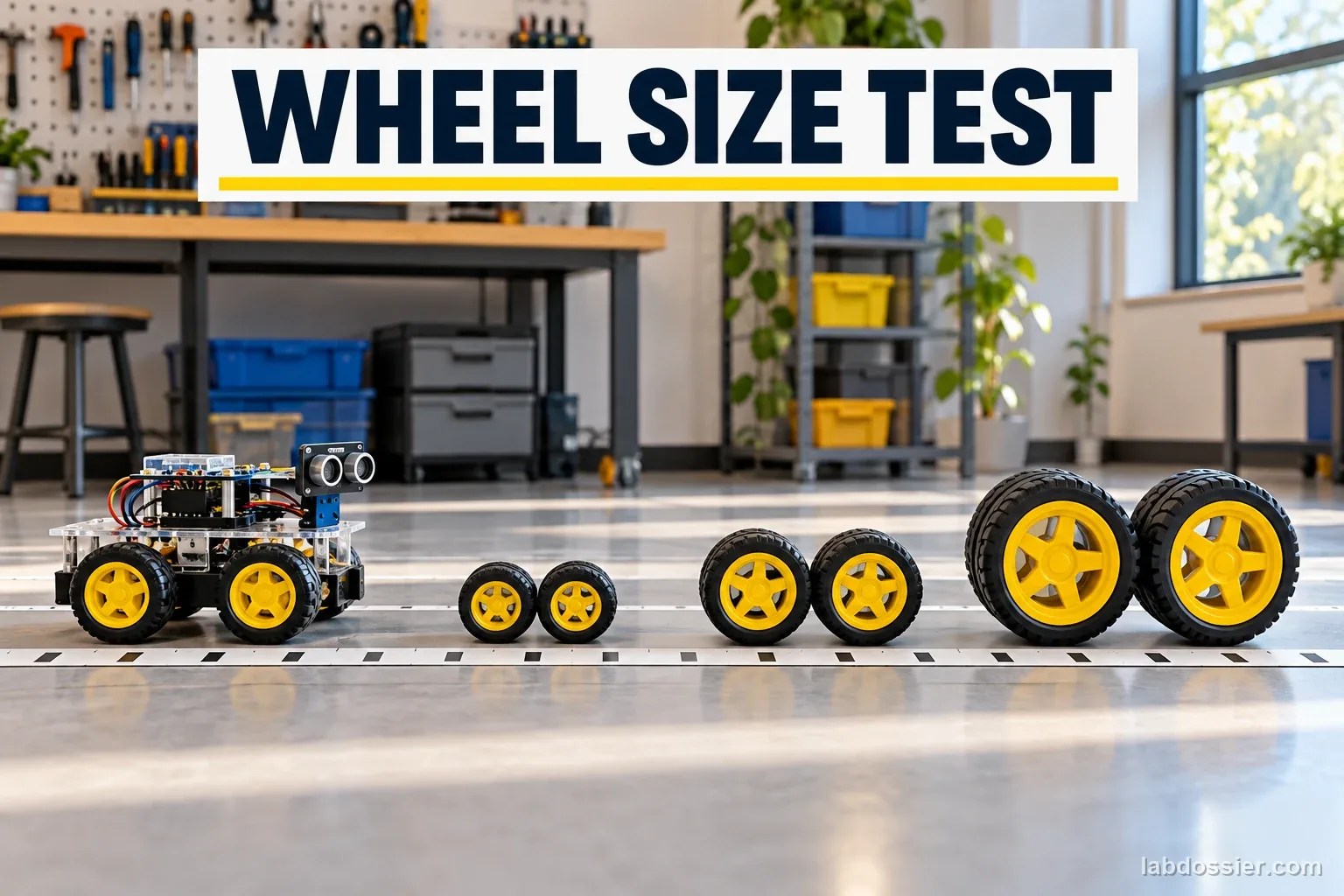
How does wheel diameter affect the distance a small robot travels during the same programmed run?
A larger wheel has a greater circumference, but a real robot’s motor load, traction and battery can change its measured result. Let the robot data decide.
02 // Variables
Independent
Driven-wheel diameter- Small wheel pair (measure actual diameter)
- Medium wheel pair (measure actual diameter)
- Large wheel pair (measure actual diameter)
Dependent
Distance traveled during a fixed motor command- Distance after a 3-second run, in cm
- Mean distance and range for five runs
- Mean speed = mean distance ÷ 3 s
03 // Hypothesis
IF the robot uses a larger wheel while the drive motor completes similar rotations, THEN it may travel farther during the same run, BECAUSE wheel circumference increases with diameter, although motor loading and traction can change the measured result.
04 // Procedure
1. Measure and label the wheel pairs
Choose three compatible wheel pairs for the same robot. Measure each driven wheel's diameter across its center and record it in centimeters; keep the tire material and width as similar as the kit allows.
2. Set a safe, level test lane
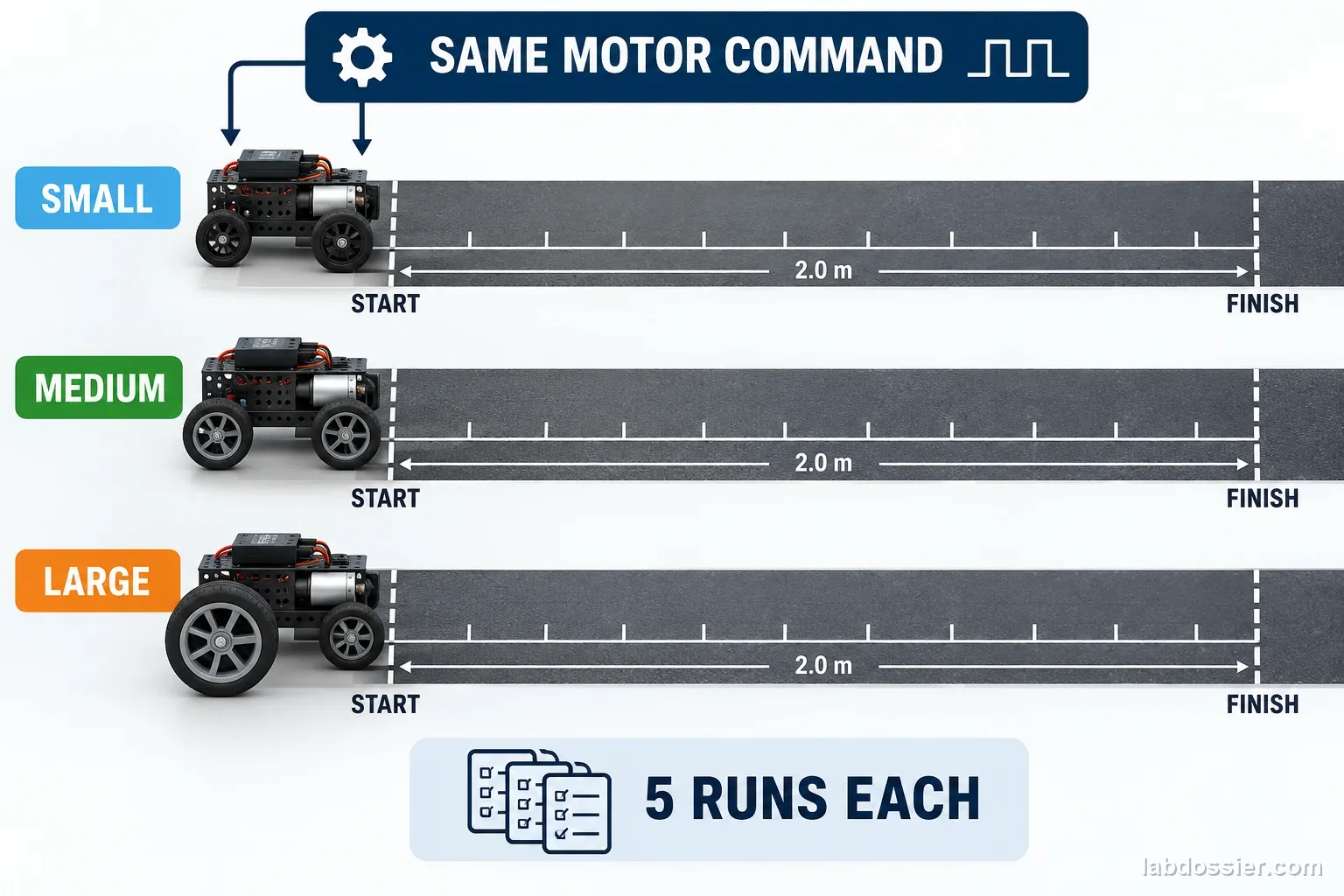
Mark a straight 2 m lane on a smooth floor, away from stairs and table edges. Mark the robot's starting line and the point from which its front bumper distance will be measured.
3. Lock the robot settings
Use the same chassis, gear ratio, payload, motor command and 3-second run for every trial. Start with a comparable battery charge and let the same operator start the robot from the same line without a push.
4. Run five trials per wheel size
Install one wheel pair, check that both wheels are secure, run the same program, and measure the final distance from the start line to the front bumper. Reset the robot and track position before each run.
5. Keep every raw distance
Record all five distances for each wheel size. Note wheel slip, a collision, battery warning or a run that reaches the lane boundary; do not quietly discard an unusual result.
6. Compare distance and average speed
For each wheel size, calculate mean distance and range. Divide mean distance by 3 seconds for mean speed. Compare the data with the measured circumference, but do not assume the largest wheel must win.
Materials // Prepare the bench
- one programmable low-speed classroom robot
- three compatible wheel pairs with different measured diameters
- one level 2 m lane
- masking tape start and finish marks
- tape measure
- timer or fixed 3-second program
- notebook or printed data table
- adult help for tools and batteries
05 // Data table
| Wheel size / diameter (cm) | Run 1 (cm) | Run 2 (cm) | Run 3 (cm) | Run 4 (cm) | Run 5 (cm) | Mean distance (cm) | Range (cm) | Mean speed (cm/s) |
|---|---|---|---|---|---|---|---|---|
| Small / ____ | ____ | ____ | ____ | ____ | ____ | ____ | ____ | ____ |
| Medium / ____ | ____ | ____ | ____ | ____ | ____ | ____ | ____ | ____ |
| Large / ____ | ____ | ____ | ____ | ____ | ____ | ____ | ____ | ____ |
Compare the wheel model with the real robot
| Idea | Calculation or observation | What it can tell you |
|---|---|---|
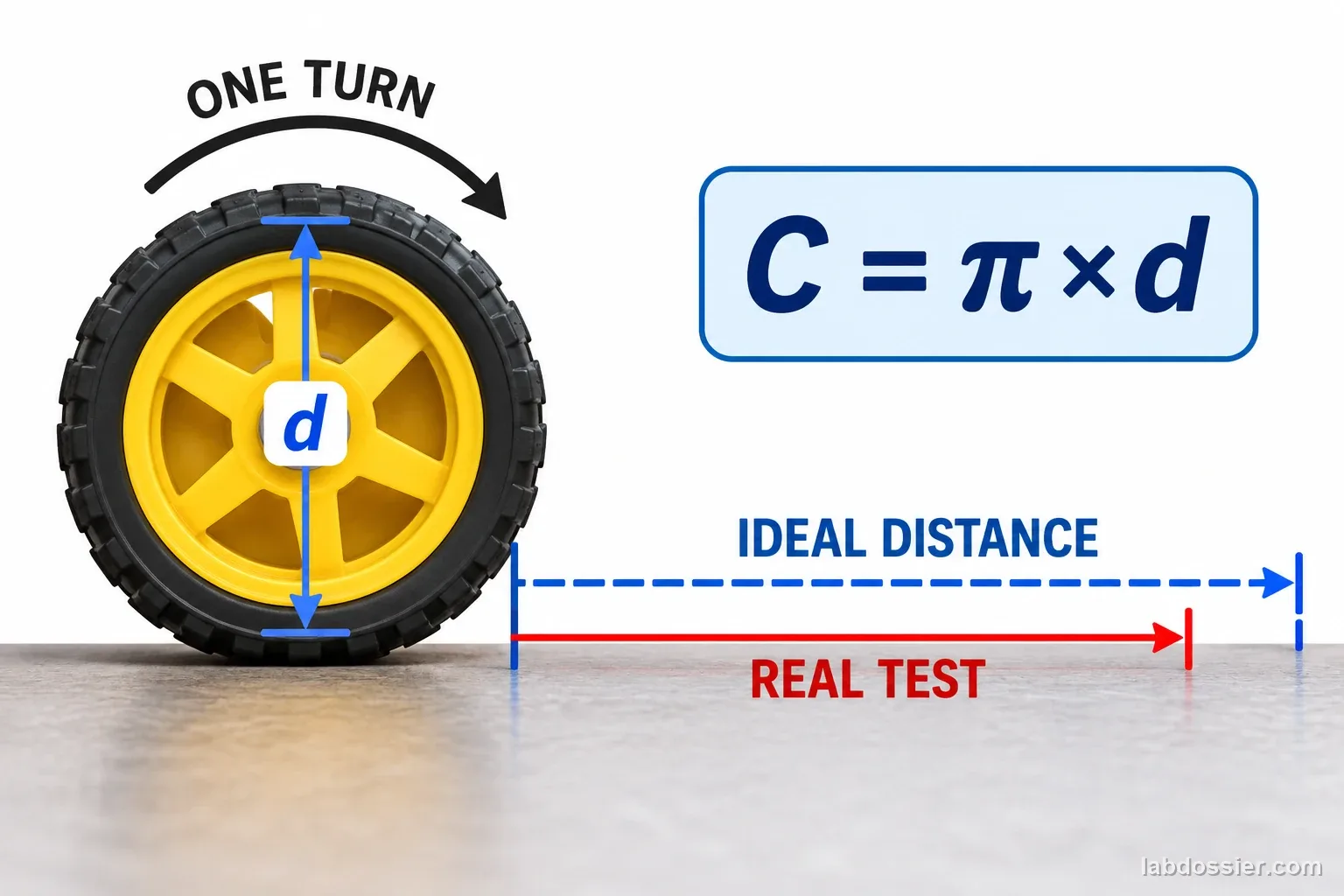
| Wheel circumference | C = π × measured diameter | Ideal distance for one wheel rotation if the wheel rolls without slipping. |
| Measured run | Distance ÷ 3 seconds | Average speed for this robot, battery, surface and motor command. |
| Difference | Measured value compared with the ideal estimate | May reflect motor speed, gearing, slip, surface, start variation or measurement error. |
Formula Wheel circumference C = πd; mean speed = mean distance ÷ 3 s
06 // What to expect
If wheel rotation rate stayed the same and the wheels rolled without slipping, a larger diameter would move the robot farther per wheel turn. A real robot may not keep the same rotation rate under load: wheel size can change the force available at the ground, and traction, gearing, battery state, chassis alignment and floor surface also matter. Measure actual distance rather than treating the geometric estimate as a guaranteed result.
Compare the five raw runs as well as each mean. A broad range may indicate inconsistent starts, wheel slip, changing battery condition or imprecise distance readings. This small test describes the chosen robot and track; it does not establish one best wheel size for every robot or task. A design that travels fastest may not turn, climb or carry a load as well.
07 // Lab notes
- Use a low-speed setting and a clear floor lane. Keep hands, faces and loose clothing away from moving gears and wheels.
- Have an adult help change wheels if the kit requires tools. Check that each wheel is attached securely before powering the robot.
- Use the same run time and motor command. If the robot reaches the end of the lane, shorten the run time and repeat every wheel condition at that same new time.
- Do not compare different robot models as though wheel diameter were the only changed variable.
08 // Remember
Wheel circumference predicts distance per turn. The robot’s measured speed also depends on its motor, gearing, traction and load.
09 // Make wheel size the planned difference
Use one robot chassis, drive motor, gear ratio, payload and tire material where the kit allows. Measure the driven-wheel diameter through its center and record it rather than trusting package labels. Use the same battery or begin each condition at a comparable charge, the same motor command, a fixed three-second run, the same start line and the same level floor lane. If the robot reaches the track boundary, shorten the run time and repeat every size under the revised condition.
Run five trials for each wheel pair, resetting the robot to the same orientation and position. A start without a push matters: a hand launch adds an uncontrolled force. Keep a note for wheel slip, turning, collisions, a loose attachment or a low-battery alert. Retain unusual results in the raw table and explain them; repeat only when the procedure was genuinely invalid, and document why.
10 // Connect wheel circumference to measured speed
For wheel diameter d, circumference is C = πd. In an ideal no-slip roll, one full wheel rotation moves the axle forward by one circumference. If the wheel completes n rotations, ideal travel would be nπd. The classroom program usually does not directly guarantee the same number of rotations across loads: a larger radius can reduce the ground force available for a given axle torque, and the motor may slow or the wheel may slip.
Calculate the mean distance and range for each set of five runs. Divide each run's distance by three seconds for its average speed, or divide the mean distance by three seconds for the condition mean. State which calculation you used. Compare wheel sizes using the measured data and the ideal geometry as a reference, not as a guaranteed prediction. Report units and preserve all five readings so readers can judge the spread.
11 // Interpret the result as a design tradeoff
A wheel that produces more straight-line distance in this test is not automatically the best robot wheel. Turning, climbing, carrying a load, acceleration, traction, stability, wheel width and the robot's gearing may matter more for another task. The result applies to the tested robot, wheel materials, battery state, floor and motor command. It should not be generalized to every robot or surface.
A useful extension is to test a second payload or a different surface in a separate experiment. Keep the wheel comparison conditions matched within that follow-up, repeat each size and clearly label the new factor. Do not change wheel size, load and surface together if the goal is to identify which change affected the result.
12 // Questions people ask
Do bigger robot wheels always make a robot faster?
No. A larger wheel covers more distance per rotation, but motor speed, gearing, load and traction affect the real robot. Test one robot under controlled conditions and report what happened in that setup.
How do I calculate wheel circumference?
Measure the wheel diameter across its center and calculate circumference as π times diameter. This is the ideal distance traveled in one complete rotation when the wheel rolls without slipping.
Why keep the battery and motor command the same?
Battery condition and motor settings can change wheel rotation rate. Holding them steady helps make wheel diameter the main planned difference between test conditions.
What if the robot slips or turns during a run?
Record the event and keep the measurement. Check the track, wheel attachment and starting alignment before repeating; do not erase a result only because it differs from your prediction.
Does a faster robot have more torque?
Not necessarily. With the same axle torque, a larger wheel radius provides less pushing force at the ground. Speed and force tradeoffs also depend on the motor, gearing, robot mass and traction.
13 // Keep going
Can you explain the investigation?
How does wheel size change a robot’s speed? · Student Data Sheet
Question: How does wheel diameter affect the distance a small robot travels during the same programmed run?
Hypothesis: If the robot uses a larger wheel while the drive motor completes similar rotations, then it may travel farther during the same run, because wheel circumference increases with diameter, although motor loading and traction can change the measured result.
Materials
- one programmable low-speed classroom robot
- three compatible wheel pairs with different measured diameters
- one level 2 m lane
- masking tape start and finish marks
- tape measure
- timer or fixed 3-second program
- notebook or printed data table
- adult help for tools and batteries
Safety before starting
- Use a low-speed classroom robot on a clear, level floor. Keep fingers, hair, clothing and loose objects away from wheels and gears; power the robot off before changing wheels.
- Have an adult help with tools or batteries. Check that wheels and fasteners are secure, keep the lane clear of people and breakable objects, and stop if the robot behaves unexpectedly.
Lab notes
- Use a low-speed setting and a clear floor lane. Keep hands, faces and loose clothing away from moving gears and wheels.
- Have an adult help change wheels if the kit requires tools. Check that each wheel is attached securely before powering the robot.
- Use the same run time and motor command. If the robot reaches the end of the lane, shorten the run time and repeat every wheel condition at that same new time.
- Do not compare different robot models as though wheel diameter were the only changed variable.
Variables
Independent: Driven-wheel diameter · Dependent: Distance traveled during a fixed motor command
Keep constant: same robot chassis and gear ratio · same motor command and 3-second duration · same payload · same level track · same start line · comparable battery charge · same tire material and release rule
Procedure
- Measure and label the wheel pairs: Choose three compatible wheel pairs for the same robot. Measure each driven wheel's diameter across its center and record it in centimeters; keep the tire material and width as similar as the kit allows.
- Set a safe, level test lane: Mark a straight 2 m lane on a smooth floor, away from stairs and table edges. Mark the robot's starting line and the point from which its front bumper distance will be measured.
- Lock the robot settings: Use the same chassis, gear ratio, payload, motor command and 3-second run for every trial. Start with a comparable battery charge and let the same operator start the robot from the same line without a push.
- Run five trials per wheel size: Install one wheel pair, check that both wheels are secure, run the same program, and measure the final distance from the start line to the front bumper. Reset the robot and track position before each run.
- Keep every raw distance: Record all five distances for each wheel size. Note wheel slip, a collision, battery warning or a run that reaches the lane boundary; do not quietly discard an unusual result.
- Compare distance and average speed: For each wheel size, calculate mean distance and range. Divide mean distance by 3 seconds for mean speed. Compare the data with the measured circumference, but do not assume the largest wheel must win.
Record your observations
| Wheel size / diameter (cm) | Run 1 (cm) | Run 2 (cm) | Run 3 (cm) | Run 4 (cm) | Run 5 (cm) | Mean distance (cm) | Range (cm) | Mean speed (cm/s) |
|---|---|---|---|---|---|---|---|---|
Compare the wheel model with the real robot
| Idea | Calculation or observation | What it can tell you |
|---|---|---|
Formula: Wheel circumference C = πd; mean speed = mean distance ÷ 3 s
Answer key and expected pattern
If wheel rotation rate stayed the same and the wheels rolled without slipping, a larger diameter would move the robot farther per wheel turn. A real robot may not keep the same rotation rate under load: wheel size can change the force available at the ground, and traction, gearing, battery state, chassis alignment and floor surface also matter. Measure actual distance rather than treating the geometric estimate as a guaranteed result.
Compare the five raw runs as well as each mean. A broad range may indicate inconsistent starts, wheel slip, changing battery condition or imprecise distance readings. This small test describes the chosen robot and track; it does not establish one best wheel size for every robot or task. A design that travels fastest may not turn, climb or carry a load as well.
Remember: Wheel circumference predicts distance per turn. The robot’s measured speed also depends on its motor, gearing, traction and load.